Reviewed by Tamir Rubin, Head of Product at iPREP • Updated January 2026
Esthetics Exam Sample Question
What is the primary purpose of using a toner after cleansing the face during a facial treatment?
- To remove any remaining cleanser or makeup.
- To balance the pH level of the skin.
- To exfoliate the skin.
- To moisturize the skin.
Theory Exam
110 questions • 90 minutes
- Infection control, safety, and regulations
- Skin structure, disorders, and diseases
- Anatomy, physiology, and body systems
- Chemistry basics: pH, ingredients, labeling
- Consultation, contraindications, service planning
- Makeup principles and tool sanitation
Written Practical Exam
50 questions • 90 minutes
- Scenario questions on safe procedures
- Sanitation, disposal, and contamination rules
- Client protection, draping, and setup
- Facial sequence, bracing, and timing
- Electrical equipment use and precautions
- Hair removal and makeup decision
Practical Exam (Hands-on)
6 tasks • timing varies
- First client setup: 10 minutes
- Facial services: 25 minutes
- Second client setup: 15 minutes
- Eyebrow hair removal: untimed
- Facial makeup: 20 minutes
- Blood exposure procedure: 10 minutes
Test Duration
Total time: varies by state
States may require Theory, Written Practical, and the hands-on Practical Exam. Written exams are 90 minutes each; the practical includes timed stations plus an untimed hair-removal station, so confirm your state’s requirements.
Test Breakdown & Sample Questions
Most states that use NIC testing break the Esthetics State Board process into three exam types: Theory, Written Practical, and Practical (hands-on). Below is a quick snapshot of what to expect. Requirements can vary by state, including whether all three exams are required and whether any add-on sections apply—always confirm with your state board or exam portal.
| Aspect | Theory Exam | Written Practical Exam | Practical Exam |
|---|---|---|---|
| Primary focus | Science and foundational knowledge behind esthetics | Service knowledge and safe, correct procedures | Hands-on performance of core esthetics services and safety |
| Question / task type | Multiple-choice | Multiple-choice | Practical demonstration (timed sections) |
| Items / tasks | 110 items (100 scored) | 50 items (40 scored) | 6 Core Domain Sections (tasks may vary by state; add-ons may apply) |
| Time limit | 90 minutes | 90 minutes | Section timing: 10 / 25 / 15 / untimed (hair removal) / 20 / 10 (blood exposure) minutes. |
| Scoring | Varies by state/vendor | Varies by state/vendor | Varies by state/vendor |
| Testing environment | Written test environment | Written test environment | Simulated practical environment |
The Esthetics Theory Examination
The NIC National Esthetics Theory Examination is a multiple-choice licensure exam used by many states and jurisdictions. Always confirm your state’s specific requirements and policies through your state board or exam portal.
Exam format (NIC National – effective Sep 1, 2025)
- Time allowed: 90 minutes
- Items: 110 total (100 scored)
- Question type: Multiple choice
Examination content (by domain weight)
Scientific Concepts (55%)
- Infection control and safety (including SDS/labeling and handling chemicals)
- Basic anatomy and physiology (cells, tissues, organs, and body systems)
- Skin structure and function (histology/physiology)
- Skin disorders and diseases (including lesions and cancers)
- Hair structure and growth cycles (including abnormal hair growth)
- Basic chemistry as it relates to cosmetics (ingredients, labeling, function, pH)
Skin Care and Services (45%)
- Client consultation, documentation, skin analysis, contraindications, and treatment planning
- Facial services fundamentals (cleansing, steaming, exfoliation, massage, extractions, masks, finishing/home care)
- Electrical equipment basics used in skin services
- Makeup principles, product selection, application, and infection control
- Other services (body treatments, lash/brow services, hair removal) and awareness of advanced topics/treatments
References for preparation
NIC exam content is developed from a standard reference set. Commonly used references include:
- Milady Standard Esthetics: Fundamentals and Foundations
- Pivot Point Fundamentals: Esthetics
- Supplemental references may also be listed in the NIC bulletin (for example, advanced esthetics resources and skillsbooks).
Sample Esthetics Theory Question
Which of the following electrical equipment is used to exfoliate the skin by using a spray of microcrystals?
- Microdermabrasion machine
- Facial steamer/vaporizer
- High frequency machine
- LED therapy machine
The correct answer is a) Microdermabrasion machine
This question tests the candidate’s knowledge of the different types of electrical equipment used during skin services, specifically focusing on equipment used for exfoliation.
a) Microdermabrasion machine: This is the correct answer. A microdermabrasion machine exfoliates the skin by using a spray of microcrystals to remove the outermost layer of dry, dead skin cells, revealing younger, healthier-looking skin.
b) Facial steamer/vaporizer: This is incorrect because a facial steamer or vaporizer is used to open up the pores and hydrate the skin by emitting steam. It helps in softening the skin but does not exfoliate it.
c) High frequency machine: This is incorrect because a high frequency machine is used to treat various skin issues such as acne and fine lines by using low-current, high-frequency alternating currents. It is not used for exfoliation.
d) LED therapy machine: This is incorrect because LED therapy machines use varying wavelengths of light to treat different skin issues such as wrinkles, acne, and inflammation. It does not involve the physical exfoliation of the skin.
Understanding the functions of different electrical equipment in skincare is essential for estheticians to provide appropriate and effective treatments.
The Esthetics Written Practical Examination
The NIC National Esthetics Written Practical Examination is a multiple-choice licensure exam used by many states and jurisdictions. Your state may require it alongside the Theory and/or the hands-on Practical exam, so always confirm your exact requirement in your exam portal.
Exam format (NIC National – effective Sep 1, 2025)
- Time allowed: 90 minutes
- Items: 50 total (40 scored)
- Question type: Multiple choice
What it covers
The Written Practical exam focuses on applying safe, correct procedures and best practices across core esthetics services. Content commonly includes:
- Infection control, standard precautions, and safety procedures (including chemical safety)
- Client consultation, skin analysis, documentation, and contraindications
- Client protection and set-up practices
- Core facial service steps (cleansing, steaming, exfoliation, extractions, masks, massage fundamentals, finishing steps)
- Electrical equipment basics used in skin services
- Makeup product selection, application, and safety
- Other service knowledge that may be required by your jurisdiction (for example, hair removal and body services)
References for preparation
Use your state’s current bulletin/reference list as the primary guide. Many candidates also study from standard esthetics textbooks and infection control/safety standards that align with NIC content.
Sample Esthetics Written Practical Question
During a facial treatment, a client informs you that they have recently been diagnosed with rosacea. What is the most appropriate course of action?
- Proceed with the treatment as planned.
- Use products with strong exfoliating agents to treat the rosacea.
- Consult the client’s medical history and modify the treatment to avoid aggravating the rosacea.
- Recommend the client to use a tanning bed to reduce the appearance of rosacea.
The correct answer is c) Consult the client’s medical history and modify the treatment to avoid aggravating the rosacea.
a) Proceed with the treatment as planned: This is incorrect because proceeding without considering the client’s rosacea could potentially aggravate the condition.
b) Use products with strong exfoliating agents to treat the rosacea: This is incorrect because strong exfoliating agents can irritate the skin and worsen rosacea.
c) Consult the client’s medical history and modify the treatment to avoid aggravating the rosacea: This is the correct answer. It is important to take into account any skin conditions such as rosacea, as they can affect the type of treatment that should be administered. Modifying the treatment to be gentler and avoiding triggers for rosacea is crucial.
d) Recommend the client to use a tanning bed to reduce the appearance of rosacea: This is incorrect because exposure to UV light can worsen rosacea. It is not a recommended treatment for this skin condition.
The Esthetics Practical Examination
The NIC National Esthetics Practical Examination is a hands-on licensure exam used by many states and jurisdictions. It evaluates your ability to perform core esthetics services safely, follow infection control procedures, protect the client, and maintain a clean work area. Always confirm your state’s exact practical requirements and whether any add-on sections apply.
Exam structure
The Practical exam is organized into 6 Core Domain Sections. Some states may also require additional add-on sections.
Core Domain Sections (NIC National – effective Sep 1, 2025)
- Work Area and Client Preparation, and Set Up of Universal Supplies (First client) — 10 minutes
- Facial Services — 25 minutes
- Work Area and New Client Preparation, and Set Up of Supplies (Second client) — 15 minutes
- Hair Removal Services (Eyebrow) — untimed
- Facial Makeup — 20 minutes
- Blood Exposure Procedure — 10 minutes
What examiners evaluate
You are evaluated throughout the exam on:
- Infection control and public protection
- Client protection and draping
- Safe product and tool handling
- Maintaining a sanitary work area and proper disposal
- Following required steps and time limits for each section
Models or mannequins
Your jurisdiction may use a live model and/or mannequin(s) depending on state policy and testing provider.
Key exam-day guidelines
- Stay in the exam area unless you have permission to leave (ID may be required to re-enter).
- Bring your required kit and keep it closed except when retrieving items for a task.
- No phones, smart devices, cameras, notes, or printed materials in the testing area.
- Label supplies as required by exam rules and your jurisdiction/testing provider.
Did you know?
Many states use the NIC (National-Interstate Council of State Boards of Cosmetology) Esthetics exams as their licensing standard. Under the NIC pathway, candidates may take up to three exam types: Theory, Written Practical, and a hands-on Practical exam. Because state requirements can still differ (for example, which NIC exams are required and whether any add-on practical sections apply), always confirm your exact testing requirements with your state board or exam portal.
Preparation Strategies
- Confirm your state’s NIC requirements: which exams you must take (Theory, Written Practical, hands-on Practical) and whether any add-on sections apply.
- Study with the test format: do timed multiple-choice practice for Theory/Written Practical, then review why answers are right/wrong.
- Use service checklists: consultation + contraindications, infection control, service steps, and clean-up/disposal.
- If you have a hands-on Practical: run timed practice sessions, organize your kit early, and rehearse set-up and break-down.
- Keep it sustainable: short daily sessions, sleep well, and do a light review the day before (no cramming).
Test Features
Purpose of the Exam
The NIC Esthetics exams are designed to confirm you have the knowledge and hands-on skills required for safe, entry-level practice. Passing shows you can follow infection control procedures, protect the client, and perform core esthetics services appropriately.
Structure of the Exam
States that use NIC testing may require up to three separate exams:
- Theory Exam (written): multiple-choice questions that assess foundational science and esthetics knowledge.
- Written Practical Exam (written): multiple-choice questions focused on applying safe, correct procedures and best practices.
- Practical Exam (hands-on): a timed skills exam that evaluates performance, safety, and infection control in a simulated setting.
Your state may require all three, or only some of them, and may include additional practical sections.
Content Areas
Common topics include:
- Infection control, standard precautions, and safety
- Client consultation, documentation, skin analysis, and contraindications
- Facial services fundamentals (cleansing through finishing steps)
- Hair removal and related safety practices (as required)
- Makeup application and sanitation
- Basic sciences (anatomy/physiology of the skin, chemistry, skin conditions)
Importance for Licensure
Passing the required NIC exam(s) is a major step toward becoming licensed to practice esthetics. Because requirements vary by state, confirm which exams you must take and any additional state-specific rules before scheduling.
Language Options
Most candidates test in English, but language availability can vary by state and testing provider. If you prefer another language or need accommodations:
Use study materials and practice questions in the same language you plan to test in.
Check your exam portal/state board for available languages and request procedures.
If translation aids (like a dictionary) are allowed, rules are strict and vary—confirm what’s permitted before exam day.
Common names for the Esthetics Exam
The Esthetics State Board Exam is known by various names, depending on the region or state. Some of the common names include:
- National-Interstate Council of State Boards of Cosmetology (NIC) Esthetics Exam
- Esthetician State Board Exam
- Esthetician Licensing Exam
- Esthetics Theory Exam
- Esthetics Practical Exam
- State Board Esthetics Test
- Esthetics Written Examination
These names essentially refer to the same exam, which is required for licensure as an esthetician in the United States. It’s important to be familiar with these terms, as different states or institutions might use different names.
Technical Facts
Test Fast Facts (tl;dr)
- NIC pathway: up to three
- Theory: 110 items, 90 min
- Written Practical: 50 items, 90 min
- Practical: 6 timed sections
- Scoring/retakes: varies by state
State add-ons
Some states add extra practical sections beyond the NIC Core Domain Practical. If your state requires add-ons, they are tested as separate sections and may include items like:
- Upper-lip hair removal
- Particle microdermabrasion
- Eyelash enhancement
Always confirm your state’s exact add-on list (and whether they are required) in your exam portal or state board instructions.
Content Areas
NIC esthetics testing commonly covers:
- Infection control, standard precautions, and safety
- Consultation, documentation, skin analysis, and contraindications
- Facial services fundamentals (cleansing through finishing steps)
- Hair removal and related safety practices (as required)
- Makeup application and sanitation
- Basic sciences (skin anatomy/physiology, chemistry, skin conditions)
The Application Process
The exact steps vary by state, but most candidates follow this flow:
- Confirm your state’s NIC requirements (which exams you must take and any add-ons).
- Review the current Candidate Information Bulletin for your required exam(s).
- Study by exam type (Theory vs Written Practical vs hands-on Practical).
- Register through your state/testing provider and pay the required fees.
- Prepare for exam-day rules (ID, prohibited items, and—if applicable—kit/model requirements).
| Step | Description |
|---|---|
| 1. Confirm requirements | Verify required NIC exams |
| 2. Review the bulletin | Use it as checklist |
| 3. Practice | Timed + hands-on drills |
| 4. Register | Schedule via exam portal |
| 5. Pay fees | Fees and rules vary |
Scoring
- Passing score is set by your state/testing provider and may differ by exam type.
- Written exams are often reported quickly; hands-on Practical results may take longer depending on the provider.
Language Options
- Testing is commonly offered in English, with additional languages depending on state/testing provider.
- If translation aids are allowed, rules vary—confirm what’s permitted before exam day.
- Study in the same language you plan to test in whenever possible.
Licensure Requirements
Passing the required NIC exam(s) is typically part of state licensure, along with education and other state-specific steps. Always confirm your full licensure pathway with your state board.
Retaking the Exam
Retake rules (waiting periods, limits, and fees) vary by state/testing provider. Check your exam portal for the current policy.
Results Scale and Interpretations
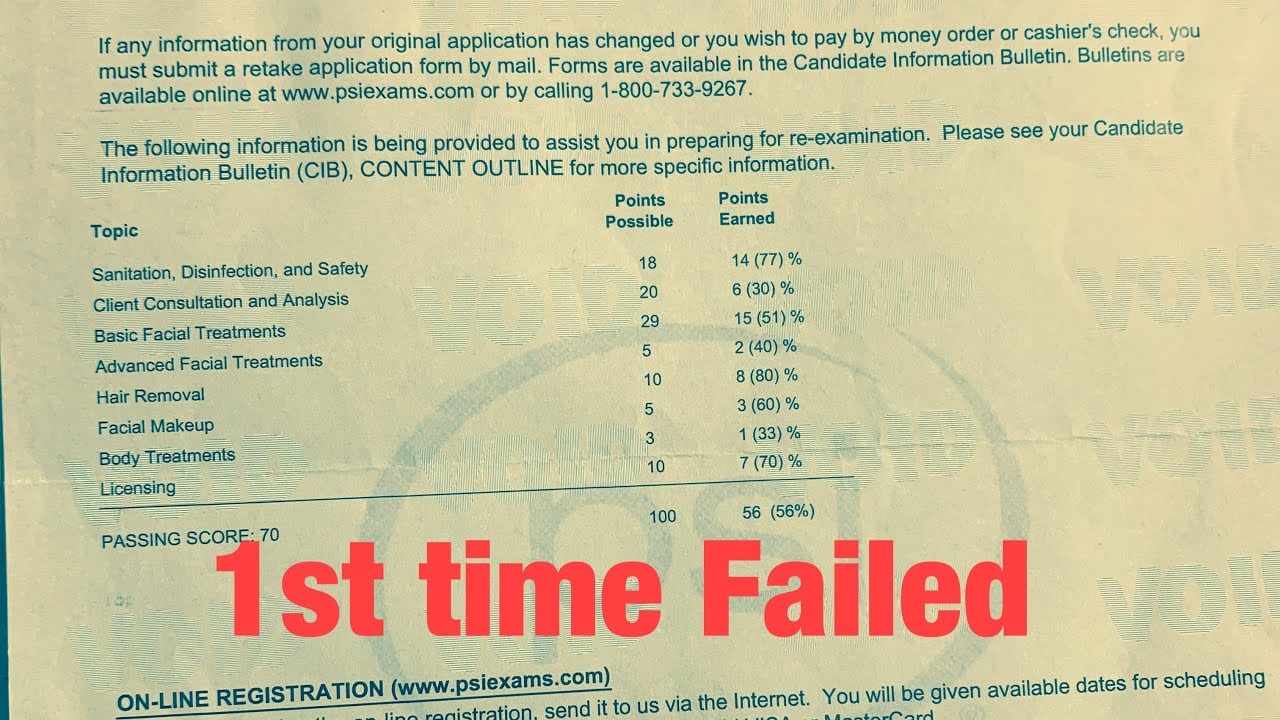
Score reports are state- and vendor-specific, so the exact layout (pass/fail only vs. detailed scoring) can differ depending on where you test and which company administers the exam in your state.
Pass/Fail
Most candidates look here first. Your state sets the passing standard and how results are reported.
Scored items vs. total questions
Some written exams may include items that do not count toward your final score (often used for test development). That’s why “total questions” and “scored questions” aren’t always the same.
Raw score
If your report shows a raw score, it typically reflects how many scored items you answered correctly (not necessarily out of every question you saw).
Scaled score
Some testing programs convert raw results into a scaled score. The scale and passing point are not universal—they’re set by your state/testing provider.
Percent correct
Some score reports show a percentage. Treat it as a performance summary, but don’t assume the same percent-to-pass applies everywhere—passing rules can differ by state.
Content-area feedback
If your report includes diagnostics by content area (domains/categories), use them to guide your study plan—prioritize the lowest areas first.
When you receive results
Timing depends on your state and testing provider. Computer-based written exams are often reported quickly, while practical exam results may be released later.
Retakes
Retake rules (waiting periods, fees, limits) are set by your state/testing provider. If you need to retest, check your exam portal for the current policy.
Esthetician Exam FAQs
Start with your state’s current Candidate Information Bulletin and confirm which NIC exams you must take (Theory, Written Practical, and/or hands-on Practical, plus any add-ons). Build a simple weekly plan, study from reputable esthetics texts, and use timed practice questions—especially for Theory and Written Practical.
Prioritize scientific concepts and how they apply in practice: infection control and safety, skin structure and function, skin conditions, basic chemistry, and how products/tools are used safely. Timed multiple-choice practice helps you build speed and accuracy.
Yes. The hands-on Practical is where you demonstrate safe, correct procedures. Examiners watch infection control, client protection, set-up, service flow, and clean-up/disposal. Practice until your steps are consistent under time limits.
It’s common. The best fix is preparation that feels real: take timed practice sets, do a full practical run-through with a timer, and simulate exam-day rules (no extra tools, no shortcuts). On test day, breathe, follow your routine, and keep moving.
For written exams: don’t get stuck—mark it, move on, and return if time allows. For the hands-on Practical: rehearse with a timer so each section has a clear pace and you don’t rush infection control steps.
Bring the required ID and any documents your exam portal lists. For the hands-on Practical, bring only the required kit items and supplies—organized and ready to access quickly. Follow your state/testing provider rules for labeling and prohibited items.
It varies by state and testing provider. Written exams are often reported quickly, while hands-on Practical results may take longer. Check your exam portal for the official timing and delivery method.
Use your score report (and any diagnostic feedback) to target the lowest areas first, then retest when eligible under your state’s rules. Most retakes are won by tightening fundamentals: infection control, contraindications, and consistent service steps.
Test Tips
Follow these tips to stay on track for the NIC Esthetics exams (and your state’s specific requirements).
Before you arrive
- Confirm your exam details: location, check-in time, required ID, and any required documents (from your exam portal/Candidate Information Bulletin).
- Plan to arrive early: aim for 30 minutes early so you’re not rushed.
- Pack only what’s allowed: written exams usually require just ID; the hands-on Practical may require a kit—follow your state/testing provider’s rules exactly.
During the written exams (Theory / Written Practical)
- Read directions first: know how to flag questions and navigate the system.
- Manage time: don’t get stuck—pick the best answer, flag it, move on.
- Use elimination: rule out clearly wrong options to improve odds.
- Review flagged items: if time remains, revisit only the questions you marked.
During the hands-on Practical
- Think “safety first” every step: infection control, client protection, and proper disposal are always evaluated.
- Work clean and organized: keep your station tidy and return items where they belong.
- Practice with a timer beforehand: so you can complete each section without rushing key safety steps.
Pro tip: kit readiness (hands-on Practical)
Your required supplies depend on your state and any add-on sections. Use your bulletin as the checklist, but many candidates find it helpful to pre-sort items by service type.
| Facial service basics | Makeup basics | Hair removal basics |
|---|---|---|
| Cleanser | Makeup products/tools (as required) | Tweezers |
| Cotton rounds / sponges / gauze | Applicators | Gloves |
| Toner/astringent (if used) | Sanitizable tools container | Wax/simulated product (if required) |
| Container for water | Disposables | Post-service soothing product (if used) |
| Gloves and disposables | Tissues/cotton | Disposables/applicators |
Administration
Test Location
NIC esthetics exams are administered through approved testing sites, but locations and available exam types depend on your state and testing provider. Use your state board/exam portal to find the nearest approved site.
Test Schedule
Availability varies by location. Written exams are often offered on many dates, while hands-on Practical appointments may be less frequent. Schedule early if you need a specific date.
Test Format
- Written exams (Theory + Written Practical): computer-based, multiple-choice
- Practical exam: in-person, hands-on demonstrations in a simulated testing environment (timed sections)
Test Materials
- Written exams: typically only valid ID and any required authorization details listed in your exam portal.
- Hands-on Practical: you usually bring a kit that meets your state/testing provider requirements. Personal items, notes, and unauthorized electronics are generally prohibited.
Cost
Exam fees are state-specific and often charged per exam type (Theory, Written Practical, Practical, and any add-on sections). Check your exam portal for current pricing and rescheduling rules.
Retake Policy
Retake rules vary by state/testing provider and may include waiting periods, limits, and additional fees. Always follow your exam portal’s current retake policy.
Test Provider
The National-Interstate Council of State Boards of Cosmetology (NIC) develops the national exams that many states use for esthetics licensure. The goal of NIC testing is to support public health and safety by measuring entry-level knowledge and skills.
Even when a state uses NIC exams, the state board (and its contracted testing provider) controls key details such as:
- Which NIC exam(s) are required (Theory, Written Practical, Practical, and any add-ons)
- Eligibility rules and registration steps
- Fees, retake policies, and score reporting timelines
- Practical exam logistics (model/mannequin rules, kit requirements, prohibited items)
NIC also develops national exams for other related licenses, such as cosmetology, nail technology, and barbering.
Information Sources
- National-Interstate Council of State Boards of Cosmetology (NIC)
- Professional Beauty Association (PBA)
- American Association of Cosmetology Schools (AACS)
- Your State’s Licensing Board (URL varies by state; search for your state’s cosmetology board website for specific information)
NIC develops the national esthetics exams used by many states, but your state board and testing provider set the requirements you must follow (which exam(s) you need, registration, fees, retakes, and exam-day rules). For studying, use reputable esthetics education resources—such as Milady and Pivot Point—alongside your state’s current Candidate Information Bulletin.
Disclaimer – All information and preparation materials on iPREP are provided for tutoring and educational purposes only. iPREP is not affiliated with, endorsed by, or sponsored by the National-Interstate Council of State Boards of Cosmetology (NIC) or any state licensing board, testing provider, or publishers referenced on this page. All trademarks and names are the property of their respective owners.
Free NIC Esthetics State Board Exam practice test: Get familiar with the NIC Esthetics exam format by practicing with sample questions for the Theory and Written Practical exams.
Quick links:
Free Sample Esthetics Theory Exam Questions
These sample questions and explanations are designed to help you prepare for the Esthetics Theory Exam by understanding the type of knowledge that is expected and the reasoning behind the correct answers.
Question 1 of 4
What is the primary purpose of using a toner after cleansing the face during a facial treatment?
- To remove any remaining cleanser or makeup.
- To balance the pH level of the skin.
- To exfoliate the skin.
- To moisturize the skin.
The correct answer is b.) To balance the pH level of the skin.
Explanation:
- The correct answer is (b) because toners are formulated to balance the pH level of the skin after cleansing, which can sometimes alter the skin’s natural pH.
- Option (a) is incorrect because while toners can help remove traces of cleanser or makeup, their primary purpose is to balance the skin’s pH.
- Option (c) is incorrect because exfoliation is not the primary purpose of a toner; exfoliation is usually achieved through scrubs or chemical exfoliants.
- Option (d) is incorrect because, while some toners have moisturizing ingredients, their primary purpose is not to moisturize but to balance the skin’s pH.
Question 2 of 4
Which skin layer is responsible for producing melanin?
- Epidermis
- Dermis
- Subcutaneous
- Stratum Corneum
The correct answer is a.) Epidermis
Explanation:
- The correct answer is (a) because the melanin is produced in the basal layer of the epidermis by melanocytes.
- Option (b) is incorrect because the dermis is primarily responsible for the skin’s structure and does not produce melanin.
- Option (c) is incorrect because the subcutaneous layer is mainly composed of fat and does not produce melanin.
- Option (d) is incorrect because the stratum corneum is the outermost layer of the epidermis and does not produce melanin.
Question 3 of 4
What is the primary purpose of using steam during a facial treatment?
- To soften the skin and open the pores.
- To dry out the skin.
- To close the pores.
- To exfoliate the skin.
The correct answer is a.) To soften the skin and open the pores.
Explanation:
- The correct answer is (a) because steam helps to soften the skin and open the pores, which makes it easier to perform extractions and allows products to penetrate deeper into the skin.
- Option (b) is incorrect because steam adds moisture to the skin, it does not dry it out.
- Option (c) is incorrect because steam actually opens the pores, not closes them.
- Option (d) is incorrect because steam does not exfoliate the skin.
Question 4 of 4
Free NIC Esthetics State Board Exam practice test: Get familiar with the NIC Esthetics exam format by practicing with sample questions for the Theory and Written Practical exams.
- Hyperpigmentation
- Vitiligo
- Albinism
- Melasma
The correct answer is b.) Vitiligo
Explanation:
- The correct answer is (b) because Vitiligo is a skin condition where patches of skin lose their pigment.
- Option (a) is incorrect because hyperpigmentation is characterized by darkening of theskin, not loss of pigment.
- Option (c) is incorrect because albinism is a genetic condition where there is little or no production of melanin throughout the entire body, not just patches.
- Option (d) is incorrect because melasma is characterized by brown patches on the face, usually due to hormonal changes, and is not a loss of pigment.
Free Sample Esthetics Written Practical Exam Questions
These sample questions and explanations are designed to help you prepare for the Esthetics Practical Written Exam by understanding the type of knowledge that is expected and the reasoning behind the correct answers.
Question 1 of 4
During a facial treatment, what is the most appropriate action to take if a client reports discomfort or a burning sensation after the application of a product?
- Ignore the client’s complaint and continue with the treatment.
- Immediately remove the product and apply a soothing agent.
- Apply more of the product to neutralize the reaction.
- Ask the client to wait for a few minutes to see if the sensation subsides.
The correct answer is b.) Immediately remove the product and apply a soothing agent.
Explanation:
- The correct answer is (b) because if a client reports discomfort or a burning sensation, it is essential to immediately remove the product to prevent any potential skin damage or allergic reaction and apply a soothing agent to calm the skin.
- Option (a) is incorrect because ignoring the client’s discomfort can lead to skin damage and is unprofessional.
- Option (c) is incorrect because applying more of the product could exacerbate the reaction.
- Option (d) is incorrect because waiting could allow the reaction to worsen.
Question 2 of 4
What is the primary purpose of using a Wood’s lamp during a skin analysis?
- To exfoliate the skin.
- To moisturize the skin.
- To remove blackheads and whiteheads.
- To detect hyperpigmentation and other skin irregularities not visible to the naked eye.
The correct answer is d.) To detect hyperpigmentation and other skin irregularities not visible to the naked eye.
Explanation:
- The correct answer is (d) because a Wood’s lamp uses ultraviolet light to illuminate skin irregularities, such as hyperpigmentation, that are not visible under normal lighting conditions.
- Option (a) is incorrect because a Wood’s lamp is not used for exfoliation.
- Option (b) is incorrect because a Wood’s lamp does not moisturize the skin.
- Option (c) is incorrect because a Wood’s lamp is not used for extractions.
Question 3 of 4
During a makeup application, what is the purpose of bracing?
- To apply more pressure during application.
- To blend makeup more effectively.
- To stabilize the hand for precise application.
- To prevent the product from smudging.
The correct answer is c.) To stabilize the hand for precise application.
Explanation:
- The correct answer is (c) because bracing involves resting a part of the hand against the client’s face to stabilize it, allowing for more precise and controlled makeup application.
- Option (a) is incorrect because bracing is not about applying pressure but about control.
- Option (b) is incorrect because bracing is not specifically for blending.
- Option (d) is incorrect because bracing is for control and precision, not specifically for preventing smudging.
Question 4 of 4
What is the first step to take in case of blood exposure during a service?
- Ask the client to clean the wound themselves.
- Apply makeup to cover the wound and continue the service.
- Continue the service and clean the blood after completing the service.
- Immediately stop the service, clean the wound, and put on gloves before continuing.
The correct answer is d.) Immediately stop the service, clean the wound, and put on gloves before continuing.
Explanation:
- The correct answer is (d) because in case of blood exposure, it is essential to immediately stop the service, clean the wound, and put on gloves to prevent contamination and ensure the safety of both the client and the practitioner.
- Option (a) is incorrect because it is the responsibility of the practitioner to ensure that the wound is properly cleaned and that safety procedures are followed.
- Option (b) is incorrect because applying makeup to a wound is not a proper response to blood exposure and can lead to infection.
- Option (c) is incorrect because continuing the service without addressing the blood exposure can lead to contamination and is not in compliance with standard safety procedures.
Free Practical Exam Sample
This sample shows the “practical mindset” you need on test day: clean setup, correct sequence, continuous sanitation, and client protection. You’re not trying to be fancy—you’re trying to be safe, consistent, and easy to grade.
Practical Sample
What’s the simplest “no-deductions” routine to follow on the Practical exam—before you begin, during the service, and at the finish?
Goal: Clean setup → correct sequence → continuous sanitation → clean finish.
Before you begin (10-second check):
- Disinfect station
- Separate clean vs used area
- PPE ready
- Client draped/protected
- Supplies laid out (no rummaging mid-service)
During the service:
- Follow the steps in order (no skipping/backtracking)
- Sanitize hands after any contamination moment
- Used items go straight to trash/container (never back on the station)
Finish:
- Dispose single-use items
- Store reusables for disinfection
- Disinfect station and reset clean
Common “score-killers”:
- Touching hair/phone/face and continuing without sanitizing
- Mixing clean and used items on the same surface
- Jumping steps or “fixing” by backtracking
Sample Flashcards
About the course
Includes 15 practice tests (11 full-length simulations)
50 Learning hours · 15 Practice tests · 943 Questions · 930 Flashcards
This course follows the NIC-style exam pathway: Theory, Written Practical, and (when required) the hands-on Practical Exam, plus state-dependent add-ons. You’ll review core concepts, then apply them with targeted practice before moving into full mock tests. Throughout, the focus stays on infection control, client protection, and choosing the safest, most correct procedure.
Skills you will learn
Infection control · Procedure sequencing · Client safety · Skin assessment · Consultation and contraindications · Facial services fundamentals · Hair removal safety · Makeup sanitation
Curriculum
Course Introduction
- Baseline assessments across exam types
- Timed and practice modes included
- Practical readiness check before mocks
Theory Study Guide & Subject Refresh
- Scientific Concepts — anatomy, physiology, chemistry, skin disorders
- Skin Care & Services — consultation, facial sequence, equipment
- Theory Summary & Flashcards — reinforce high-yield concepts
- Esthetics – Theory Practice Test — timed, practice modes
Written Practical Study Guide & Subject Refresh
- Setup, Sanitation, Draping, Room/Client Prep — setup rules
- Client Prep & Basic Facial — cleansing to finishing
- Waxing, Makeup, Blood Exposure — safety decisions
- Written Practical Summary & Flashcards — key procedures review
- Esthetics – Written Practical Practice Test — scenario practice
Practical Study Guide & Step-by-Step Prep
- The 6 Core Practical Sections + Timing Strategy — station flow
- Practical Scoring & Common Mistakes — what graders want
- Disinfection, Safety, and Automatic-Fail Prevention — avoid critical errors
- Kit Prep, Setup Flow, and Test-Day Checklists — ready routine
- Practical Summary & Flashcards — quick sequence refresh
- Esthetics – Practical Practice Test — scenario reinforcement
State-Dependent Add-Ons
- Microdermabrasion — equipment basics and precautions
- Eyelash Enhancement — safe procedures, contraindications
- Upper Lip Hard Wax — technique and sanitation
- State-Dependent Add-Ons Summary & Flashcards — rapid review
- Esthetics – State-Dependent Add-Ons Practice Test — targeted practice
Mock Tests
- Theory Mock Tests — realistic timed and practice mocks
- Written Practical Mock Tests — scenario timed and practice mocks
- Practical Final Readiness Walkthrough — full run-through checklist
Post-Mock Test Analysis
- Diagnose misses: knowledge, sequence, safety
- Target weak areas with focused review
- Build a repeatable test-day approach
Course Conclusion & Resources
- Final wrap-up and next steps
- Key resources for continued review
Reviews

Vanessa W*********
November 29, 2025 at 8:44 PM
IPrep is by far the best exam prep I've ever used and I've tried lots of different ones. It helped me so much preparing for my Esthetics State Board Exam!!
Shirley A*****
November 17, 2025 at 11:06 PM
Great way to study and learn. Especially breaking things down to remember the things I don’t know very well. Having a review before the questions is very helpful as well
shanae p****
October 22, 2025 at 7:02 PM
This IPREP has been so so helpful and doesn't feel overwhelming when studying their tools for your exam. I highly recommend this to get yourself even more prepared ahead of time. 🙂
Erika Gabriela R***************
September 8, 2025 at 6:22 AM
me esta encantando esta forma de prepararme para el examen.. me siento muy segura y se que me ira super bien. Esta bastante claro y las retroalimentaciones me hacen entender los pocos errores que se generan en los examenes
Gloria T******
August 24, 2025 at 10:06 PM
I purchased this course a month ago, but I wasn’t able to study right away because I’ve had so much work. I recently started going through the material, and my exam is on the 11th of next month. I’m feeling a bit nervous, but I’m so glad I have this course to help me prepare.💪🏼
Hailey m****
August 12, 2025 at 10:35 PM
Amazing i feel actually confident for my test !!!!! It goes in depth and helps you do more than just memorize
Abeer A*********
July 23, 2025 at 12:02 AM
really, I was looking for something to wake up my study appetize after long time no study no book, found it
Kayla M*****
June 29, 2025 at 6:23 PM
Easy to use anywhere, good questions, affordable product you can open anytime. Good resource with relevant information to help pass your test.
Aliyah V******
June 19, 2025 at 5:20 AM
I have been using Iprep since April 2025 studying for this exam and I have never been more impressed with how much I have learned and all the things I needed a refresher on! definitely very helpful and gives detailed answers and information
Starlyn C******
May 14, 2025 at 11:48 AM
This app is great for relearning everything you need to know. Helps you prepare for the test and have good test to study.