Reviewed by Tamir Rubin, Head of Product at iPREP • Updated February 2026
PELLETB Sample Question
Choose the sentence that is most clearly written:
- A. The cat chased its tail spinning around in the living room.
- B. In the living room, the cat spun around as it chased its tail.
Clarity Questions
Assesses: sentence clarity
- Choose clearer sentence from pair
- Spot wordiness and awkward phrasing
- Fix fragments, run-ons, modifiers quickly
- Improve grammar for clear meaning
Vocabulary Questions
Assesses: word meaning
- Pick best synonym for underlined
- Use context clues within sentence
- Distinguish close meanings and usage
- Focus on common work-related language
Spelling Questions
Assesses: spelling accuracy
- Select correct spelling in context
- Compare similar options quickly, carefully
- Apply common rules, prefixes, suffixes
- Notice homophones and letter order
Reading Comprehension Questions
Assesses: text understanding
- Read passage, answer multiple-choice items
- Locate stated details and main ideas
- Infer meaning from provided information
- Make conclusions from provided evidence
- Manage time across longer passages
Test Duration
Total time: 135 minutes (2 hours 15 min) • 65–78 questions
Taken in one sitting in two parts: Writing Ability (Clarity, Spelling, Vocabulary) followed by Reading Ability (Reading Comprehension). Pace steadily, skip time-sinks, and revisit later if allowed.
Test Breakdown & Sample Questions
The PELLETB is administered in two parts, taken one after the other in the same session:
1) Writing Ability:
- Clarity
- Spelling
- Vocabulary
2) Reading Ability:
- Reading Comprehension
The table below outlines the sections and the official item ranges:
| Section | sub-section | Description | Number Of Items |
|---|---|---|---|
| Writing Ability | Clarity | Applicants select the sentence that is most clearly written from a pair of options. | 15–18 Items |
| Spelling | Applicants select the correct spelling of a word from a list of options. | 15–18 Items | |
| Vocabulary | Applicants select the correct meaning of a word from a list of options. | 15–18 Items | |
| Reading Ability | Reading Comprehension | Applicants read a passage and answer questions about the passage’s content. | 20–24 Items |
Note: The CLOZE sub-test is no longer part of the PELLETB (effective January 1, 2025).
1. Writing Ability Section
Each of the three writing sub-tests contains 15–18 items. Let’s take a closer look at each sub-test individually.
Clarity Sub-section
In the Clarity sub-test, applicants are presented with pairs of sentences and must select the sentence that is most clearly written. This sub-test focuses on recognizing common writing problems that reduce clarity, such as awkward or confusing wording, wordiness, and errors in sentence structure.
Clarity Sample Question
Choose the sentence that is most clearly written:
A. While walking to the store, the rain began to pour heavily.
B. The rain began to pour heavily while I was walking to the store.
Correct answer: B
Explanation:
A. This sentence has a misplaced modifier (“While walking to the store…”) that incorrectly suggests the rain was walking to the store.
B. This sentence is clear and correctly identifies the person as the one walking to the store.
Spelling Sub-section
In the Spelling sub-test, applicants choose the correctly spelled word from a list of options. Each question presents several spellings of the same word, and the test-taker selects the correct spelling.
Spelling Sample Question
The apple pie has a wonderful __________ that fills the room.
- sent
- scent
- cent
- sents
The correct answer is B. scent
Explanation:
- A “sent” is the past tense of the verb “send.”
- B “scent” refers to a distinct smell, especially one that is pleasant. It is the correct word in this context.
- C “cent” is a unit of currency.
- D “sents” is not a recognized English word.
Vocabulary Sub-section
In the Vocabulary sub-test, applicants select the option that best matches the meaning of a given word. The questions are multiple-choice and focus on general English vocabulary used in everyday reading and writing.
Vocabulary Sample Question
Choose the word that has the same meaning as the underlined word:
The suspect was evasive during the interrogation.
- eager
- honest
- avoidant
- aggressive
The correct answer is C. avoidant
Explanation:
- A “eager” means having a sharp or keen interest, which is opposite to the context of the highlighted word.
- B “honest” indicates truthfulness and is not synonymous with “evasive.”
- C “avoidant” closely matches the meaning of “evasive,” which implies deliberately avoiding or being unclear.
- D “aggressive” indicates a confrontational or hostile behavior, which does not match “evasive.”
2. Reading Ability Section
This section contains 20–24 items. Passages can vary in length from a single paragraph to one page. After reading, applicants answer multiple-choice questions based only on the information provided in the passage.
Reading Comprehension Sample Question
Detective Garcia entered the room, immediately noting the shattered vase by the fireplace and an open window, with the curtain flapping in the brisk evening breeze. The room was in disarray, with papers scattered everywhere and a drawer left ajar. It was clear to her that the house had been hastily searched by someone.
Question: Which of the following observations made by Detective Garcia suggests that someone had gone through the room’s contents?
- The brisk evening breeze
- The shattered vase by the fireplace.
- The curtain flapping near the open window.
- Papers scattered everywhere and a drawer left ajar.
The correct answer is D. Papers scattered everywhere and a drawer left ajar.
Explanation:
- A is incorrect; the brisk evening breeze is unrelated to the room’s contents.
- B is incorrect; while the shattered vase indicates a disturbance, it doesn’t directly suggest someone searched through the room’s contents.
- C is incorrect; the flapping curtain indicates an open window but not that someone went through the room’s items.
- D is correct; scattered papers and an open drawer indicate that someone likely went through the room’s contents.
Did you know?
The PELLETB is a written exam that measures reading and writing ability. It takes 2 hours and 15 minutes to administer (including instructions and exam time) and is given in two parts: Writing Ability (Clarity, Spelling, Vocabulary) and Reading Ability (Reading Comprehension), with 65–78 items total.
Preparation Strategies
Improving reading and writing skills takes consistent practice over time. Preparation resources such as iPREP can help you identify language-related weaknesses and build effective habits to address them.
Preparation Tips for Each Test Component:
Clarity:
Focus on choosing the sentence that is most clearly written. Watch for common issues that reduce clarity, such as awkward phrasing, wordiness, vague wording, and sentence structure errors.
Vocabulary:
Read regularly and build vocabulary through context. Avoid memorizing long word lists; instead, pay attention to how words are used in sentences. If you see an unfamiliar word on the test, use context clues to narrow down the best meaning.
Spelling:
There is no official word list to memorize. Improve by practicing common spelling patterns and rules (prefixes/suffixes, plurals, commonly confused spellings) and by reading carefully for small differences between options.
Reading Comprehension:
Read the question first so you know what to look for, then read the passage closely. Base your answers only on information stated or implied in the passage, not on outside knowledge.
Test Features
Where PELLETB Fits in the Hiring Process
The PELLETB (POST Entry-Level Law Enforcement Test Battery) is one step that many California law enforcement agencies and academies use as part of their peace officer selection process. Agencies may structure hiring slightly differently, but a typical process includes:
- Application
- Written Exam (Reading and Writing Assessment / PELLETB or another validated test)
- Physical Ability Test
- Oral Interview
- Background Investigation (including personal history statement, fingerprinting, and related steps)
- Medical Evaluation
- Psychological Evaluation
Who Uses PELLETB?
Many agencies and academies use the PELLETB as an indicator of readiness for a law enforcement career. Because requirements vary, candidates should confirm directly with the specific agency or academy they are applying to whether they require the PELLETB and how to schedule it.
Technical Facts
Fast Facts (tl:dr)
- Measures reading and writing ability.
- 2 hours 15 minutes total.
- Two parts: Writing, Reading.
- Four sections (3+1).
- Paper-and-pencil only (proctored).
- Administered by authorized CA agencies.
- Passing score varies by agency.
Eligibility Criteria
Eligibility requirements are set by the hiring agency (and can vary by department and position). Always rely on the specific job announcement or recruiting unit for the official requirements. Common requirements many agencies include are: minimum age, legal work status, education (high school diploma/GED or higher), a background suitable for law enforcement employment, and a valid driver’s license.
Common and Past Names of The Test
- POST Entry-Level Law Enforcement Test Battery
- PELLET-B
- POST Written Exam/Test
- POST Reading and Writing Test
- POST Written (PELLETB)
- POST Written – PELLETB Exam
PELLETB Test Registration
To take the PELLETB, you generally register through the agency or academy that is hiring or testing (there isn’t one universal statewide registration portal).
- Contact the law enforcement agency and/or basic training academy you’re applying to.
- Ask whether they administer the PELLETB and how to schedule it.
- Follow that agency’s instructions for registration, location, date, fees (if any), and required paperwork.
- Keep a copy of any confirmation or instructions they provide.
Retake Policy
If you don’t pass (or want a higher score), you must wait at least 30 calendar days before retaking the PELLETB. You can retest on the 31st day after your last test date. If you retake the exam before the 30-day waiting period is over, your score may be invalidated.
Results Scale and Interpretations
How Is the Exam Scored?
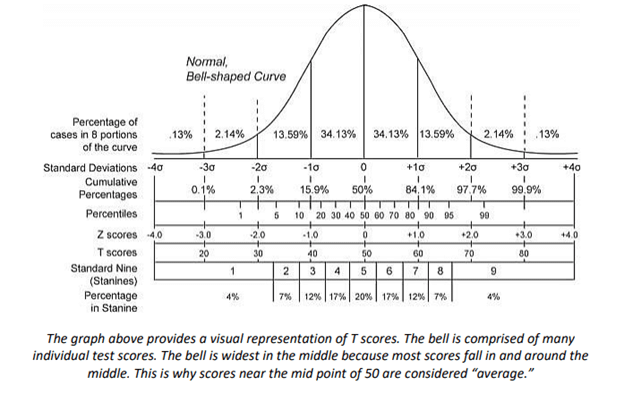
When POST scans test responses electronically, your raw score (the number of correct answers) is converted into a T-score. A T-score is a standardized score plotted on a bell-shaped curve with an average of 50 and a standard deviation of 10.
- A score around 50 is considered average.
- A score of 40 or below is considered below average.
- A score of 60 or above is considered above average.
POST also notes that research has found that for every point above 42, the likelihood of successfully completing the academy increases.
How Long Is My PELLET B Score Good For?
A POST test score does not expire, and the department letter from a prior test administration can be provided to a potential employer. However, each department decides whether to accept an older score and what time limits (if any) it considers appropriate.
How Do I Get My Test Results?
POST does not provide test results directly to candidates. Your results are provided by the agency or academy that administered your exam (typically as a letter showing your T-score).
Allow time for the agency/academy to process the results (often up to about 30 days). If you still haven’t received results after that, contact the organization that administered your test. If needed, an authorized agency representative can contact POST on your behalf.
FAQs
The PELLETB (POST Entry-Level Law Enforcement Test Battery) is a written exam designed to measure reading and writing ability for entry-level peace officer candidates in California. It is administered in two parts: Writing Ability (Clarity, Spelling, Vocabulary) and Reading Ability (Reading Comprehension).
The PELLETB focuses on writing and reading skills. It covers Clarity, Spelling, Vocabulary, and Reading Comprehension. Questions are based on general English usage and reading passages, not law enforcement jargon or scenario-based reasoning.
The PELLETB takes 2 hours and 15 minutes to administer (including instructions and exam time).
Yes, you can prepare for the PELLETB test. There are various study guides and practice tests available online or through reputable providers that can help you familiarize yourself with the test format and content.
The passing score for the PELLETB test is determined by each law enforcement agency. Different agencies may have different passing score requirements, so it’s essential to check with the specific agency you are applying to for their passing score criteria.
You may retake the PELLETB, but you must wait at least 30 calendar days between attempts. You are eligible to retest on the 31st day after your most recent test date.
A POST test score does not expire, and you can provide the department letter from a prior administration to another agency. However, it is up to each department to decide whether it will accept a previous score or require a new test.
The appeal process for PELLETB test results may differ between agencies. If you believe there was an error in your test administration or scoring, you should follow the appeal procedures outlined by the POST.
No, the PELLETB test is just one part of the overall hiring process for law enforcement positions in California. Other requirements can include physical fitness tests, background checks, interviews, and psychological evaluations, among others. Each agency will have its specific hiring process.
Test Tips
Here are some additional guidelines for completing the test:
- Mark the correct line: Make sure each answer you bubble matches the correct question number on the answer sheet.
- Use a steady surface: Keep the answer sheet flat to avoid messy or unclear marks.
- Fill bubbles completely: Darken the circle fully and stay inside the bubble.
- Use pencil only: Use the provided pencil (don’t use pen or marker).
- Erase cleanly: If you change an answer, erase completely before marking a new choice.
- Answer every question: There’s no penalty for wrong answers, so make your best guess if you’re unsure.
- Manage your time: Don’t get stuck—skip tough questions and return later if needed.
- Read all choices: Compare options before selecting your answer.
- Stay focused: Ignore distractions and work carefully through the test.
Administration
- Test Administrators – The law enforcement agency or academy that is hiring (or testing) typically administers the PELLETB. Requirements and score standards can vary by agency.
- Test Schedule – Test dates and locations are set by the administering agency/academy.
- Test Format – Paper-and-pencil only (proctored).
- Test Materials – Bring a valid government-issued photo ID and follow the agency’s rules. Personal items are usually restricted, and pencils/materials are typically provided on site.
- Cost – POST does not charge a fee for the test, but the administering agency/academy may charge a fee to cover administration costs.
- Retake Policy – You must wait at least 30 calendar days before retaking the test (eligible again on the 31st day).
Test Provider
The PELLETB (POST Entry-Level Law Enforcement Test Battery) is a California POST exam used by authorized agencies to measure reading and writing ability for entry-level peace officer candidates. California POST establishes the reading and writing standard and manages the PELLETB program as part of its role in setting minimum standards for peace officer recruitment and training in California.
Information Sources
Disclaimer – Every tutoring guide and study guide on iPREP is written with the aim of offering assistance. iPREP is not affiliated with the PELLETB (POST Entry-Level Law Enforcement Test Battery) or the California Commission on Peace Officer Standards and Training (POST), or any other brands or organizations mentioned above.
Free PELLETB practice test: Get to know what the PELLETB Test will be like by practicing with these sample questions:
Clarity Questions
Question 1
Choose the sentence that is most clearly written:
A. The cat chased its tail spinning around in the living room.
B. In the living room, the cat spun around as it chased its tail.
Correct answer: B
Solution:
A. The wording is unclear and awkward (“chased its tail spinning”), which can confuse what is happening.
B. This sentence is clear and correctly describes the cat’s action.
Question 2
Choose the sentence that is most clearly written:
A. The teacher said that tomorrow’s test will be tough.
B. Tomorrow’s test, the teacher believes, will be tough.
Correct answer: A
Solution:
A. This sentence is direct and clear.
B. This sentence is understandable, but the inserted phrase (“the teacher believes”) makes it slightly less straightforward.
Spelling Questions
Question 1
The movie was a __________ of the original book.
- dilution
- dilettion
- deletion
- dilatation
The correct answer is A. dilution.
Solution:
- A “dilution” is a reduction in the strength, concentration, or quality of something, which makes sense in this context, implying the movie may not have lived up to the book.
- B “dilettion” is not a recognized English word.
- C “deletion” means removing something entirely, which isn’t the right context here.
- D “dilatation” refers to an enlargement, dilation, or stretching of a hole or a tube, not suitable in this context
Question 2
The cat tried to __________ the high shelf
- jump too
- jump two
- jump to
- jump tu
The correct answer is C. jump to
Solution:
- A “jump too” uses “too” in the sense of “also” or “excessively,” which doesn’t fit here.
- B “jump two” indicates a quantity, which isn’t the context here.
- C “jump to” indicates an action directed towards something, making it the correct choice.
- D “tu” is not a recognized English word.
Vocabulary Questions
Question 1
Choose the word that has the same meaning as the underlined word:
The officer conducted a thorough search of the vehicle.
- cursory
- incomplete
- comprehensive
- hasty
The correct answer is C. comprehensive
Solution:
- A “cursory” means a quick or superficial examination, which is opposite to “thorough.”
- B “incomplete” implies something not finished, which does not align with the detailed nature of “thorough.”
- C “comprehensive” means complete and detailed, synonymous with “thorough.”
- D “hasty” means done in a rush and does not equate to the deliberate detail of “thorough.”
Question 2
Choose the word that has the same meaning as the underlined word:
The evidence was deemed inadmissible in court.
- relevant
- unallowable
- credible
- dependable
The correct answer is B. unallowable
Solution:
- A “relevant” indicates something that is appropriate or applicable, which doesn’t describe “inadmissible.”
- B “unallowable” means not permitted, which aligns with the meaning of “inadmissible.”
- C “credible” refers to the believability or trustworthiness of something, which doesn’t equate to “inadmissible.”
- D “dependable” means reliable, which doesn’t match the context of “inadmissible.”
Reading Comprehension Questions
Officer Lopez received a call about a disturbance at Maple Street Park. Arriving on the scene, he saw a group of children playing near the pond, a woman reading a book on a bench, and two men having an animated discussion by the basketball court. The loud voices of the men attracted a small crowd of onlookers, clearly the source of the complaint. Officer Lopez approached the men, asking them to lower their voices and reminding them to be considerate of others.
Question 1
What was the primary reason for Officer Lopez’s visit to Maple Street Park?
- To warn children playing by the pond from drowning
- To put an end to a quarrel between two men.
- To watch out for a small crowd of onlookers.
- To make a routine patrol on Maple Street Park.
The correct answer is B. To put an end to a quarrel between two men.
Solution:
- A is incorrect; while children playing near the pond were observed by Officer Lopez, there’s no indication in the passage that his main reason was to warn them.
- B is correct; the disturbance call and the subsequent actions of Officer Lopez to approach the men and ask them to lower their voices indicates that the quarrel was the primary concern.
- C is incorrect; the small crowd of onlookers was a result of the men’s loud discussion, not the primary reason for Officer Lopez’s visit.
- D is incorrect; the passage states Officer Lopez was responding to a call, not making a routine patrol.
Question 2
What action did Officer Lopez take upon identifying the source of the disturbance?
- He separated the two men.
- He asked the men to leave the park.
- He joined the two men in their discussion.
- He asked the men to speak more quietly.
The correct answer is D. He requested the men to speak more quietly.
Solution:
- A is incorrect; there’s no mention in the passage of Officer Lopez separating the men.
- B is incorrect; Officer Lopez approached the men and asked them to lower their voices, but did not ask them to leave the park.
- C is incorrect; there’s no indication in the passage that Officer Lopez joined in the discussion.
- D is correct; Officer Lopez approached the men and asked them to lower their voices, indicating his request for them to speak more quietly.