Reviewed by Tamir Rubin, Head of Product at iPREP • Updated March 2026
TSA TAB (2D-3D) Sample Question
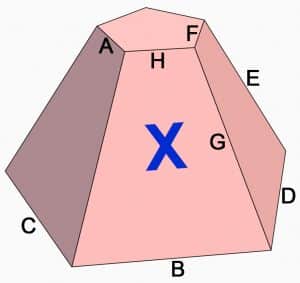
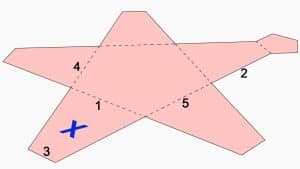
Select the pairs that correspond:
- 1 (A, B, C, D, E, F, G, H) : ?
- 2 (A, B, C, D, E, F, G, H) : ?
- 3 (A, B, C, D, E, F, G, H) : ?
- 4 (A, B, C, D, E, F, G, H) : ?
- 5 (A, B, C, D, E, F, G, H) : ?
The Legacy TSA Test
Length: ~2.5 hours
- Answer X-Ray Questions about prohibited items
- Use color-density cues to classify materials
- Judge if target object is present
- Answer Writing Skills Questions on English
The New TSA TAB Test (aka 2D-3D)
Length: 20–40 minutes
- 2D to 3D image mapping tasks
- Trail making (aka connect-the-dots) sequences
- Image recognition speed run comparisons
- Sections appear in randomized order
- Overall time varies by performance
Test Duration
Total time: Legacy Test: ~2.5 hours • TAB: 20–40 minutes
Confirm which version your location administers before test day, since timing and content differ. For TAB, finishing time depends on your speed and performance across sections.
Test Breakdown & Sample Questions
The Legacy Test (aka X-ray)
The legacy version of the test focuses predominantly on X-ray object recognition and English language proficiency, reflecting the day-to-day responsibilities of a TSO. As a prospective TSA officer, your ability to accurately and swiftly identify harmful and harmless objects is paramount. This skill is not only essential for your role but is also a significant part of the TSA Computer-Based Test (CBT), specifically the Screener Object Recognition Test.
This test assesses your ability to interpret X-ray images, a common task for TSA officers. To excel in this test, you’ll need to master several techniques that will aid in your object identification process. These techniques include understanding object colors, recognizing object shapes and sizes, and dealing with overlapping objects.
- Object Colors: In X-ray images, different materials are represented by different colors based on their composition and density. Organic materials, such as food, leather, or explosives, often appear as orange. Metals, which are denser, appear blue or green. Lighter materials like plastics, ceramics, or precious stones can appear in shades of black, gray, or sometimes green. By understanding these color codes, you can quickly identify the material composition of an object and determine if it’s potentially harmful.
- Object Shapes and Sizes: The shape and size of an object can provide crucial clues about its identity. For instance, a knife will have a distinctive shape, regardless of its orientation. Similarly, a gun will have a recognizable outline, whether it’s viewed from the side, top, or any angle. Familiarize yourself with the shapes and sizes of common prohibited items to enhance your object recognition skills. Remember, harmful objects can come in all sizes, so don’t dismiss something just because it’s small.
- Overlapping Objects: This is one of the trickier aspects of X-ray image interpretation. When objects overlap, their shapes and colors can blend, making identification more challenging. However, you can use the color and shape techniques mentioned above to piece together what each object might be. Look for distinctive features or parts of objects that aren’t obscured. Practice is key here; the more images you review, the better you’ll become at identifying objects, even when they overlap.
Key Techniques for Object Identification in the TSA CBT Test
| Technique | Description | Application |
|---|---|---|
| Object Colors | Different materials are represented by different colors in X-ray images based on their composition and density. | Understand the color codes to quickly identify the material composition of an object and determine if it’s potentially harmful. |
| Object Shapes and Sizes | The shape and size of an object can provide crucial clues about its identity. | Familiarize yourself with the shapes and sizes of common prohibited items to enhance your object recognition skills. |
| Overlapping Objects | When objects overlap, their shapes and colors can blend, making identification more challenging. | Look for distinctive features or parts of objects that aren’t obscured. The more images you review, the better you’ll become at identifying objects, even when they overlap. |
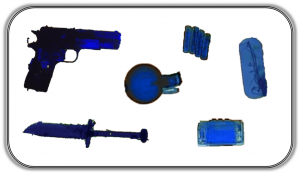
Source: iPREP
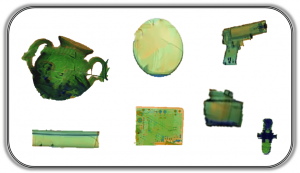
Source: iPREP
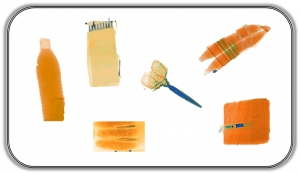
Source: iPREP
By mastering these techniques, you’ll be well-prepared to identify harmful and harmless objects in overlapping scenarios, ensuring the safety and security of travelers.
The TSA/TSO Assessment Battery (TAB) (aka 2D-3D)
The TSA/TSO Assessment Battery (TAB) represents a significant advancement in the evaluation of potential Transportation Security Officers (TSOs), focusing on the crucial skills needed in the fast-paced and technology-driven environment of airport security. Unlike its predecessor, TAB is designed to assess cognitive abilities, quick decision-making, and adaptability through three distinct sections:
- Trail Making (Connect-the-Dots): This innovative section tests a candidate’s problem-solving abilities and their capacity to logically and visually connect information. It measures cognitive flexibility and visual-motor tracking, challenging candidates to quickly link sequences or patterns under time constraints. This task mirrors the real-world necessity of piecing together disparate pieces of information to form a coherent security assessment.
- Image Recognition Speed Run: In this section, candidates are assessed on their ability to rapidly recognize and identify objects within images. It simulates the critical task of spotting potential threats in X-ray images, a staple in airport security screening processes. This part of the test emphasizes the importance of keen observation skills and the ability to make swift, accurate judgments, reflecting the high-stakes nature of a TSO’s responsibilities.
- 2D to 3D Image Mapping: This component uniquely evaluates spatial awareness and the understanding of how two-dimensional images translate into three-dimensional objects. Such a skill is vital for the effective interpretation of X-ray scans, enabling officers to accurately identify and assess potential threats concealed in luggage or on passengers. It tests a candidate’s capacity to visualize and mentally manipulate objects, a key skill in navigating the complexities of airport security.
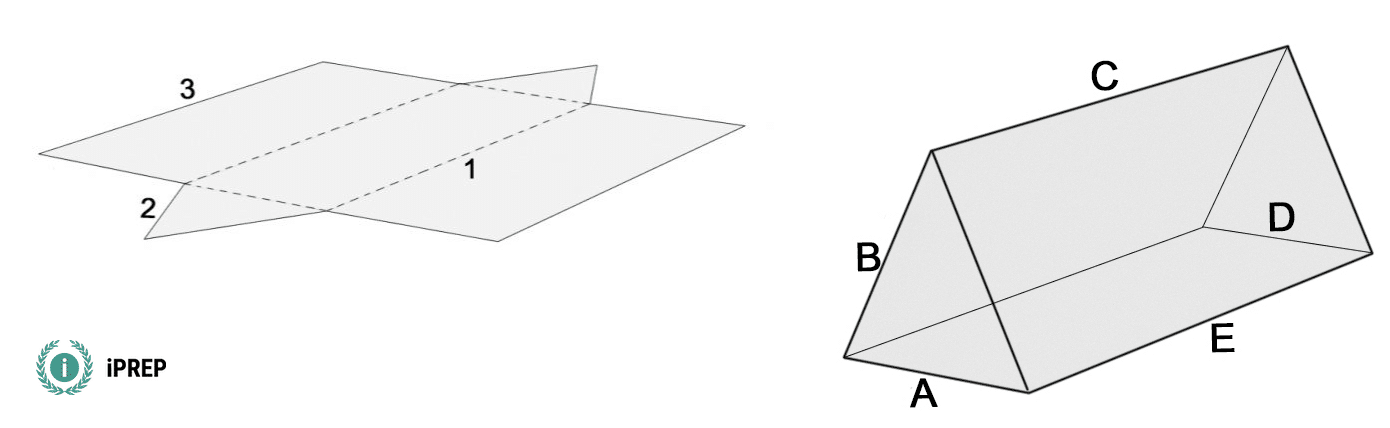
Each section of TAB is meticulously crafted to align with the critical competencies required of today’s TSOs, ensuring candidates are not only adept at traditional security procedures but are also prepared to meet the challenges posed by modern threats and evolving technology.
TSA Test Update!
From October 2022, the Transportation Security Administration (TSA) has altered the selection procedure for the Transportation Security Officer (TSO) post at several airports, while maintaining the previous “legacy” process (XRAY and English skills) at all other airports.
The new assessments will eventually be extended to all airports, replacing the legacy process. However, the selection process you encounter presently depends on the testing location. iPREP’s course now includes a study guide and simulations to cover the new assessment.
Preparation Strategies
Preparing for the TSA Test, whether you’re facing the legacy version or the new TSA/TSO Assessment Battery (TAB), requires a strategic approach to study and practice. Your success hinges not only on understanding the content but also on mastering the skills and techniques needed to navigate the test efficiently. Here’s how you can gear up for the challenge, ensuring you’re ready to demonstrate your potential as a future Transportation Security Officer.
- Understand the Test Format and Sections: Begin with a clear understanding of both the legacy and TAB formats. Knowing what to expect in each section allows you to focus your preparation effectively. Familiarize yourself with the types of questions and tasks you’ll encounter, especially the differences between the image interpretation skills required in the legacy version and the cognitive skills assessed in TAB.
- Develop a Study Schedule: Consistency is key. Allocate specific times for study and practice, ensuring you cover all test components. Balance your schedule to prevent burnout, mixing in easier study sessions with more intensive practice.
- Practice with Simulated Tests: Utilize practice tests that mimic the actual exam conditions. This not only helps you get accustomed to the test’s timing but also aids in applying theoretical knowledge in a practical, timed environment.
- Focus on Weak Areas: Identify your weaknesses early in your preparation. If spatial awareness or quick decision-making challenges you, dedicate more time to these areas. Tailoring your study to address these weaknesses can dramatically improve your performance.
- Enhance Your English Skills: For the legacy version, strong English language proficiency is essential. Engage in activities that improve your reading comprehension, vocabulary, and grammar. Regular reading, writing, and conversational practice can significantly benefit your test performance.
- Stay Physically and Mentally Fit: The stress of preparing for such an important test can be taxing. Incorporate regular physical activity and mindfulness practices into your routine to keep your mind and body sharp. Adequate rest, nutrition, and exercise can greatly affect your study efficacy and test performance.
- Review and Reflect: After each practice session, take time to review your answers, especially the incorrect ones. Understanding why you got an answer wrong is crucial to avoiding similar mistakes in the future. Reflection helps solidify learning and improves your problem-solving strategies.
Test Features
The TSA Tests, comprising both the legacy version and the new TSA/TSO Assessment Battery (TAB), are designed with specific features to evaluate the aptitude of candidates for the Transportation Security Officer (TSO) role. These tests assess various skills essential for ensuring the safety and security of travelers. Below, we delve into the main features of both tests, highlighting their unique purposes without encroaching on the technical specifics reserved for the following section.
Legacy TSA Test Features
- Dual Component Structure: The legacy test is bifurcated into the X-ray Object Recognition Test and the English Language Proficiency Test. This structure directly mirrors the primary responsibilities of a TSO, focusing on the identification of prohibited items in baggage and effective communication.
- Realistic Simulation: Through the use of X-ray imagery, the test simulates the actual challenges faced by TSOs, requiring candidates to quickly and accurately identify potential threats among everyday items.
- Comprehensive Language Assessment: The English component evaluates candidates on their grammar, spelling, reading comprehension, and written communication skills, ensuring they can effectively interact with the public and colleagues.
TSA/TSO Assessment Battery (TAB) Features
- Cognitive and Psychological Evaluation: TAB introduces a novel approach by incorporating tests that assess cognitive abilities, psychological readiness, and the potential for quick and effective problem-solving in high-pressure situations.
- Dynamic Assessment Format: Unlike the static format of the legacy test, TAB includes sections like Trail Making, Image Recognition Speed Run, and 2D to 3D Image Mapping, which are designed to evaluate a candidate’s adaptability, spatial orientation, and decision-making speed.
- Shorter Duration with Randomized Sections: The total duration of TAB ranges from 20 to 40 minutes, with sections presented in a randomized order to each candidate. This unpredictability adds an element of real-world challenge, mimicking the variable conditions under which TSOs operate.
Both versions of the TSA Test are tailored to identify individuals who not only possess the technical skills required for the role but also demonstrate the psychological resilience and cognitive flexibility crucial for adapting to the dynamic and sometimes stressful environment of transportation security. By focusing on a broad range of competencies, these tests ensure that candidates are well-rounded and prepared for the multifaceted responsibilities of a TSO.
Common names of the TSA Test
The TSA Computer-Based Test (CBT) is often referred to by several names, including:
- TSO Assessment Battery (TAB)
- TSA 2D-3D Test
- TSA CBT
- TSA Entrance Exam
- TSA Precheck Test
- TSA Screener Test
- TSA X-ray Test
- TSA English Proficiency Test
- TSA Officer Exam
- Transportation Security Officer (TSO) Exam
Transportation Security Officer (TSO)
Transportation Security Officers (TSOs) are employees of the Transportation Security Administration (TSA), a U.S. Department of Homeland Security agency. They’re crucial for maintaining safety in U.S. transportation systems, especially in airports.
TSOs primarily handle passenger, baggage, and cargo screening to detect dangerous items such as weapons or explosives. They enforce TSA regulations, respond to security incidents, and provide information and assistance to travelers. The job requires intensive training in security protocols, equipment operation, threat identification, and emergency management. It’s physically and mentally demanding, necessitating high vigilance and interaction with many people daily.
Technical Facts
The TSA Tests, including both the legacy format and the TSA/TSO Assessment Battery (TAB), are constructed with specific technical parameters designed to evaluate the suitability of candidates for Transportation Security Officer positions. These technical facts underscore the methodology, design, and logistical aspects of the assessments.
Legacy TSA Test Technical Facts
- Duration and Questions: The legacy test typically takes approximately 2.5 hours to complete. It comprises around 100 questions for the X-ray Object Recognition Test and about 30 questions for the English Language Proficiency Test.
- Scoring System: It utilizes a pass/fail scoring mechanism, where candidates must achieve a minimum standard in both components to succeed. The scoring criteria are benchmarked against predefined standards of competency required for TSA roles.
- Test Administration: Conducted in authorized testing centers, the legacy test is computer-based, ensuring consistent test delivery and objective scoring of candidates’ responses.
TSA/TSO Assessment Battery (TAB) Technical Facts
- Adaptive Testing Methodology: TAB uses an adaptive testing format, particularly in sections like the Image Recognition Speed Run, where the difficulty level of tasks can adjust based on the test taker’s performance.
- Duration and Format: The TAB’s duration ranges from 20 to 40 minutes, depending on the candidate’s responses and speed. This variability reflects the test’s design to measure efficiency and decision-making speed under pressure.
- Section Randomization: The order of sections within TAB is randomized for each candidate, a feature intended to simulate the unpredictable scenarios TSOs might face and assess adaptability and quick thinking.
- Pilot Phase Adjustments: Given that TAB is in a pilot or rollout phase, its components and scoring thresholds may be subject to adjustments. This flexibility allows the TSA to refine the test based on empirical data and evolving security needs.
Both the legacy TSA Test and TAB are administered electronically, ensuring a standardized testing environment across various locations. The emphasis on computer-based testing aligns with the technological competencies required in modern security roles, ensuring that candidates are tested in an environment reflective of their future job settings. These technical aspects provide a foundation for a fair, objective, and relevant assessment process, critical for identifying capable and adaptable security personnel for the TSA.
The DNXCT Test
The Digital National X-Ray Competency Test (DNXCT), administered by the UK Civil Aviation Authority (CAA) and the British International Freight Association (BIFA), is a critical certification for X-ray screeners in the aviation security industry. This test, which can take up to 1 hour and 45 minutes to complete, is designed to ensure that screeners meet the minimum performance standards required for their role.
The test has a pass mark of 80% and comes in three distinct versions, each tailored to a specific area of screening: cabin baggage, hold baggage, and air cargo and mail. It’s important to note that the DNXCT has replaced the older NXCT and is now the standard for X-ray screener certification in the UK.
- What is DNXCT? The DNXCT is a standardized image interpretation test that serves as the final step in the national certification of X-ray/EDS screeners in the UK. It’s designed to ensure that screeners meet the minimum standards and to mitigate risks associated with human error in the aviation security screening process.
- Test Environment: The DNXCT is a browser-based test that you’ll complete in a dedicated location, such as your workplace or a training facility. It’s important to note that the test must be supervised by a DNXCT test manager in person. Remote supervision or completion of the test is not allowed.
- Types of Tests: The DNXCT platform offers seven different tests, each catering to different categories of X-ray/EDS screeners. This ensures that the certification process is tailored to the specific role you’ll be performing.
- Who Needs Certification? If you’re involved in X-ray/EDS screening and make screening decisions, you’ll need to successfully complete the DNXCT as part of your certification. This applies to both screeners and supervisors. However, you can’t obtain certification speculatively; you must already be employed by an entity undertaking aviation security screening activities.
The DNXCT is not a training tool; it’s a pass/fail certification test designed to assess whether you meet the minimum standards as a screener. Approach it with seriousness and integrity, and you’ll be well on your way to becoming a certified X-ray/EDS screener in the UK.
Other Organizations Using X-Ray Assessment Tests
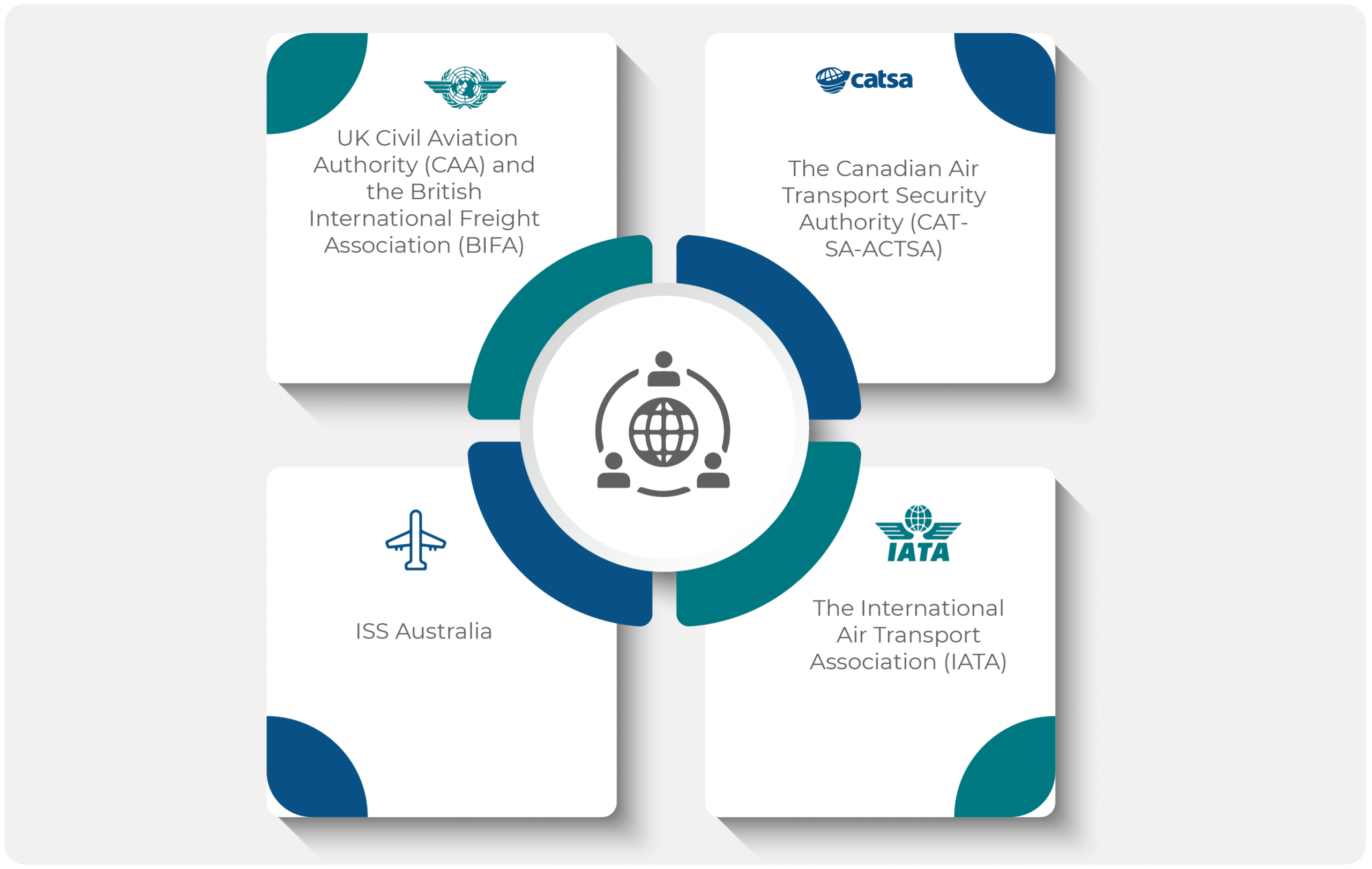
The US Transportation Security Administration (TSA) and the UK Civil Aviation Authority (CAA) are only two of many security authorities and agencies that administer an X-Ray ORT as part of their hiring process. There are a number of government and private organizations that make hiring decisions based on their candidates’ performance in X-Ray object recognition tests, including:
- The Canadian Air Transport Security Authority (CATSA-ACTSA) contracts three security firms that operate at airports across Canada and requires all of them to include an X-Ray threat identification test to any person they wish to employ as a pre-boarding screening officer. These firms are:
- GardaWorld Aviation Services in the Central Region and the Prairies Region
- Securitas Transport Aviation Security in the Eastern Region
- G4S Secure Solutions in the Pacific Region
- ISS Australia – a leading security firm in Australia, which partnered with Kedlin Screening International (KSI) to administer the X-Ray Screener Test to its prospective employees
- The International Air Transport Association (IATA) X-Ray Screening Test is administered by many of the 290 airline companies represented by this trade association. This online 25-minute x-ray image interpretation test has an 80% passing grade and is an important part of the training of security screeners in airports and cargo facilities.
Positions Requiring a TSA Test
Different agencies and organizations refer to the screener’s position in different names. If you are applying to any of these jobs, take into account that you will probably need to pass a pre-employment X-Ray recognition or TAB test as part of your recruitment process:
- Pre-Board Screening Officer Test
- Transportation Security Officer
- Airport Security Officer (ASO) / Airport Security Screener
- Cargo Screener / Security Screener / X-Ray Operator
- Security Screener Officer / Package Screener
- Aviation Screener
- Security Xray Screening Specialist
Main X-Ray Competency Tests Used Today
There are a number of different x-ray tests being used. While some of the details may differ, if you are trying to prepare for any of the following tests, you can use the practice tests offered here for any of the following tests:
- CASRA – Center for Adaptive Security Research and Applications in Switzerland – Which offers either the CASRA X-Ray ORT (Object Recognition Test), which is a gray-scale based images or CASRAX-Ray CAT (Competency Assessment Test), which is the full color version.
- Simulscan X-Ray CBT – Screening for aviation security and surveillance companies.
- Kedlin Screening International (KSI) – X-Ray Screener assessment
- VIA Project Aviation Security – Cabin Baggage Screening (CBS) and Hold Baggage Screening (HBS) tests.
- Additional in-house x-ray tests – tests like those developed by the TSA.
In the following sections, we’ll delve deeper into the results interpretation, frequently asked questions, and more. By understanding these technical facts and applying effective preparation strategies, you’ll be well-prepared to excel in the TSA CBT Test and your future role as a TSA officer.
Results Scale and Interpretations
Understanding your TSA CBT Test results helps you know what to expect after you finish the exam. Results are typically available within a few minutes. The TSA CBT uses an internal scoring process, but candidates are generally notified only of their status rather than a detailed numeric score report.
Legacy Version (SORT + SET)
Pass/Fail Status: You must pass both sections—the Screener Object Recognition Test (SORT) and the Screener English Test (SET)—to move forward in the TSA hiring process.
Scoring: Each section is scored separately. There are no penalties for wrong answers, so it’s best to answer every question.
TAB Version (Test Battery)
Pass/Fail Status: You must meet the passing standard for the TAB version used at your location. Candidates are typically notified whether they have passed or failed rather than receiving a detailed numeric score report.
Scoring: The TAB sections are scored based on correct responses. There are no penalties for wrong answers, so it’s best to answer every question.
Performance Categories
If you pass, you may be placed into a performance category such as Best Qualified, Highly Qualified, or Qualified. These categories are used to help prioritize candidates in the hiring process.
Score Interpretation
TSA does not publicly share the passing score. If performance categories are provided, they indicate relative standing—higher categories generally improve your chances of moving forward and being matched to available positions.
Interpreting the TSA CBT Test Results
| Result Component | What It Means |
|---|---|
| Pass/Fail Status | You are notified whether you passed or failed the version of the test you were given (Legacy or TAB). |
| Section Scoring | Sections are scored separately. There are no penalties for wrong answers, so answer every question. |
| Performance Categories | If used, categories such as Best Qualified, Highly Qualified, or Qualified indicate relative standing among candidates who passed. |
| Score Interpretation | Passing scores are not publicly shared. Candidates typically do not receive a detailed numeric score report. |
Your TSA CBT Test results can help you gauge readiness for the TSA role. A pass status indicates you met the required standard for that stage of hiring. If you do not pass, use the experience to identify weaker areas and focus your practice before you retake the test.
TSA Test FAQs
The TSA Test assesses a candidate’s suitability for the role of a Transportation Security Officer (TSO). Depending on your testing location, you may take either the legacy version (focused on X-ray/object recognition and English skills) or the TAB version (a test battery that measures speed, accuracy, attention, and visual/spatial processing). Overall, the goal is to evaluate job-relevant skills such as visual recognition, critical thinking, and making accurate decisions under time pressure.
There are two versions of the TSA Test. The legacy version includes the X-ray Object Recognition Test and an English Language Proficiency Test. The new TSA/TSO Assessment Battery (TAB) consists of three sections: Trail Making, Image Recognition Speed Run, and 2D to 3D Image Mapping, with a varying duration based on performance.
The TSA Test measures core skills needed for the Transportation Security Officer (TSO) role. The exact skills emphasized can vary by test version and location, but commonly include visual recognition, attention to detail, critical thinking, and making accurate decisions under time pressure. Some versions also assess English language skills, while others place more emphasis on speed and accuracy in visual and cognitive tasks.
The legacy test typically takes about 2.5 hours, while the TAB can take between 20 to 40 minutes, depending on the test taker’s performance.
Both versions of the test use a pass/fail scoring system. Candidates must meet or exceed the minimum standards in all sections to pass.
Yes, candidates can retake the test, but there may be a waiting period before reattempting. Check with the TSA or the test administration for specific policies.
Preparation should include practice with visual recognition tasks, critical thinking exercises, speed tests for image recognition, English language proficiency improvement, and familiarization with 2D to 3D image mapping.
Yes, passing the TSA Test is a prerequisite for moving forward in the application process for a TSO position. It is one of the initial steps in evaluating a candidate’s eligibility and suitability for the role.
Yes, the version of the test you will take depends on the airport where you are applying. Some locations use the legacy version, while others have transitioned to the TAB.
You are advised to inquire directly with your testing center or the TSA to determine which version of the assessment you will face, as this can vary by location and over time.
TSA Test Tips
- Arrive Early: Ensure you arrive at the testing center well before your scheduled time to avoid any last-minute stress and to familiarize yourself with the environment.
- Dress Comfortably: Choose comfortable clothing for the test day. Being physically comfortable can help you stay focused during the test.
- Read Instructions Carefully: Before each section, read the instructions thoroughly so you understand what to do and what to look for.
- Manage Your Time Wisely: Be aware of the time allocated for each section and pace yourself to ensure you can attempt all questions.
- Use Process of Elimination: For multiple-choice questions, eliminate the most obviously incorrect answers first to improve your chances of selecting the correct one.
- Stay Calm and Focused: Maintain a calm demeanor throughout the test. If you feel stuck, take a few deep breaths and move on to the next question, returning later if time permits.
- Review Your Answers: If time allows, review your answers to ensure you haven’t made any careless mistakes or overlooked any questions.
Administration
- The provided text has been adjusted to fit both the legacy TSA CBT and the new TSA/TSO Assessment Battery (TAB) formats, maintaining the original structure and subtitles:
- Test Location: Administered at designated centers nationwide, specific locations assigned upon scheduling.
- Test Schedule: Scheduled post-application and background check, with dates and times based on slot availability.
- Test Format: Both are computerized; the legacy test includes multiple-choice questions in two sections (SORT and SET), while TAB’s format is adapted to its unique sections.
- Test Materials: Provided at the center; personal items like pens and electronics are prohibited.
- Cost: No cost for applicants, covered by the TSA.
- Retake Policy: A six-month waiting period is required before retaking, allowing for skill improvement.
Test Provider
The TSA Tests are administered by the Transportation Security Administration (TSA), an agency of the U.S. Department of Homeland Security. Established in the aftermath of the 9/11 attacks in 2001, the TSA is responsible for security in all modes of transportation across the United States. The agency’s primary mission is to prevent terrorist attacks and reduce the vulnerability of the U.S. transportation system to terrorism.
Information Sources
- Transportation Security Administration
- U.S. Department of Homeland Security
- USAJobs (Official job site of the US Federal Government)
Disclaimer – All the information and prep materials on iPREP are genuine and were created for tutoring purposes. iPREP is not affiliated with the Transportation Security Administration, which is the owner of the TSA Tests.
Free TSA practice test: Get to know what the TSA test will be like by practicing with these sample questions:
1. New TSA Test Sample Questions:
- 1.1. 2D to 3D image mapping
- 1.2. Trail making (aka connect-the-dots)
- 1.3. Image recognition speed run
2. The Legacy TSA Test Sample Questions:
1. The New TSA TAB Test
1.1. 2D to 3D image mapping
2D-3D Question 1 of 3
Select the pairs that correspond:
- 1 (A, B, C, D, E, F, G, H) : ?
- 2 (A, B, C, D, E, F, G, H) : ?
- 3 (A, B, C, D, E, F, G, H) : ?
- 4 (A, B, C, D, E, F, G, H) : ?
- 5 (A, B, C, D, E, F, G, H) : ?
The correct answer is 1-B, 2-E, 3-H, 4-C, and 5-D.
These pairs correctly correspond.
Tips:
- Begin with the “X” as your starting point to figure out the rest of the shape.
- Look for the flat 2D face that matches the bottom of the 3D shape.
- If you need to, you can skip a question without it affecting your score negatively.
Please find an animated illustration below:
2D-3D Question 2 of 3
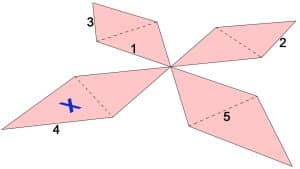
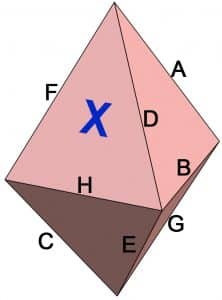
Select the pairs that correspond:
- 1 (A, B, C, D, E, F, G, H) : ?
- 2 (A, B, C, D, E, F, G, H) : ?
- 3 (A, B, C, D, E, F, G, H) : ?
- 4 (A, B, C, D, E, F, G, H) : ?
- 5 (A, B, C, D, E, F, G, H) : ?
The correct answer is 1-C, 2-A, 3-F, 4-D, and 5-B.
These pairs correctly correspond.
Tips:
- Begin with the “X” as your starting point to figure out the rest of the shape.
- Look for the flat 2D face that matches the bottom of the 3D shape.
- If you need to, you can skip a question without it affecting your score negatively.
Please find an animated illustration below:
2D-3D Question 3 of 3
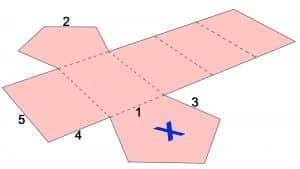
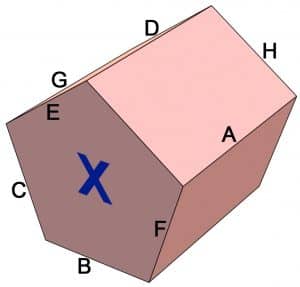
Select the pairs that correspond:
- 1 (A, B, C, D, E, F, G, H) : ?
- 2 (A, B, C, D, E, F, G, H) : ?
- 3 (A, B, C, D, E, F, G, H) : ?
- 4 (A, B, C, D, E, F, G, H) : ?
- 5 (A, B, C, D, E, F, G, H) : ?
The correct answer is 1-B, 2-H, 3-F, 4-C, and 5-G.
These pairs correctly correspond.
Tips:
- Begin with the “X” as your starting point to figure out the rest of the shape.
- Look for the flat 2D face that matches the bottom of the 3D shape.
- If you need to, you can skip a question without it affecting your score negatively.
Please find an animated illustration below:
1.2. Trail making (aka connect-the-dots)
TSA Trail making test
This section evaluates problem-solving, cognitive flexibility, and visual-motor tracking by testing how well candidates connect information and recognize patterns under time constraints. It reflects the real-world need to piece together information for accurate security assessments.
1.3. Image recognition speed run
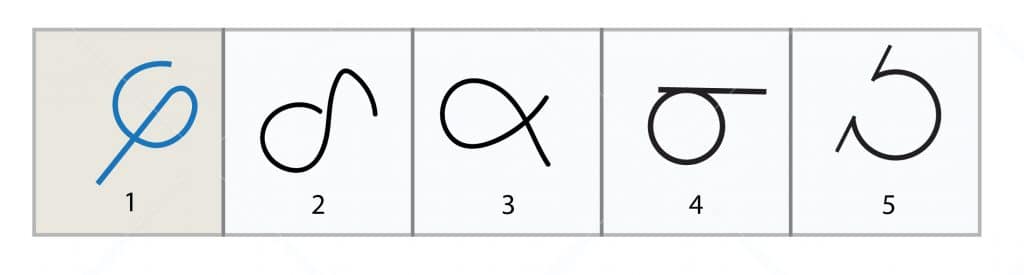
Image Recognition Question 1 of 2
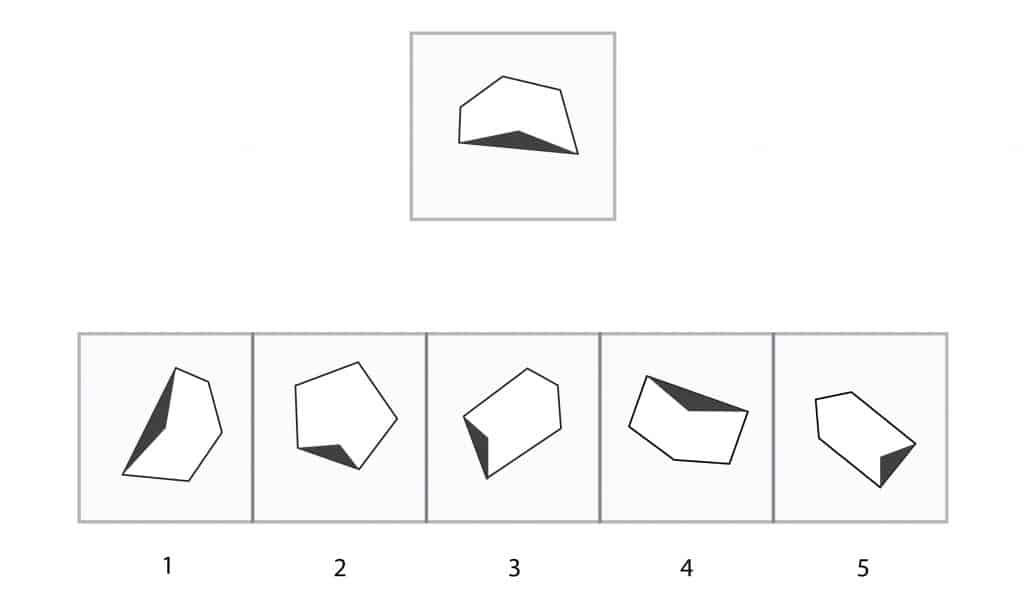
Which of the options below is identical to the shape above?
- 1
- 2
- 3
- 4
- 5
The correct answer is 1, which shows the original image, rotated.
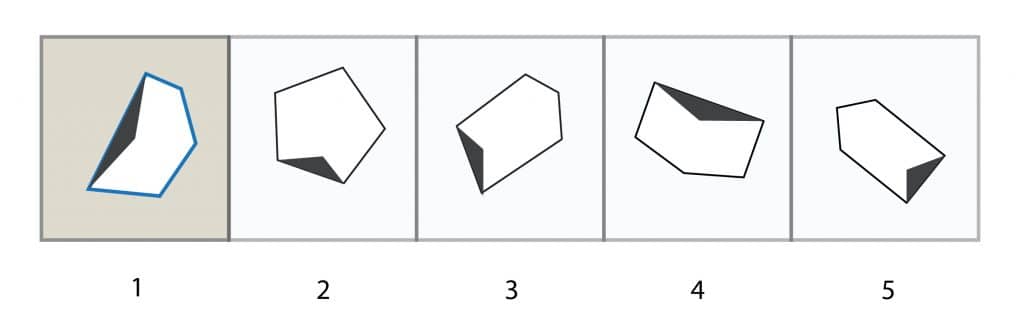
Image Recognition Question 2 of 2
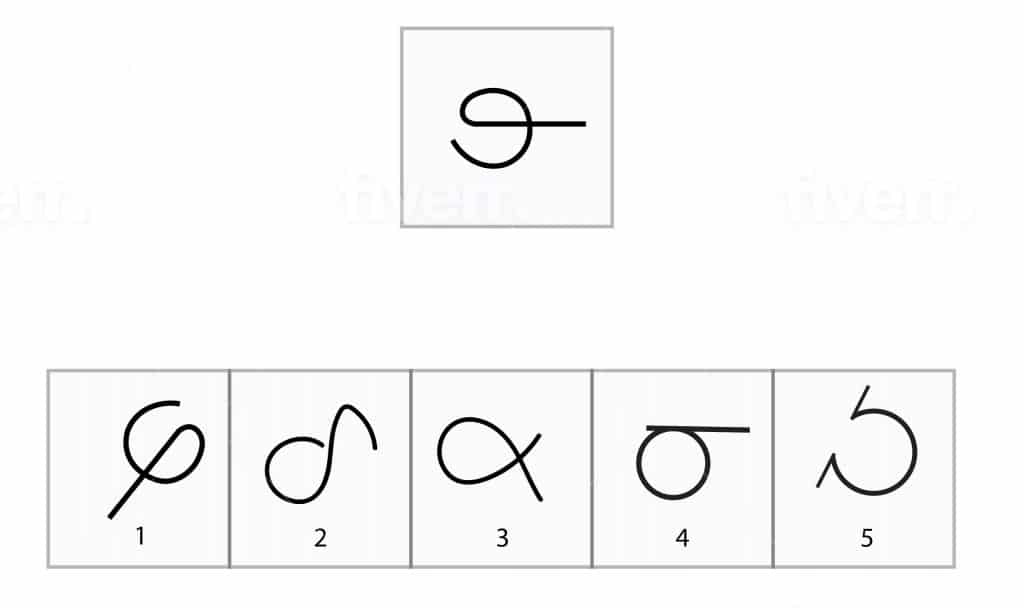
Which of the options below is identical to the shape above?
- 1
- 2
- 3
- 4
- 5
The correct answer is 1, which shows the original image, rotated.
2. The Legacy TSA CBT Test
2.1. X-Ray Questions
In this TSA CBT XRAY sample exercise, your goal is to recognize whether certain objects are found in the following pieces of luggage.
Each question will be preceded by an image showing the objects appearing through X-ray scanners. Study the examples before proceeding to the sample items.
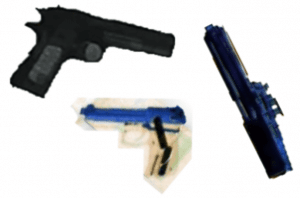
Guns
Guns appear distinct in X-ray scans due to their metal construction. The dense metal components, like the barrel and trigger mechanism, usually show up as dark blue or black, while lighter parts, such as grips made of plastic, may appear as lighter blue or green.
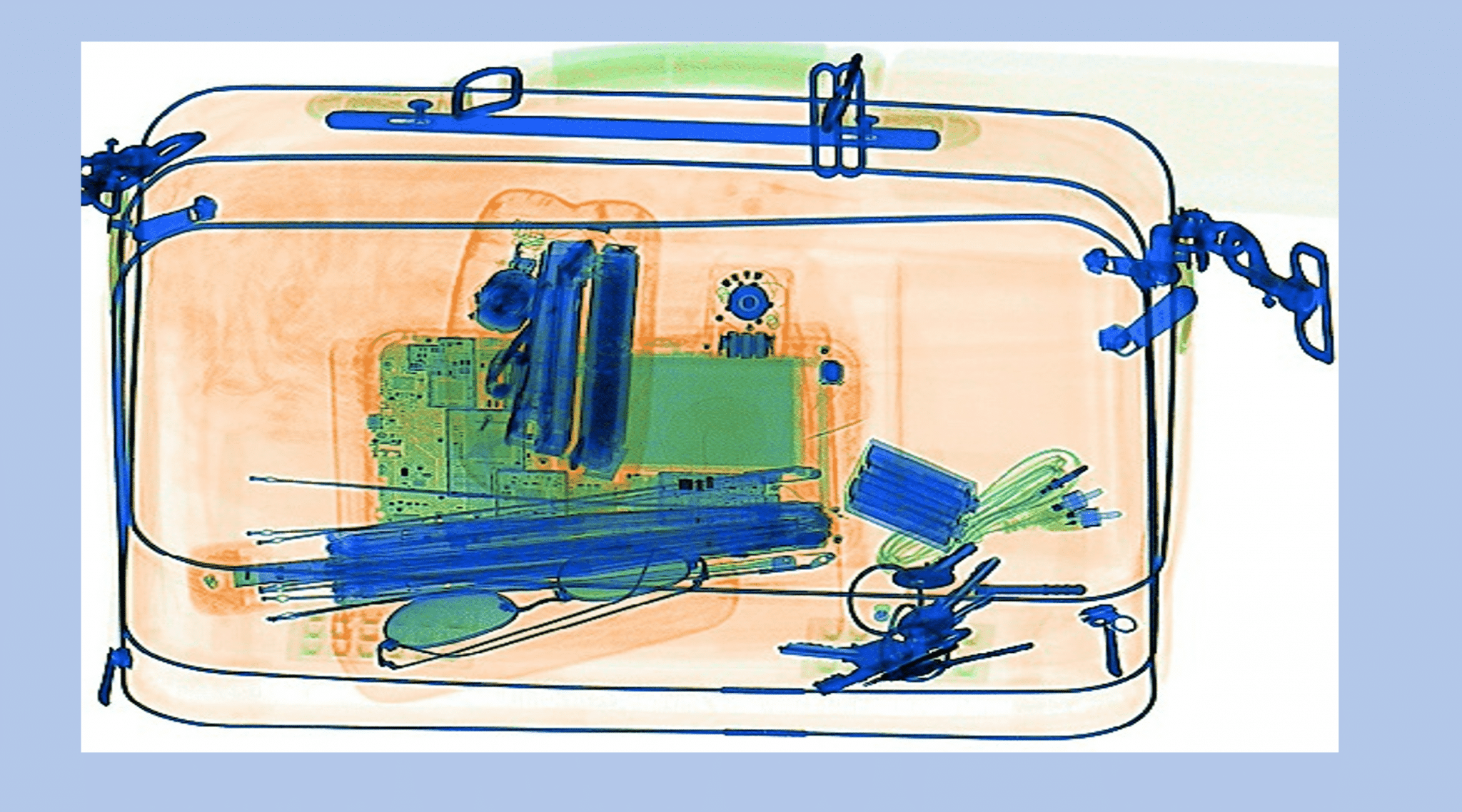
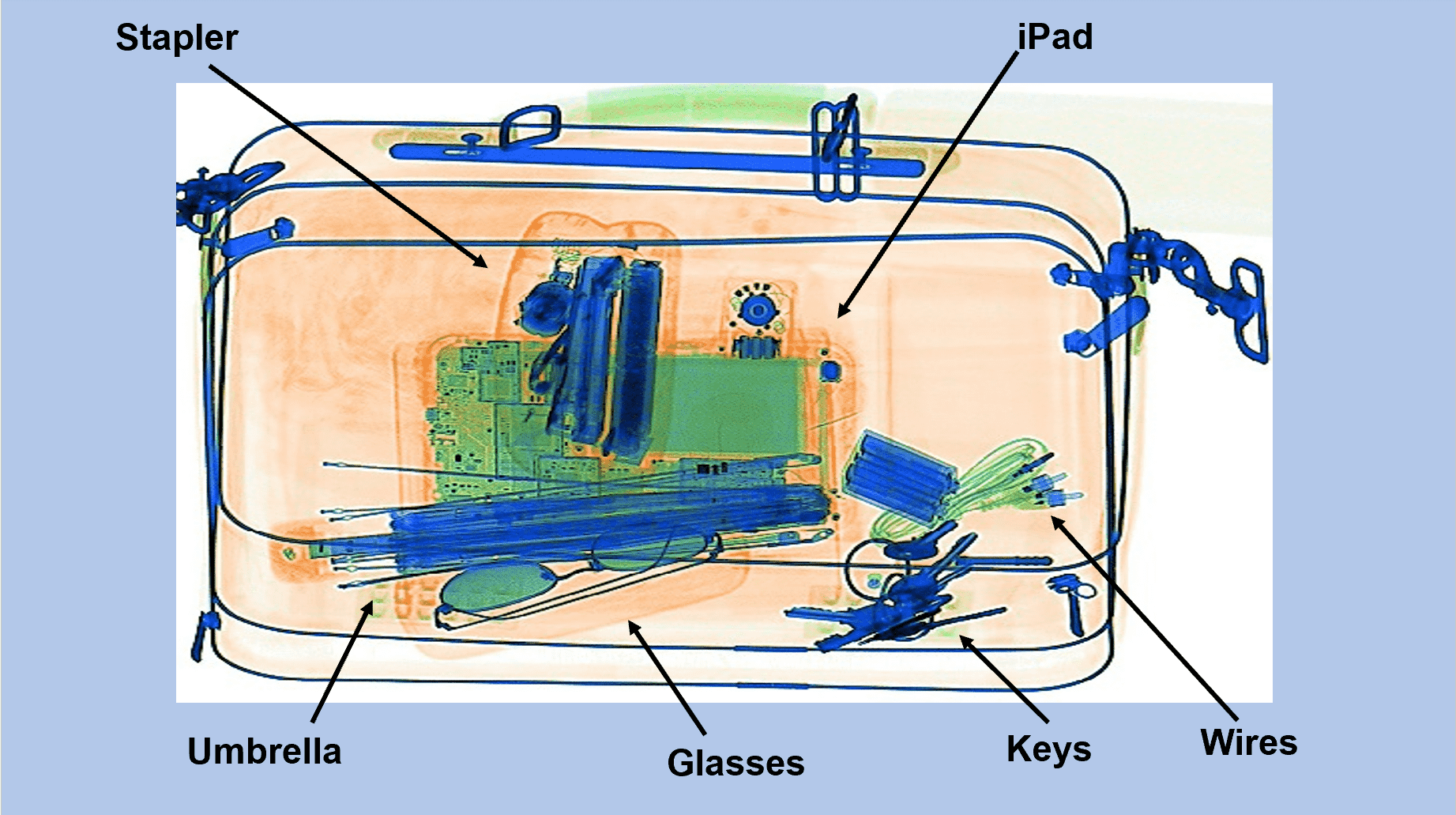
X-Ray Recognition Question 1 of 10
Is there a gun within the baggage?
- Yes
- No
There is no gun within the baggage.
Certain items may appear misleading. For instance, due to their elongated shapes and metallic components, the stapler and the umbrella might resemble parts of a firearm. Similarly, the wires and keys could mimic features of a weapon when viewed out of context. However, careful examination confirms the absence of any firearm components.
X-Ray Recognition Question 2 of 10
Is there a gun within the baggage?
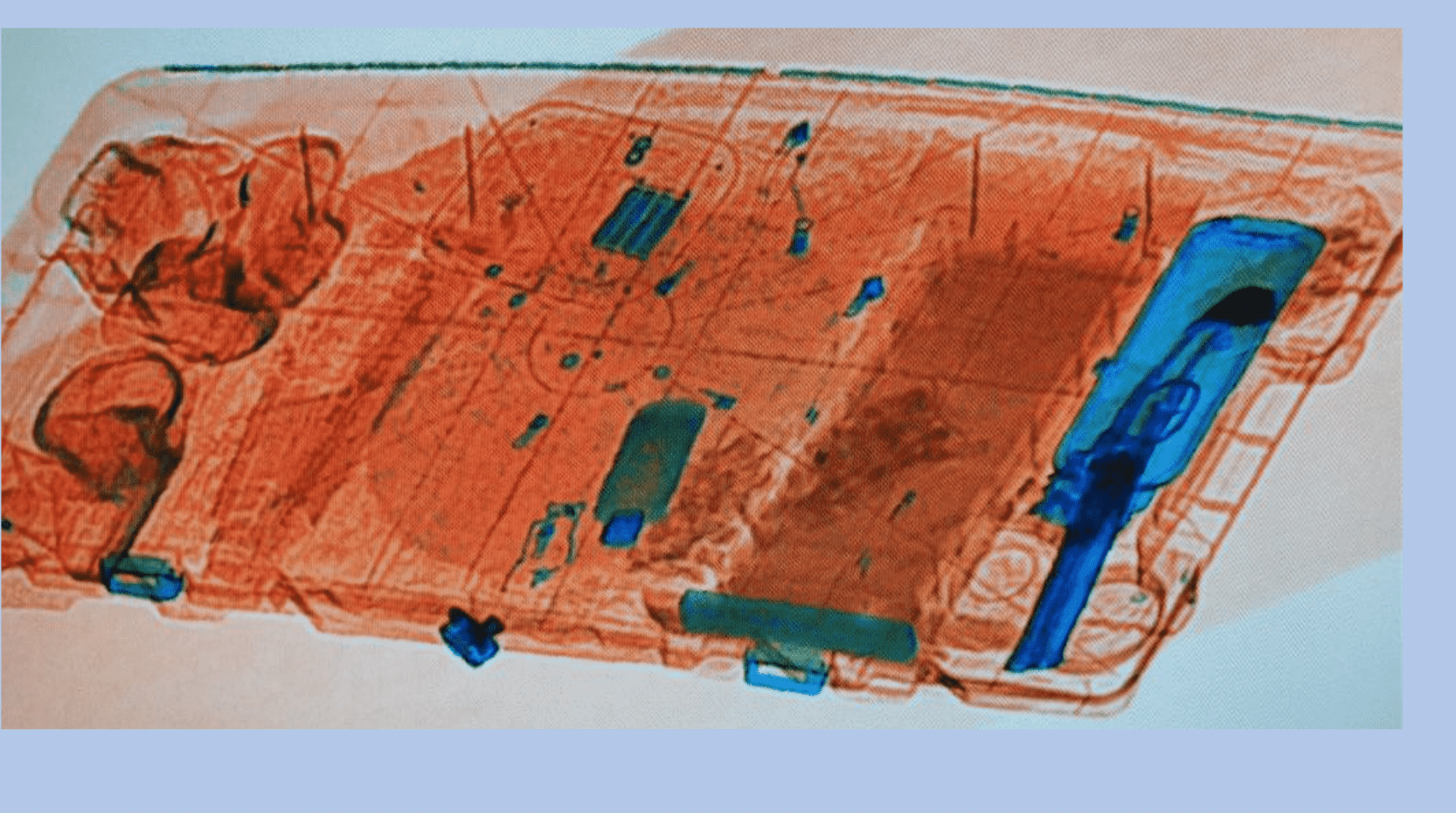
- Yes
- No
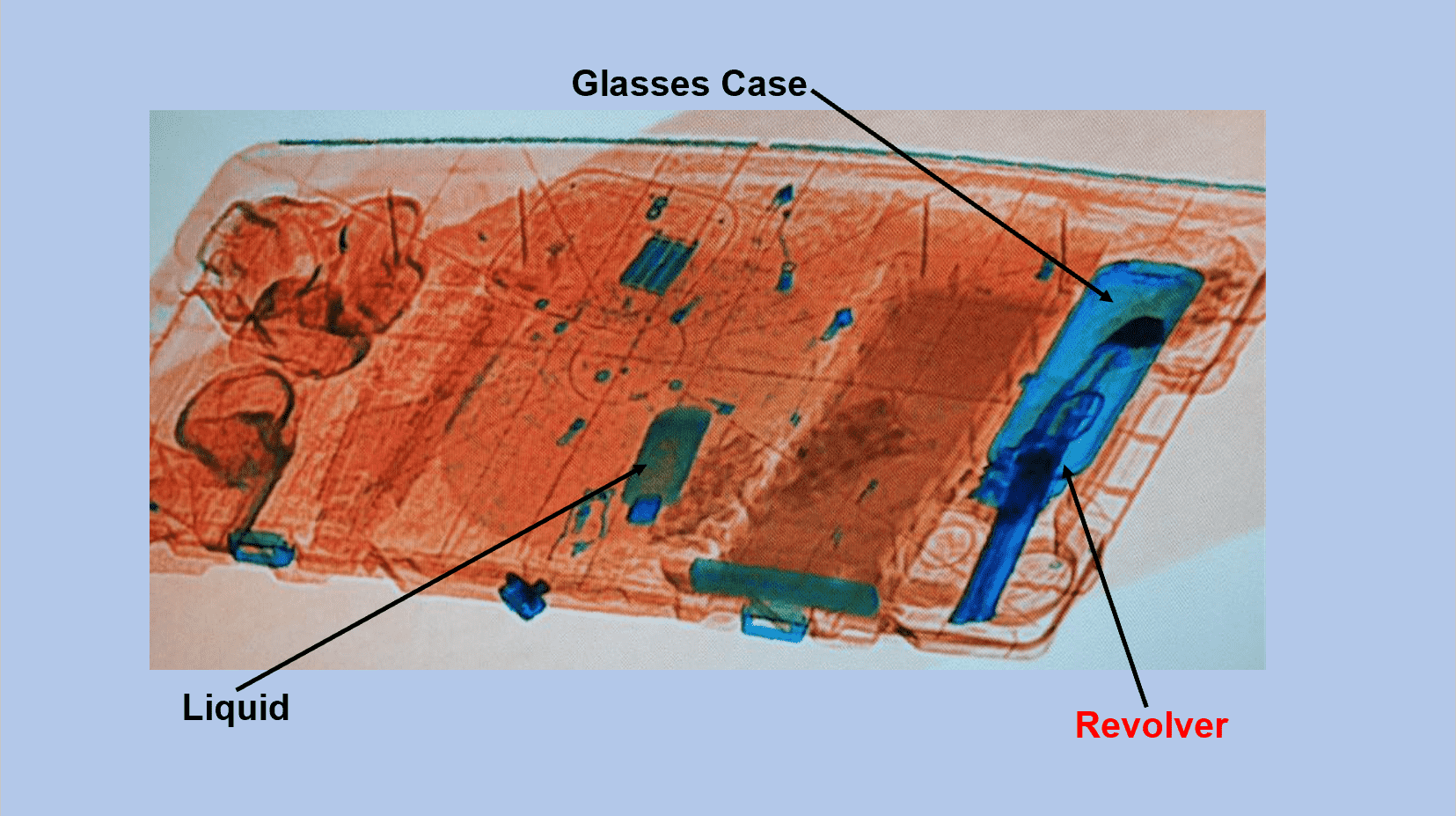
There is a gun within the baggage.
In this X-ray scan, the revolver is identifiable by its distinct features, such as the barrel, grip, and trigger area, which appear as dense blue due to their metallic composition. At first glance, the trigger area might be mistaken for the shape of eyeglasses. However, upon closer examination, it lacks the curvature and overall design typical of glasses, confirming it as part of the revolver.
Blades
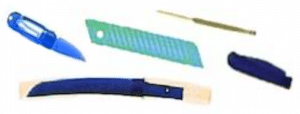
Blades appear prominently in X-ray scans due to their sharp, dense metallic structure. They are typically displayed in dark blue or black, depending on the material. The angle of the scan significantly affects the visibility of the blade edges, while folded blades may appear more compact and harder to distinguish, blending with their housing or handle.
X-Ray Recognition Question 3 of 10
Is there a blade within the baggage?
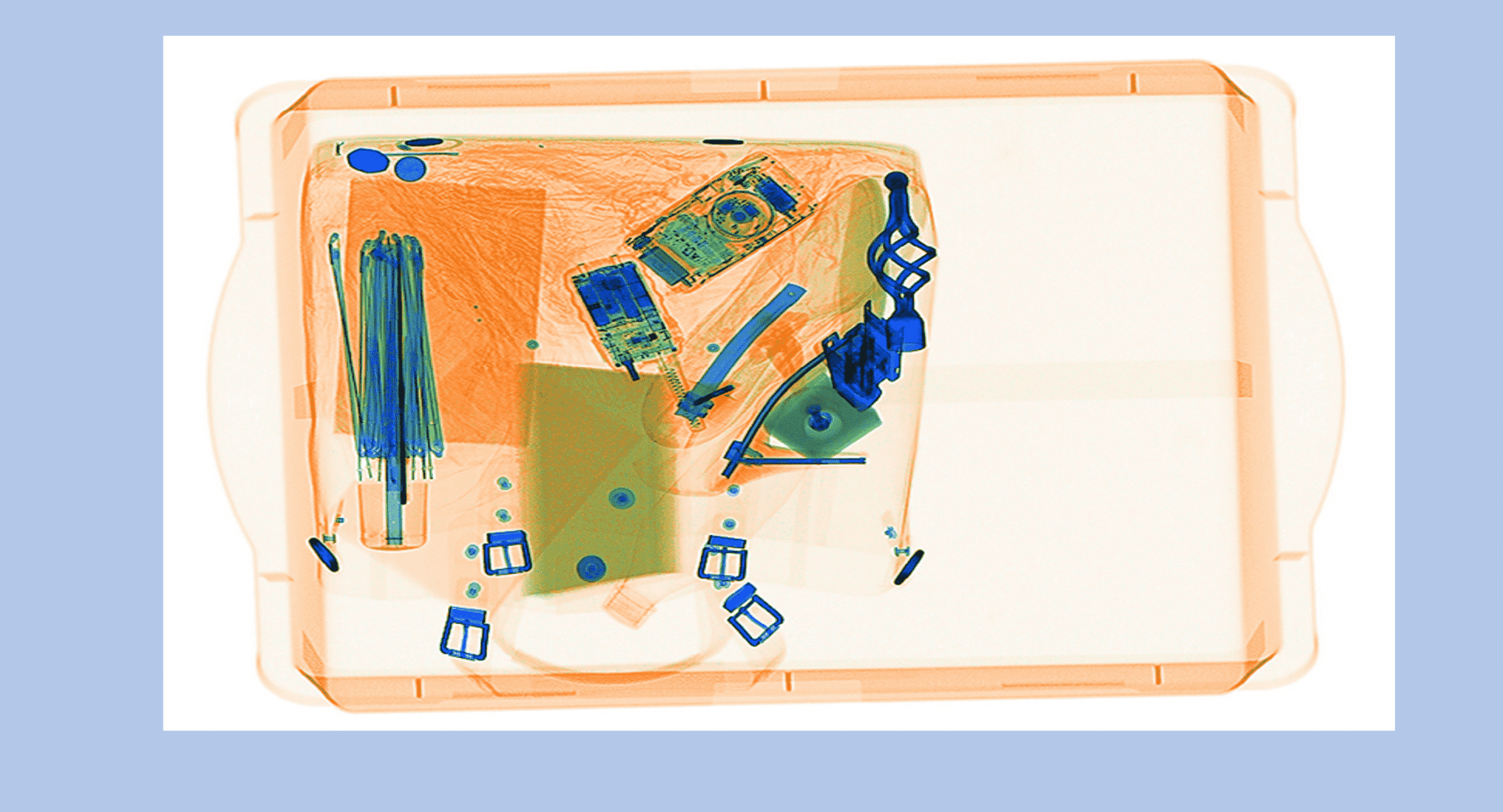
- Yes
- No
There is a blade within the baggage.
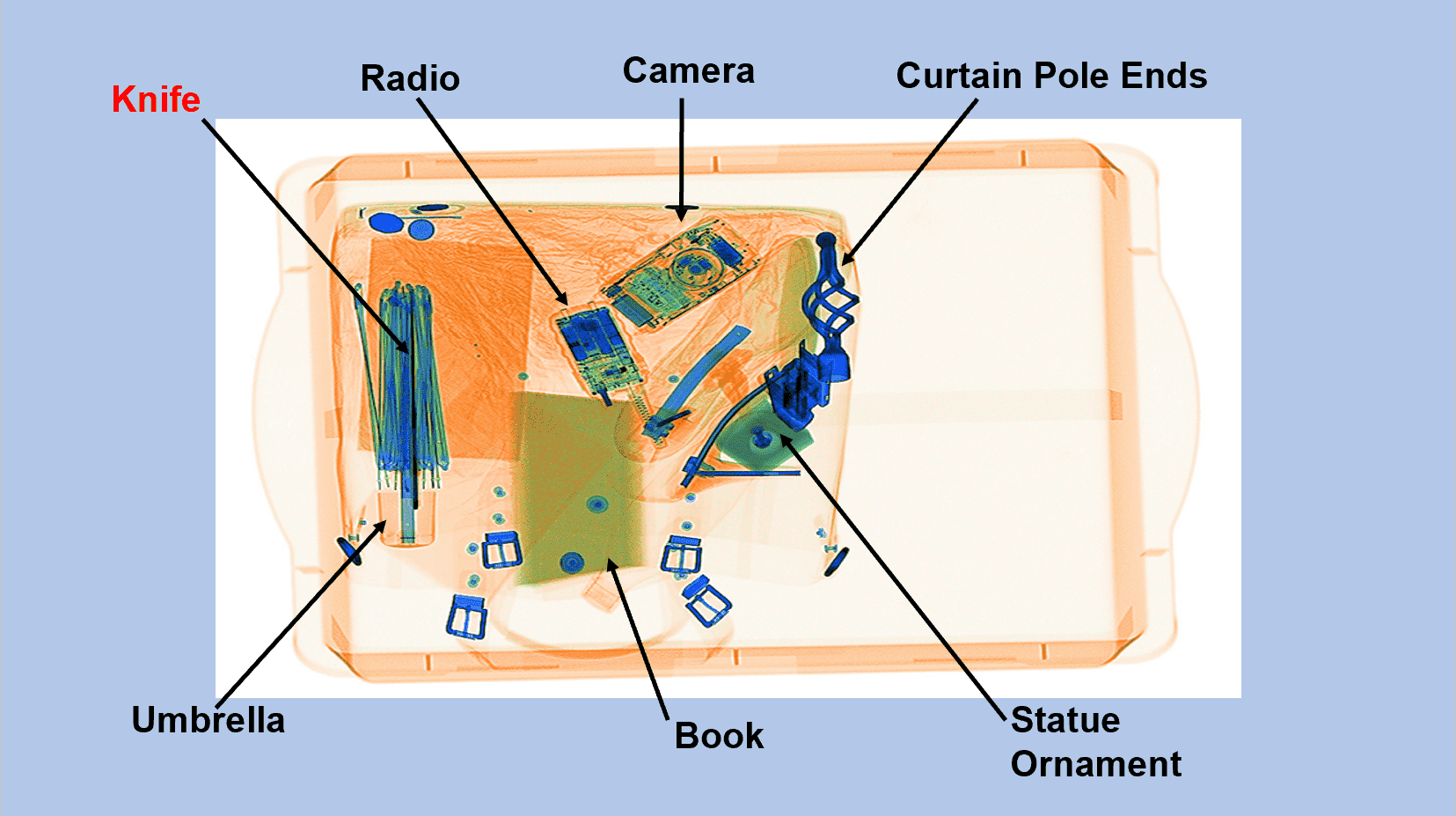
In this X-ray scan, the knife is concealed within the luggage but can be identified by its sharp, dense metallic blade, which appears as a dark blue or black shape. Its alignment among other objects, such as the umbrella, helps mask its presence, requiring careful attention to detail.
The high heel of the statue ornament might initially seem misleading, as its dense material and elongated shape could resemble a blade at first glance. However, closer inspection shows its distinct curvature and lack of sharp edges, differentiating it from a weapon.
X-Ray Recognition Question 4 of 10
Is there a blade within the baggage?
- Yes
- No
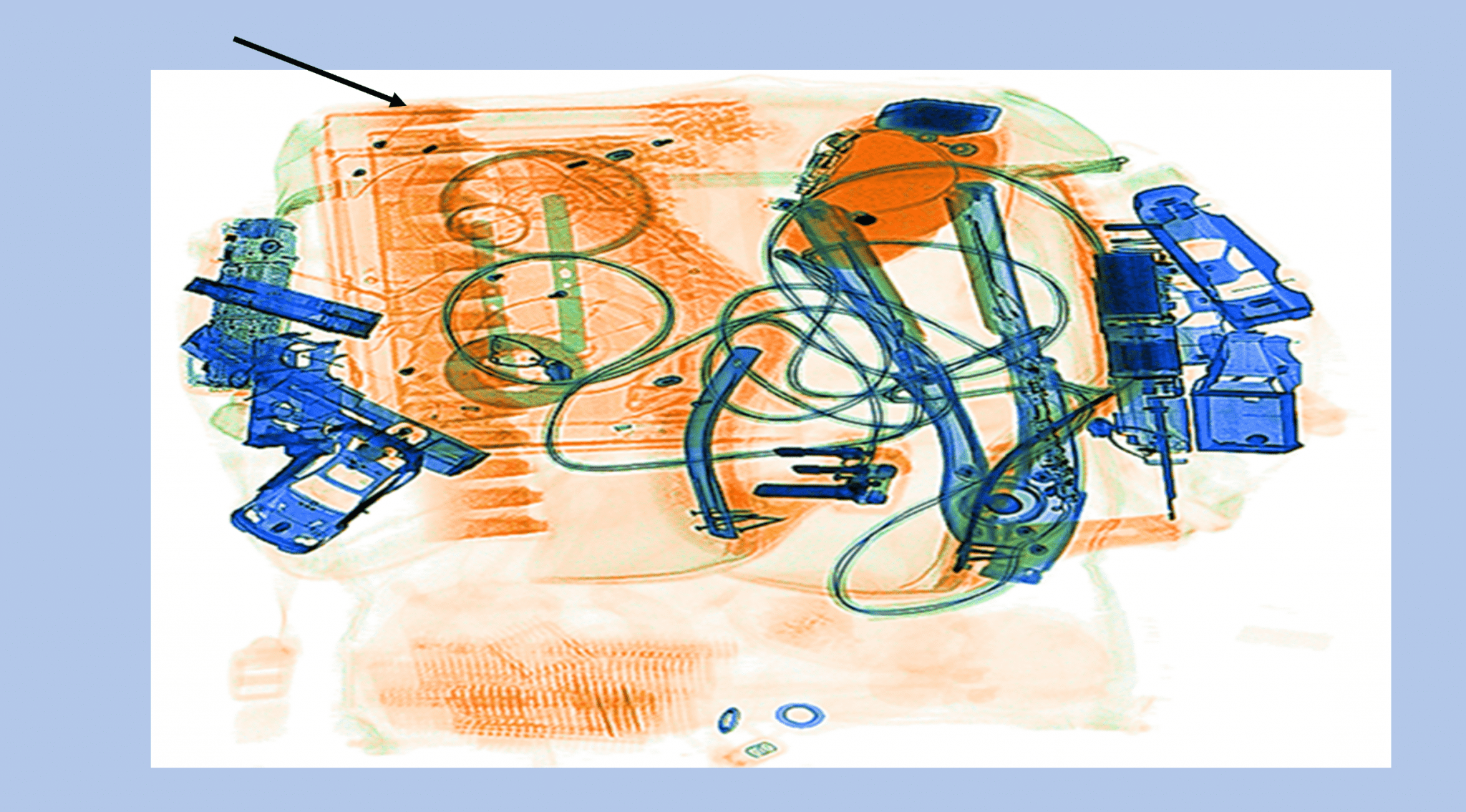
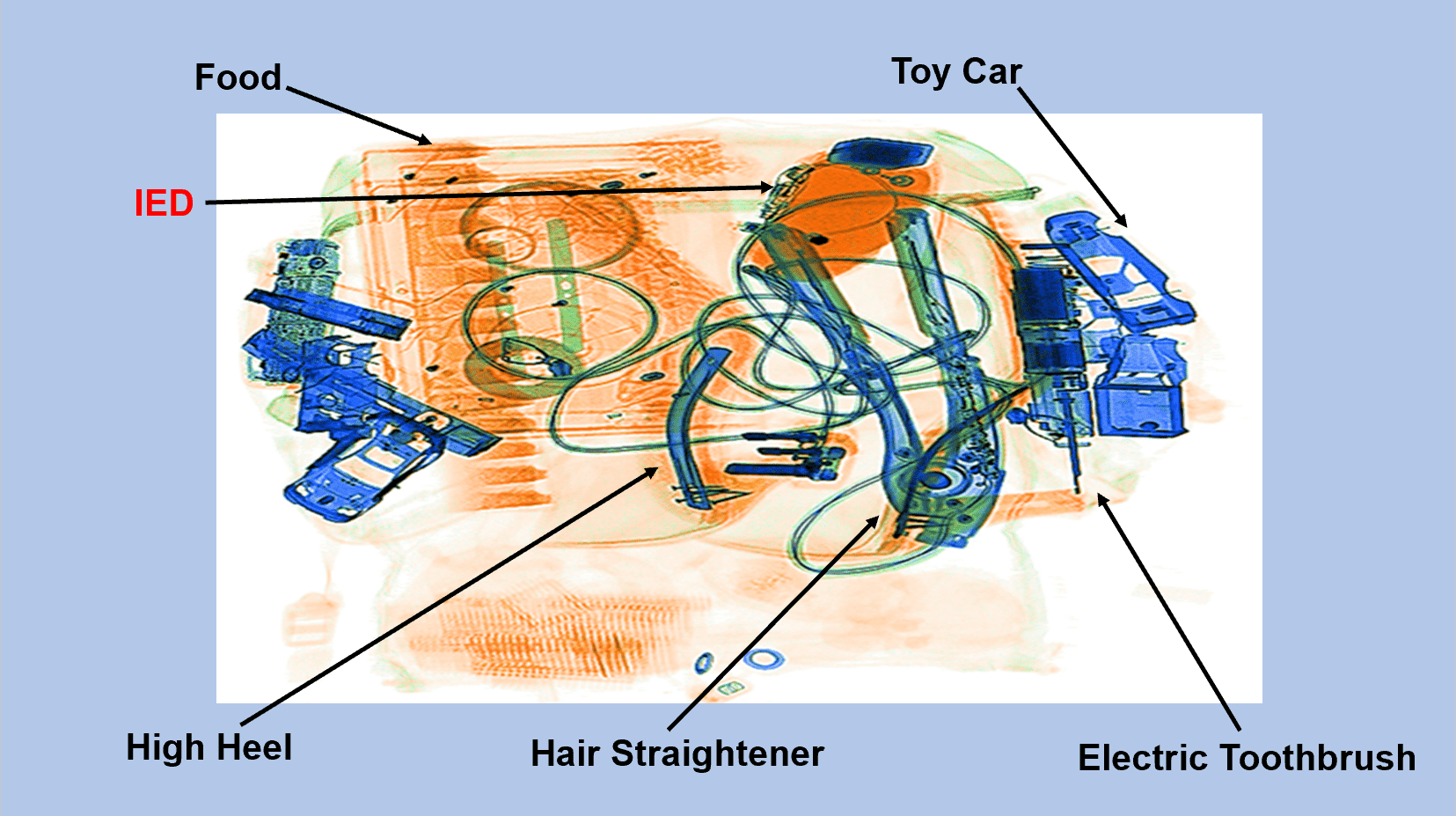
There is no blade within the baggage.
This X-ray scan does not reveal any blades within the baggage, though several objects may appear misleading. The high heel and hair straightener, with their elongated shapes and dense metallic components, could initially resemble blade-like structures. Similarly, the toy car’s metallic parts and the electric toothbrush’s cylindrical form might create confusion. However, careful examination of these items confirms their non-threatening shapes and functions, ruling out the presence of any blades.
IEDs
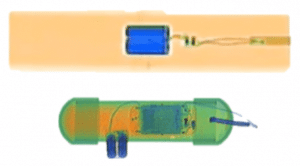
Improvised Explosive Devices (IEDs) often appear on X-ray scans as a mix of dense and less dense materials. Metallic components, such as wires or detonators, show up as dark blue or black, while plastic casings or explosives, often plastic-based, appear orange. The arrangement of wires, batteries, and dense elements is key to identifying them.
X-Ray Recognition Question 5 of 10
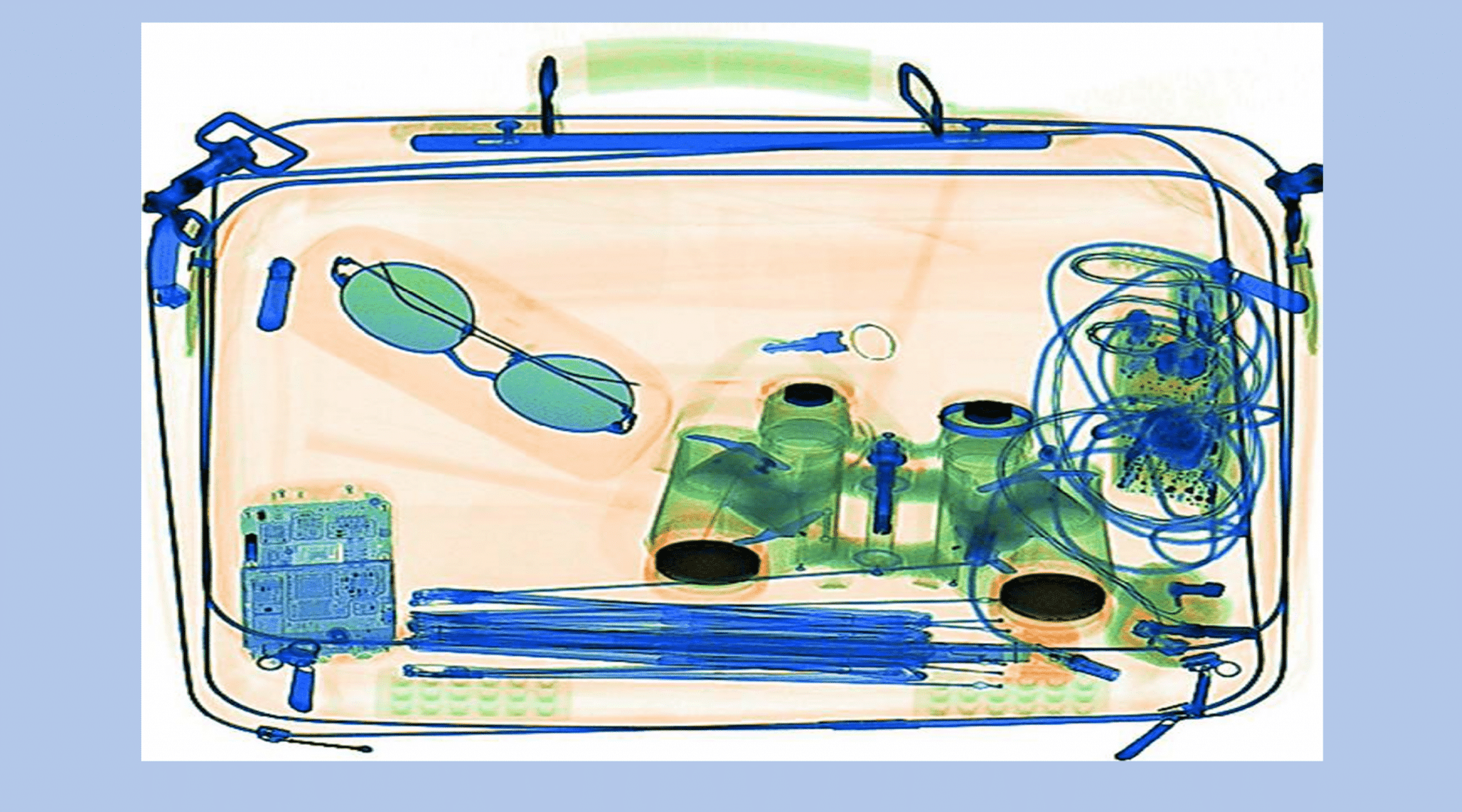
Is there an IED within the baggage?
- Yes
- No
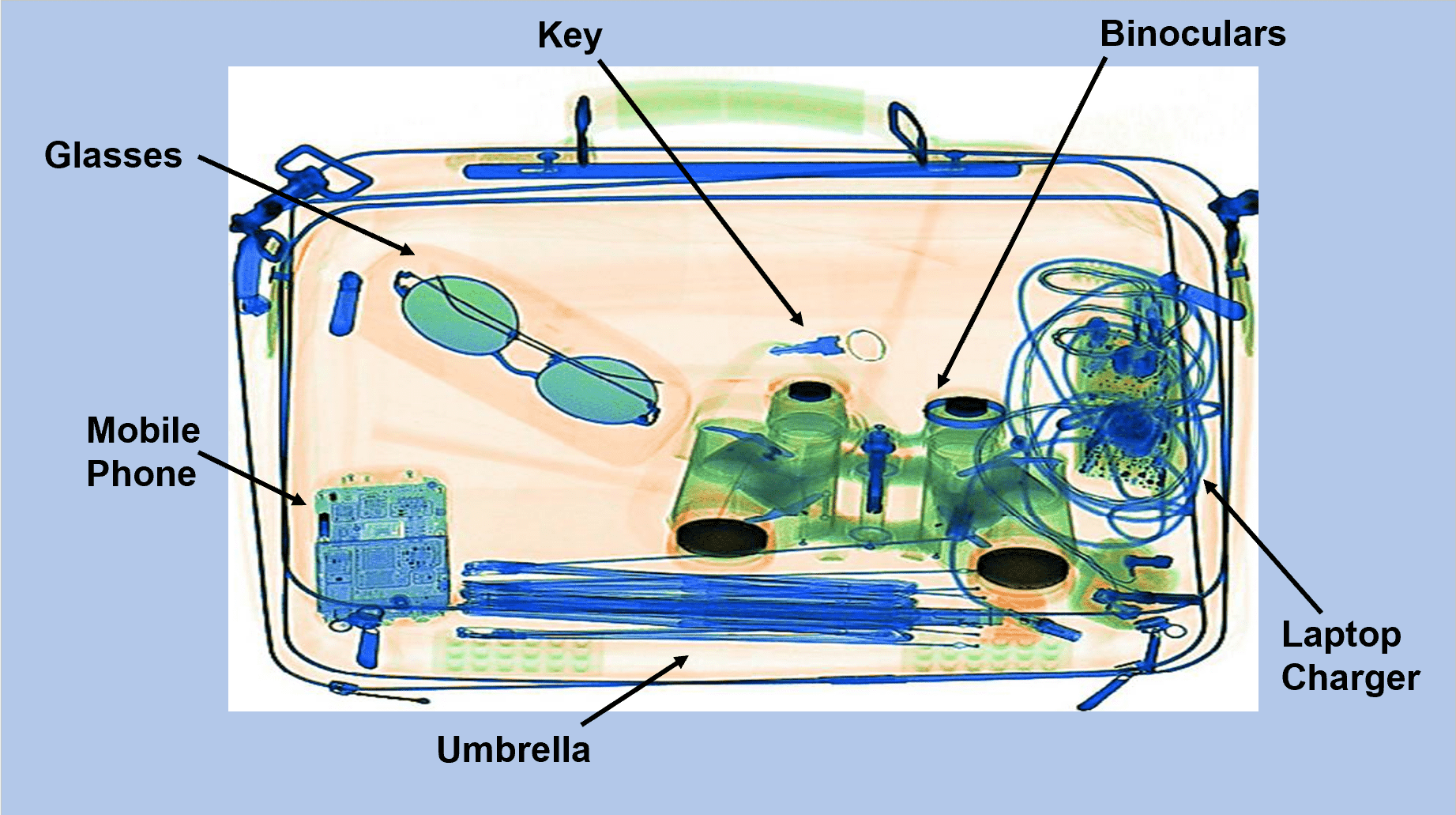
There is no IED within the baggage.
This X-ray scan shows no IED, though some items may appear misleading. The laptop charger, with its wires, and the mobile phone, with its compact circuitry, might resemble IED components at first glance. However, they lack the distinct orange signature of explosives, confirming they are harmless everyday items.
X-Ray Recognition Question 6 of 10
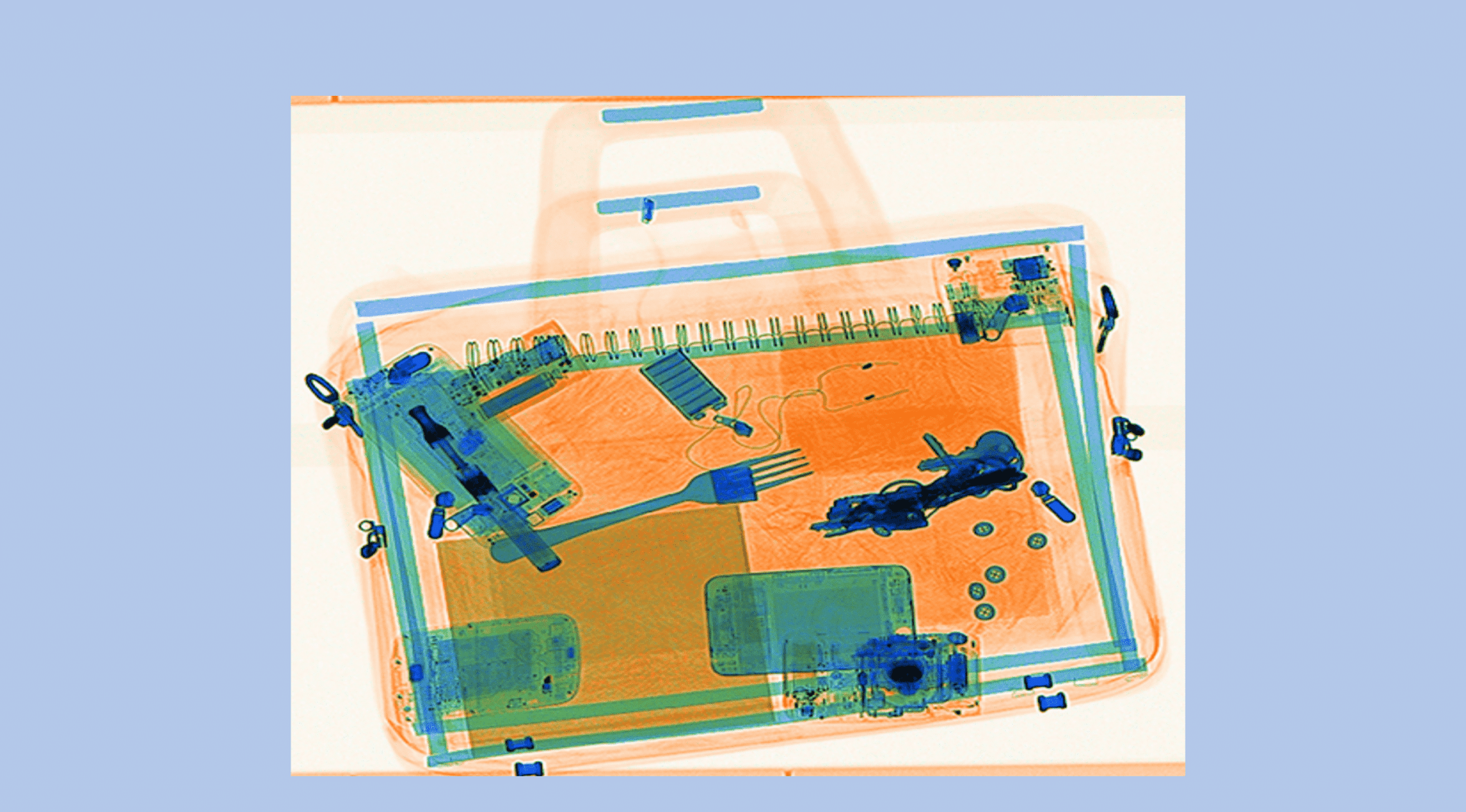
Is there an IED within the baggage?
- Yes
- No
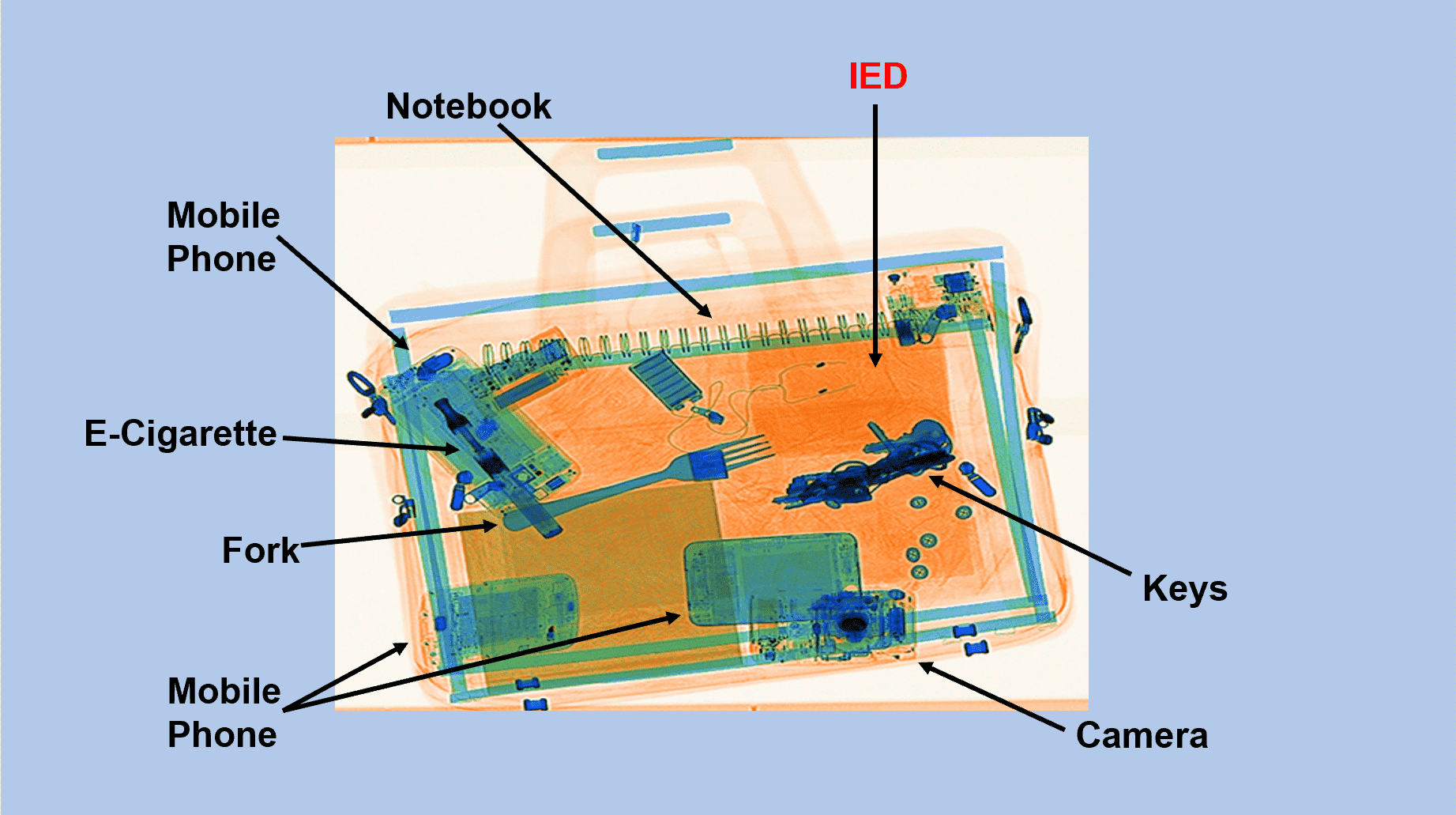
There is an IED within the baggage.
In this X-ray scan, the IED is identifiable by its combination of dense metallic components, such as wiring and a detonator, and the orange-colored explosive material. The arrangement of these elements, including a possible battery or power source, aligns with typical IED structures. The distinct orange signature of the explosive highlights its presence, differentiating it from harmless items like mobile phones, which lack the same color and configuration.
Cameras
The body of a camera is typically made from high-density plastic or metal alloys, which show up as dark green or even blue on an X-ray scan. The camera’s lens, being extremely dense, may appear almost black.
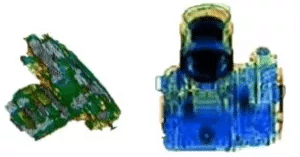
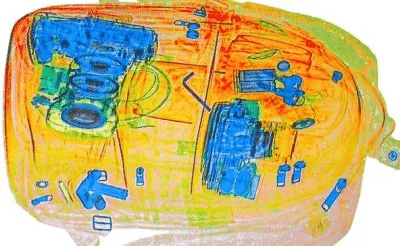
X-Ray Recognition Question 7 of 10
Is there a camera within the baggage?
- Yes
- No
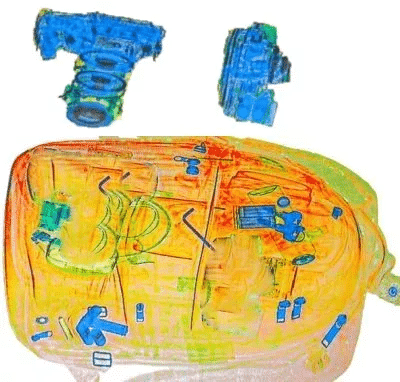
There is a camera within the baggage.
There are actually two cameras. These were pulled out of the baggage for demonstration purposes.
The other metallic (blue) devices that can be seen are a few keys, two AA batteries, and a few pullers of zippers.
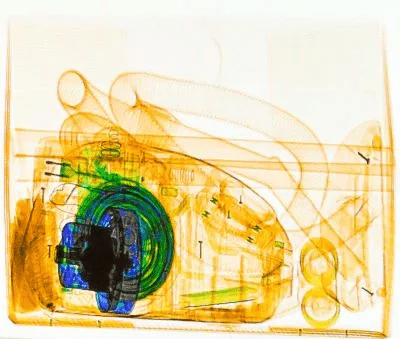
X-Ray Recognition Question 8 of 10
Is there a camera within the baggage?
- Yes
- No
There isn’t a camera within the baggage.
While it seems similar to a camera, the blue object is in fact the motor of a vacuum cleaner. While the darker part may seem like the camera’s lens, the body of the camera cannot be found. The green-blue round object is the vacuum cleaner’s power cord.
Shoes
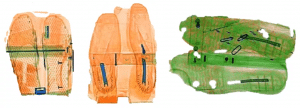
Shoes are made of organic fabrics or very light plastic materials. They usually have an orange shade, which means that it might be quite difficult to recognize them among other objects. Try to locate metallic plates which are often inside the sole of the shoe.
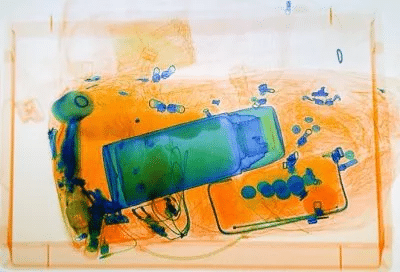
X-Ray Recognition Question 9 of 10
Is there a pair of shoes within the baggage?
- Yes
- No
There are no shoes in the baggage.
There are several objects made of organic materials within the baggage (orange shade) but these are clothes rather than shoes. The main object in the center is a metal bottle with a screw cap (blue) filled with some fluid (hence the orange shade). At the bottom right there is also a wallet with a few coins.
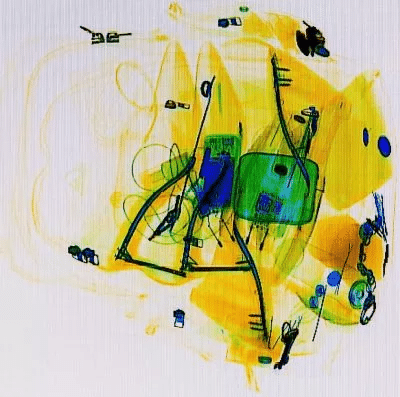
X-Ray Recognition Question 10 of 10
Is there a pair of shoes within the baggage?
- Yes
- No
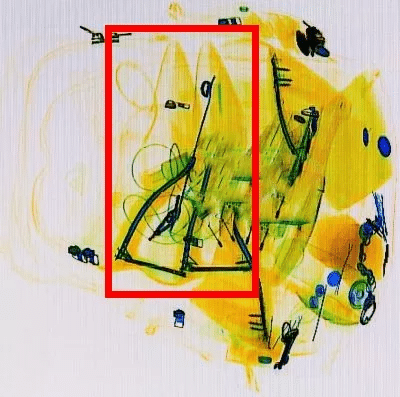
There are shoes in the baggage.
There are actually two pairs of high-heeled shoes in the bag. These can be identified by the metal plates implanted inside the heels and all the way through the soles.
2.2. Writing Skills
Writing Skills Question 1 of 2
Select the one word or phrase that needs to be used in place of the underlined text to make the sentence correct, or indicate that the underlined text is not in error.
At Fire Island, a popular tourist spot east of the city, the remains of what might have been the shipping vessel were uncovered.
- NO ERROR
- has been
- had been
- having been
The correct answer is A.
Explanation: The word “might” is an auxiliary verb. Therefore, because of the addition of “might,” the only possible answer is “have been.”
Writing Skills Question 2 of 2
Put the following sentences into the correct order to create a logical and flowing paragraph.
Sentence 1. With an ever-increasing population, clean water is becoming even more essential in developing African countries and it is estimated that investments of over $800 billion will be needed in the next few years.
Sentence 2. Drink 2025 is an initiative which aims to unite 7 drought-affected African nations in order to conserve water supplies and provide citizens with an uninterrupted supply of drinkable water.
Sentence 3. The initiative will bring together water conservation experts from around the globe, government agencies, charities, multilateral organizations, and private companies in order to raise the needed capital.
Sentence 4. The investment will ensure Africa remains healthy and disease free for many years to come.
- 1, 2, 3, 4
- 1, 3, 4, 2
- 2, 4, 1, 3
- 4, 3, 1, 2
The correct answer is A.
Explanation:
The logical flow of the paragraph is as follows.
Introduce the problem > Introduce the solution > Talk about the aims of the solution > Conclusion
Note the vocabulary connections in each sentence too.
“Developing African countries” in the 1st paragraph pairs with “7 drought-affected African nations” in the 2nd.
“Drink 2025” in the 2nd pairs with “the initiative” in the 3rd.
“Needed capital” in the 3rd pairs with “investment” in the 4th.
When tackling this type of question, you must take these vocabulary connections into account.
3. TSA Test Selector
About the course
Includes 58 TSA practice tests
22 Learning hours · 58 Practice tests · 786 Questions · 330 Videos
This course prepares you for both TSA test versions: the legacy CBT (X-ray/object recognition plus English skills) and the newer TAB battery (2D-3D). You’ll learn how each section works, then build speed and accuracy through guided practice and simulations that mirror the visual and attention demands of the real assessment.

Skills you will learn
X-Ray Interpretation · 2D-3D Matching · Threat Identification · Writing Skills
Curriculum
Course Introduction
- How the TSA CBT is structured
- What to expect on test day
New Test (incl. 2D-3D): Guide & Simulations
- Section 1: Trail-Making Test — connect-the-dots speed
- Section 2: Image Recognition Test — speed-run comparisons
- Section 3: 2D – 3D Image Mapping Test
Legacy Test: X-Ray – Guide
- Color-density cues and materials
- Shapes, overlap, and viewpoint recognition
Legacy Test: X-Ray – Simulations
- Timed simulations for X-ray object recognition
- Identify targets amid overlapping items
Legacy Test: X-Ray – Practice Mode
- Practice-mode drills with instant feedback
- Reinforce accuracy before adding speed
Legacy Test: Writing Skills
- Reading Comprehension — passage-based practice
- English Proficiency (Grammar & More) — rules drills
- Vocabulary — word knowledge practice
Course Conclusion
- Final checklist and next-step practice plan
Reviews

steve r***
March 25, 2026 at 10:04 AM
the study section and test quizzes are easy to understand and are structured very well. The site is laid out in a good format.
Rhyan D******
March 5, 2026 at 4:49 PM
These test were way harder than the actual exam! I will say that it helped. Especially the 2D/3D part. The TSA exam is not that serious these days, but thanks for the test prep.
Brent G*******
December 17, 2025 at 10:41 AM
I passed the test, at first I didn't think that I had but got the email a couple days ago and got the job offer. Thank you so much for your help.
Roberta F*****
November 10, 2025 at 9:35 AM
You have a great program here. It covers everything you could possibly need to get thru the test and more. It was worth every penny I spent. Iprep should not change anything about this program., I take my test in a week and I know I will pass on this try. Thank you so much for putting out such a great program. Roberta Fraine
Tammy W*********
November 7, 2025 at 9:23 PM
I will be taking the TSA test and I found that iPREP was incredible helpful. The practice mock test where very similar to what I can except for the actual exam. I really liked how they actually showed the 2D and 3D images and how they came together. I'd highly recommend IPrep to understanding the test format.
Markus H*********
August 23, 2025 at 4:08 PM
This course is designed by professionals for aspiring professionals. The exercises are excellent. Everything is explained very well. I'm very pleased with the large number of x-ray images. Everything is explained perfectly. This is exactly what I was looking for. Many thanks to the entire team.
Margie H********
August 18, 2025 at 2:56 PM
The 2d to 3d section looks nothing like the real test. However, I did pass the test and received a TJO.
Wes B*****
July 19, 2025 at 2:32 PM
Tremendous help!! Just being familiar with looking at the images and shapes was vital in my experience. The free practice questions were a wake up and hinted to me this would be useful. The 3-D/2-D questions felt routine after a couple days of practice and sure enough, I got quick confirmation I had passed and received a "tentative job offer" (step 1 of many, but this is the start!). I don't know if that means I was in the top bracket, but I felt quite confident about my answers and time. Yes, highly recommended and it was the most affordable prep option!!
Princess O*********
June 6, 2025 at 8:34 PM
its right on point as the real test would tell u to get it anyone iprep is the way too go
Greg S******
May 17, 2025 at 6:10 PM
Well I just took the real test for the TSO. The 2-d to 3-d was very different from the I-prep practice tests. I would not recommend relying on iprep alone to study for your exam