Reviewed by Tamir Rubin, Head of Product at iPREP • Updated July 2026
What is the Certified Registered Central Service Technician (CRCST) exam?
The Certified Registered Central Service Technician (CRCST) exam validates sterile processing knowledge for certification, including decontamination, preparation and packaging, sterilization, storage/distribution, equipment handling, documentation, and professional communication. The test is 180 minutes with 150 multiple-choice questions, including 25 unscored items, and results are pass/fail. (SPT Manual 9th edition: 2023)CRCST HSPA Sample Question
During the cleaning process of surgical instruments, a Central Service Technician notices some visible biofilm on a surgical scissor. What should the technician do next?
- Wipe the instrument with a dry cloth to remove the biofilm
- Proceed to the disinfection process as planned
- Immerse the instrument in an enzymatic cleaner to break down the biofilm
- Use a sterilization wrap to cover the instrument before processing
Topics Covered
7 High-level content areas
- Cleaning, decontamination, and disinfection basics
- Preparation and packaging for sterilization
- Sterilization methods, monitoring, and release
- Patient care equipment and distribution
- Sterile storage, transport, inventory management
- Department workflow, documentation, quality practices
- Professional development and human relations
Test Duration
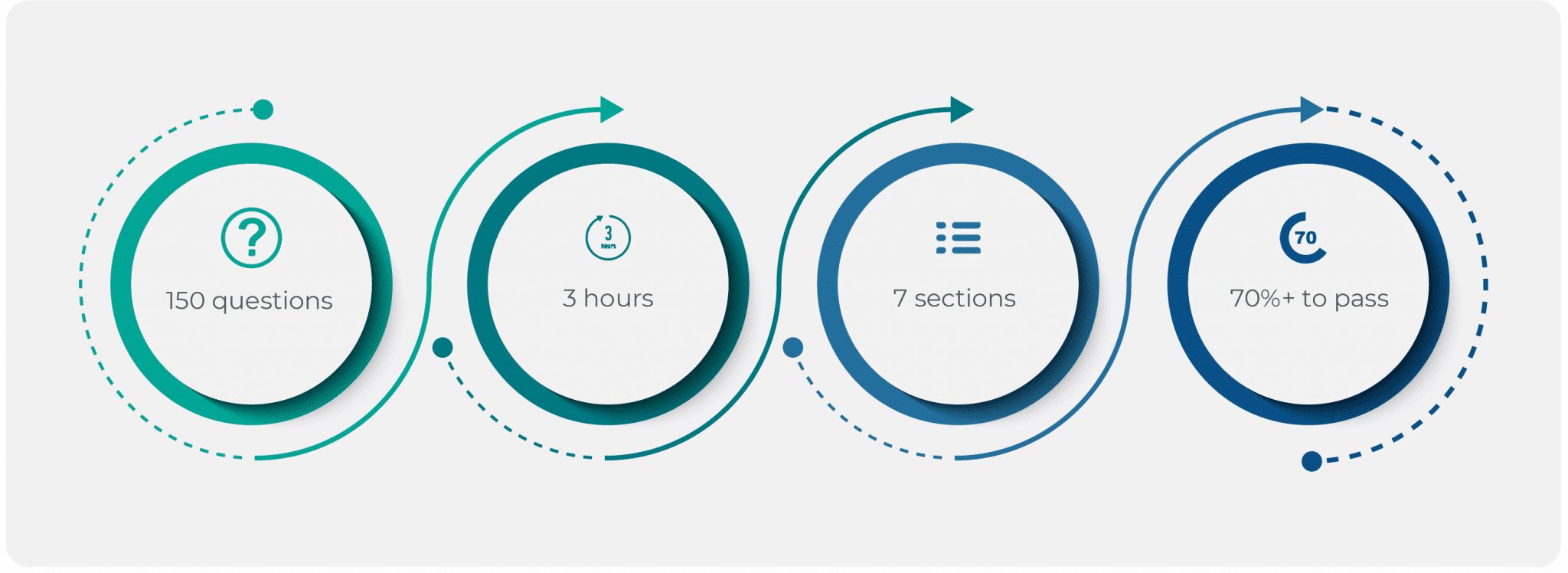
Total time: 180 minutes • 150 multiple-choice questions (25 unscored)
Plan steady progress; all questions look the same, including unscored items. Avg pace: ~70 seconds per question. Leave time to review marked questions. Results are reported as Pass/Fail (not a percentage score).
Test Breakdown & Sample Questions
The CRCST exam includes 150 multiple-choice questions. This total typically includes 125 scored questions and 25 unscored (pretest) questions mixed throughout the exam.
The exam is computer-based, multiple-choice, and must be completed within 3 hours. Results are reported as Pass/Fail (not a percentage score).
Exam content areas and weights
| Content area | Official weight | Approx. scored questions (of 125) | What it includes |
|---|---|---|---|
| Cleaning, Decontamination & Disinfection | 21% | ~26 | Point-of-use handling, decontamination workflow, cleaning methods, disinfection basics, safety practices |
| Preparation & Packaging | 21% | ~26 | Inspection and assembly, packaging selection, instrument sets, labeling, prep for sterilization |
| Sterilization Process | 21% | ~26 | Sterilization methods, cycle parameters, monitoring (chemical/biological), load release concepts, documentation of loads |
| Patient Care Equipment and Distribution | 5% | ~6 | Processing of patient care equipment, distribution processes, basic equipment tracking/documentation |
| Sterile Storage, Transport and Inventory Management | 9% | ~11 | Storage practices, event-related sterility concepts, transport, inventory controls, handling and distribution |
| Departmental Considerations (includes documentation and record keeping) | 15% | ~19 | Department workflow and quality practices, standards/regulations awareness, documentation/record keeping, environmental and personnel considerations |
| Professional Development and Human Relation Skills | 8% | ~10 | Communication and professionalism, teamwork, service-minded behaviors, basic human relations in the SPD environment |
Cleaning, Decontamination & Disinfection
Official exam weight: 21%
This content area focuses on safe, effective processing from point-of-use through decontamination and transfer to the preparation area.
What you need to know
- Safety practices in decontamination
- Personal protective equipment
- Work area conditions and workflow controls (clean vs. dirty separation)
- Setting up and maintaining the decontamination work area
- Quality checks that confirm cleaning outcomes
- Operation, routine care, and basic troubleshooting of cleaning equipment
- Identifying and separating reusable vs. single-use items
- Preparing items for decontamination and cleaning
- Selecting and using disinfectants appropriately (as applicable)
- High-level disinfection basics (when applicable in your setting)
- Safe handling and transfer of items to the preparation/packaging area
Preparation & Packaging
Official exam weight: 21%
This content area focuses on inspecting, assembling, and packaging items correctly so they can be sterilized and safely used.
What you need to know
- Safety practices in the preparation and packaging area
- Work area conditions and workflow controls (including temperature/humidity considerations as applicable)
- Setting up the work area for preparation and packaging
- Receiving items from decontamination for inspection and assembly
- Inspecting items for cleanliness and proper function
- Verifying correct contents for sets/trays and assembly
- Assembling items and sets for packaging
- Selecting the appropriate packaging method/material
- Labeling and identification practices
- Handling and transferring packaged items to the next processing stage
Sterilization Process
Official exam weight: 21%
This content area covers sterilization methods, monitoring, load control, and the steps needed to ensure items are sterilized safely and consistently.
What you need to know
- Safety practices in the sterilization area
- Work area conditions and workflow controls (including temperature/humidity considerations as applicable)
- Setting up the work area for sterilization
- Required sterilizer testing and routine monitoring
- Sterilization methods, cycles, and basic cycle selection
- Pre- and post-sterilization package integrity checks
- Loading the sterilizer correctly
- Operating and monitoring sterilization equipment
- Verifying cycle parameters and required documentation
- Unloading practices that protect sterility and package integrity
- Interpreting monitoring/test results (chemical/biological as applicable)
- Recognizing potential process failures and appropriate next steps
- Load control/lot numbers and traceability
- Documenting sterilization load contents and related records
Patient Care Equipment and Distribution
Official exam weight: 5%
This content area focuses on processing and distributing patient care equipment safely, including basic tracking and handling practices.
What you need to know
- Safety practices related to patient care equipment handling and distribution
- Work area conditions and workflow controls (including temperature/humidity considerations as applicable)
- Setting up the work area for distribution
- Inspecting equipment for cleanliness and proper function
- Preparing equipment for distribution (as applicable to your facility)
- Care and handling practices that help prevent damage and contamination
- Distribution workflows and communication with end users
- Basic equipment tracking and related documentation practices
Sterile Storage, Transport and Inventory Management
Official exam weight: 9%
This content area covers how sterile and non-sterile items are stored, handled, transported, and managed to protect integrity and support accurate inventory control.
What you need to know
- Safety practices related to storage and transport
- Work area conditions and storage requirements (including temperature/humidity considerations as applicable)
- Setting up and maintaining storage areas
- Ordering and inventory replenishment basics
- Receiving and inspecting inventory
- Stocking, rotation, and handling practices
- Distributing sterile and non-sterile items appropriately
- Monitoring, tracking, and documentation of distributed items (as applicable)
- Responding to compromised items (for example, damaged packaging or loss of sterility)
Departmental Considerations
Official exam weight: 15%
This content area covers day-to-day department operations that support safe, consistent processing—such as documentation, quality practices, and awareness of standards and workplace requirements.
What you need to know
- Documentation and record keeping (what to document, why it matters, and basic retention/traceability concepts)
- Environmental condition monitoring and corrective actions (as applicable)
- Quality assurance concepts and routine checks
- Personnel practices that support safety and risk reduction
- Basic awareness of regulations, standards, and policies that guide sterile processing
- Ongoing education, competency, and professional responsibilities within the department
Professional Development and Human Relation Skills
Official exam weight: 8%
This content area focuses on the people-side of sterile processing: professional communication, teamwork, and behaviors that support safe, reliable service.
What you need to know
- Professional communication and customer service in the SPD environment
- Teamwork and working effectively within work groups
- Professionalism, accountability, and appropriate workplace behavior
- Basic problem-solving and service recovery concepts (as applicable)
- Personal development and continuing education expectations
Did you know?
The CRCST exam includes 150 multiple-choice questions (typically 125 scored plus 25 unscored pretest questions) and must be completed in 3 hours; results are reported as Pass/Fail, and earning a passing result supports HSPA CRCST certification.
CRCST Preparation Strategies
CRCST certification is typically earned by passing the exam and completing 400 hours of hands-on sterile processing experience (or meeting the provisional pathway requirements and completing the hours within the allowed timeframe). The best prep combines real SPD workflow practice with focused study by content area.
Build a test-ready foundation
- Know the full workflow: decontam → prep/pack → sterilization → storage/transport → distribution
- Follow safety and quality habits every shift (PPE, clean/dirty separation, handling, documentation basics)
Study with the right resources
- Use the official content outline as your checklist
- Study core references commonly used for CRCST prep (including the Sterile Processing Technical Manual, 9th Ed, plus major standards/guidelines)
Use practice tests strategically
- Take a timed practice test, then target weak areas
- Prioritize higher-weight sections first
- Retest until both accuracy and speed improve
Get better at multiple-choice
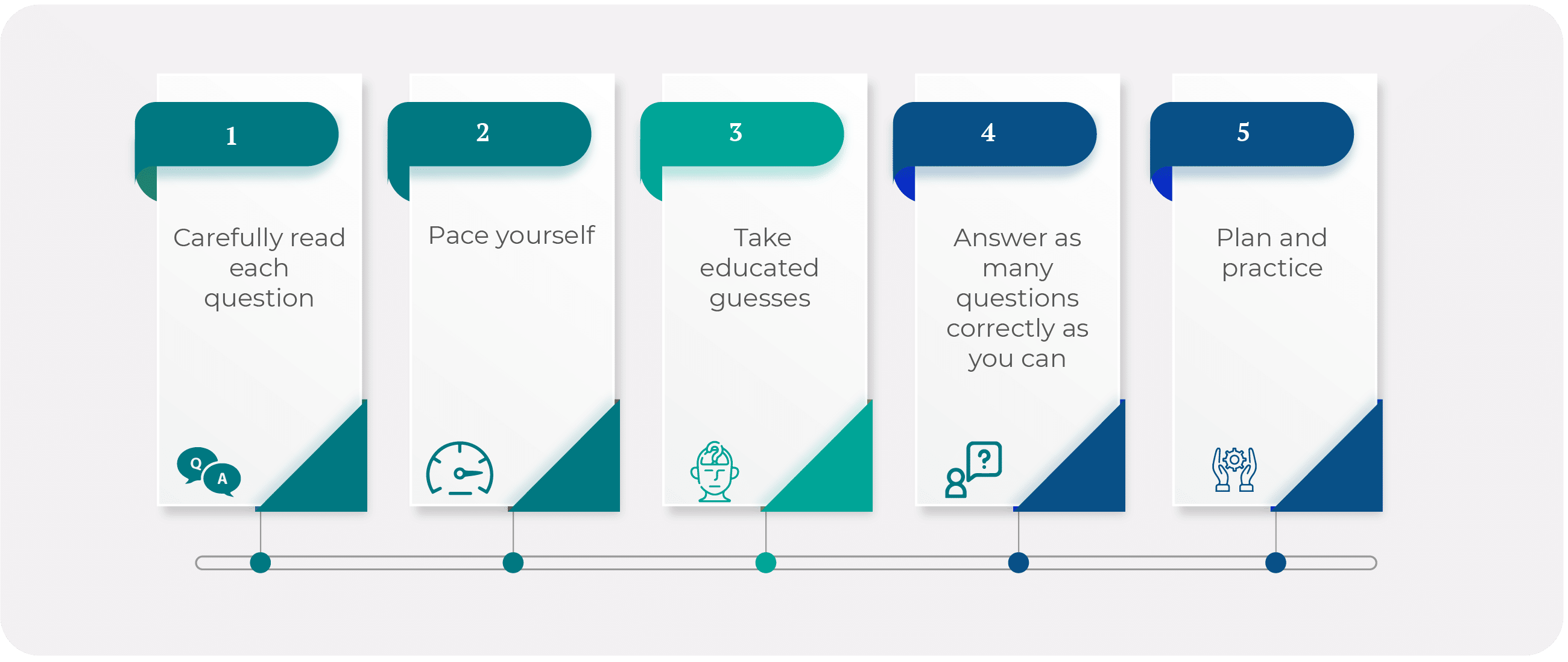
- Pace yourself for 150 questions in 3 hours
- Eliminate distractors and look for “best next step” / safety-first wording
Test Features
The CRCST exam is delivered at Prometric test centers and is scheduled during your approved eligibility window (based on available appointments).
Test Fast Facts (tl;dr)
- 150 multiple-choice questions
- 3-hour testing time
- Seven content areas tested
- Includes unscored pretest items
- Pass/Fail result reported
- Photo ID required
- Name must match registration
- Personal items not allowed
- Exam fee: $140
- Prometric test center delivery
Common names for the CRCST test
While the exam is commonly called the CRCST, you may also see it referred to as:
- CRCST Test
- CRCST Certification Test
- Certified Registered Central Service Technician test
- Sterile Processing Technician Test
- Sterile Processing Department (SPD) Test
- Central Sterile Services Department (CSSD) Test
- HSPA CRCST Test
Common CRCST Test Names. Source: iPREP
Test eligibility period
After your application is approved, you receive an authorization to test and can schedule your exam at a Prometric test center within your eligibility window. The current handbook describes a 120-day eligibility period.
Retake policy
If you do not pass, you may retest after the required waiting period. A minimum 6-week wait applies between attempts, and the current retake fee is $140 per attempt.
Hands-on requirements
CRCST certification also requires 400 hours of hands-on experience (pathway rules vary). Common experience areas include decontamination, preparation/packaging, sterilization/disinfection, storage/distribution, quality practices, and equipment handling.
Results Scale and Interpretations
The CRCST exam includes 150 multiple-choice questions. Typically, 125 questions are scored and 25 are unscored (pretest). The unscored questions are mixed throughout the exam and are not identified, so plan to answer all 150.
CRCST results are reported as Pass/Fail (not a percentage score). There is no penalty for wrong answers, so if you’re unsure, eliminate unlikely options and make the best choice. After testing, you typically see your result at the test center, and your official score report and any next-step details are provided through your account/portal.
Historical pass/fail counts (2015–2019)
| Year | Pass | Fail | Total | Pass rate |
|---|---|---|---|---|
| 2015 | 3,292 | 2,700 | 5,992 | 54.9% |
| 2016 | 3,723 | 3,339 | 7,062 | 52.7% |
| 2017 | 3,524 | 3,016 | 6,540 | 53.9% |
| 2018 | 4,620 | 3,073 | 7,693 | 60.0% |
| 2019 | 6,416 | 1,873 | 8,289 | 77.4% |
These results are historical and can vary by year. The most reliable way to improve your odds is to study by content area and use timed practice questions to build both accuracy and pacing.
CRCST FAQs
Yes. Many candidates test before completing the hands-on experience. If you have not completed the required hours, you may receive a provisional status and must submit proof of completed hours within the required timeframe set by HSPA.
The exam includes 150 multiple-choice questions. Typically, 125 questions are scored and 25 are unscored (pretest) questions mixed throughout the exam.
No. A formal course is not required. However, structured study plus practice questions can help you build speed, confidence, and familiarity with the exam style.
CRCST is awarded by HSPA (formerly IAHCSMM). Recognition and employer acceptance can vary by location and facility, so it’s best to confirm requirements with your employer or local hiring standards.
Requirements depend on whether you are applying for full certification or a provisional pathway. In general, full certification requires documentation of 400 hours of hands-on experience, while provisional status allows you to test first and submit documentation later within the required timeframe.
CRCST results are reported as Pass/Fail. A percentage “passing score” is not provided.
Yes. You can retake the exam, but a waiting period applies between attempts (typically 6 weeks) and you must pay the exam fee each time.
Hands-on experience is essential. Combine it with focused study by content area and timed practice questions to improve accuracy and pacing.
The current exam is organized into seven content areas:
– Departmental Considerations
– Cleaning, Decontamination and Disinfection
– Preparation and Packaging
– Sterilization Process
– Sterile Storage, Transport and Inventory – Management
– Patient Care Equipment and Distribution
– Professional Development and Human Relation Skills
Test-center security rules vary. Plan to bring a valid photo ID and store personal items in a locker or designated area as instructed by the test center.
Typically, yes. Computer-based exams usually allow you to move between questions, flag items, and return to them before you submit—use this feature to manage time.
In many cases, you receive your Pass/Fail result at the test center after you finish the exam. Detailed reporting and next-step instructions are provided through your testing account.
CRCST Test Tips
Set yourself up to do your best on exam day with a simple plan: stay calm, manage time, and answer every question.
Time and pacing
- You have 150 questions in 3 hours (about 1 minute 12 seconds per question).
- If a question is taking too long, make your best choice, flag it if available, and move on.
How to approach each question
- Read the last line first (what is it really asking?).
- Watch for “best next step” and safety-first wording.
- Use process order cues (what comes first, what must be verified, what must be documented).
Smart guessing
- There’s no penalty for wrong answers, so never leave a question blank.
- Eliminate obviously wrong options, then choose the best remaining answer.
Reduce preventable mistakes
- Double-check key details (sterility, integrity, monitoring, traceability).
- Re-read your selected option before clicking Next—especially on “except,” “most appropriate,” or “first” questions.
The night before
- Do a short review of weak areas and stop early.
- Bring your photo ID and arrive early to allow time for check-in and security.
Administration
- Test location: Prometric test centers
- Test schedule: Schedule during your approved eligibility window (currently 120 days)
- Test format: Computer-based, multiple-choice
- Test materials: No personal materials allowed; testing center rules apply
- Cost: $140
- Retake policy: Retakes allowed; 6-week minimum wait between attempts; $140 per attempt
Test Provider
The CRCST exam is administered by the Healthcare Sterile Processing Association (HSPA), formerly IAHCSMM. HSPA offers several sterile processing certifications, including CRCST, CIS, CHL, CCSVP, and CER.
Information Sources
Disclaimer – All information and preparation materials on iPrep are provided for tutoring and practice purposes only. iPrep is not affiliated with HSPA (formerly IAHCSMM), Prometric, or any other organization mentioned on this page.
Free CRCST Practice Test
Start with free CRCST practice test questions that give you a clear feel for the HSPA CRCST certification exam. The free practice introduces common sterile processing topics such as cleaning and decontamination, preparation and packaging, sterilization, sterile storage, documentation, and patient care equipment handling.
Use the free practice to understand the question format, exam pacing, and level of detail expected on the CRCST test before moving into full preparation. For complete practice, iPREP’s full CRCST course includes timed drills, realistic certification-style questions, detailed explanations, and targeted practice for the main exam content areas.
Topic 1: Cleaning, Decontamination, and Disinfection
Sample Question 1 of 7
During the cleaning process of surgical instruments, a Central Service Technician notices some visible biofilm on a surgical scissor. What should the technician do next?
- Wipe the instrument with a dry cloth to remove the biofilm
- Proceed to the disinfection process as planned
- Immerse the instrument in an enzymatic cleaner to break down the biofilm
- Use a sterilization wrap to cover the instrument before processing
Correct Answer: C. Immerse the instrument in an enzymatic cleaner to break down the biofilm
Explanation:
Biofilm is resistant to regular cleaning, disinfection, and even sterilization processes. Thus, when biofilm is present, the instrument should be immersed in an enzymatic cleaner (C) to break down the biofilm. Wiping with a dry cloth (A) is not effective in removing biofilm. Proceeding to the disinfection process (B) or covering with a sterilization wrap (D) while biofilm is still present can lead to ineffective sterilization and potential cross-contamination.
Topic 2: Preparation & Packaging
Sample Question 2 of 7
While packaging a set of surgical instruments, a technician notices that a hinge instrument is not opening and closing smoothly. What is the best course of action?
- Lubricate the hinge and continue with packaging
- Replace the instrument immediately
- Send the instrument for repair and continue packaging without it
- Ignore the issue as it is not of major concern
Correct Answer: C. Send the instrument for repair and continue packaging without it
Explanation:
When a hinge instrument is not functioning correctly, the best course of action is to send the instrument for repair and continue packaging without it (C). Lubricating the hinge and continuing with packaging (A) would not address the underlying problem with the instrument. Replacing the instrument immediately (B) might not be an option if an exact replacement is not readily available. Ignoring the issue (D) could risk patient safety and procedural efficacy.
Topic 3: Departmental Considerations
Sample Question 3 of 7
A Central Service Technician discovers an inconsistency in sterilization records. What should the technician do first?
- Discard the records to avoid confusion
- Report the discrepancy to the supervisor immediately
- Correct the discrepancy on their own
- Ignore the discrepancy as it might be a minor error
Correct Answer: B. Report the discrepancy to the supervisor immediately
Explanation:
If a Central Service Technician discovers a discrepancy in sterilization records, they should report the discrepancy to the supervisor immediately (B). This is because any errors in sterilization records can have significant consequences for patient safety. Discarding the records (A) could eliminate important information. Correcting the discrepancy on their own (C) may not be appropriate without first discussing the issue with a supervisor. Ignoring the discrepancy (D) could also lead to adverse consequences if the issue is not resolved.
Topic 4: Sterilization Process
Sample Question 4 of 7
You’re a Central Service Technician and while processing surgical instruments, you find that the biological indicator (BI) for the steam sterilization process has turned positive. What should be your immediate course of action?
- Run the sterilization cycle again immediately with the same instruments
- Discard the biological indicator as it might be faulty
- Report the incident, quarantine the load, and reprocess all items
- Use a chemical indicator to confirm the result
Correct Answer: C. Report the incident, quarantine the load, and reprocess all items
Explanation:
A positive BI indicates that the sterilization process was unsuccessful. In this situation, the technician should report the incident, quarantine the load, and reprocess all items (C) to ensure patient safety. Simply running the sterilization cycle again (A) or using a chemical indicator to confirm the result (D) would not adequately address the potential for non-sterile instruments. Discarding the BI (B) ignores a serious process failure.
Topic 5: Professional Development and Human Relation Skills
Sample Question 5 of 7
In a situation where a department staff member has delivered contaminated instruments without adhering to proper protocol, after ensuring the instruments are safely contained and directed to decontamination, what is the first step to address the protocol breach and prevent recurrence?
- Return the instruments to the department
- Directly inform the supervisor about the incident
- Sterilize the instruments before any further steps
- Communicate with the staff member about the protocol breach and its potential implications
Correct Answer: D. Communicate with the staff member about the protocol breach and its potential implications
Explanation:
While it may seem logical to take immediate action, such as returning the instruments or sterilizing them, the first action should be to communicate directly with the staff member involved (D). This ensures that the person is made aware of the breach, understands the potential implications, and can take corrective action. Informing the supervisor is also not necessarily the first step.
It is required, but the CST’s first professional action should be to immediately communicate with the staff member involved. After that, the next step is to escalate to a supervisor.
Topic 6: Sterile Storage, Transport and Inventory Management
Sample Question 6 of 7
What is the most critical factor to consider when choosing a location for sterile storage?
- The proximity to the sterilization department
- The accessibility for the end users
- The safety and sterility of the environment
- The availability of sufficient space
Correct Answer: C. The safety and sterility of the environment
Explanation:
While all these factors are important, the safety and sterility of the environment (C) is the most critical when considering a location for sterile storage. Sterile storage areas must provide a clean, dry, and well-ventilated environment that minimizes the risk of contamination.
Topic 7: Patient Care Equipment and Distribution
Sample Question 7 of 7
A Central Service Technician is assigned to clean a recently used ventilator. Which of the following steps should the technician NOT take in this process?
- Wiping down the exterior of the ventilator with a hospital-approved disinfectant
- Submerging the entire ventilator in a disinfectant solution
- Detaching and disinfecting the tubing and masks separately
- Inspecting the ventilator for any damages or malfunctions
Correct Answer: B. Submerging the entire ventilator in a disinfectant solution
Explanation:
While all parts of the ventilator should be cleaned and disinfected, submerging the entire ventilator in a disinfectant solution (B) could damage its electrical and mechanical components. Hence, this step should not be taken. All other steps (A, C, D) are necessary in the cleaning and maintenance process.
Sample Flashcards
Boost your exam prep with these key concept flashcards.
About the course
Includes 13 practice tests (6 full-length simulations)
20 Learning hours · 1001 Questions · 150 VIDEOS · 30 Day access
This course builds CRCST readiness by covering the exam format through the seven content areas, then sharpening your approach with focused preparation strategies. It is based on the Sterile Processing Technical Manual (9th Edition). You’ll finish with full-length CRCST-style simulations in timed and practice modes, using detailed explanations and feedback to improve accuracy and pacing. Coverage follows the sterile processing workflow from decontamination through distribution, emphasizing safe handling and documentation.

Skills you will learn
Decontamination and cleaning workflow · Preparation, inspection, and packaging · Sterilization methods and monitoring · Sterile storage, transport, and inventory management · Patient care equipment handling and distribution · Documentation, quality practices, and professional communication
Curriculum
Course Introduction
- Course walkthrough and navigation basics
- Using explanations to learn from mistakes
CRCST Certification Exam Format (7)
Section 1 – Departmental Considerations
- Department workflow and clean/dirty separation
- Standards, policies, and safety expectations
- Documentation and record-keeping essentials
Section 2 – Cleaning, Decontamination & Disinfection
- Point-of-use handling and decontamination workflow
- PPE, safety, and equipment basics
- Cleaning verification and disinfection fundamentals
Section 3 – Preparation & Packaging
- Inspection, assembly, and set organization
- Packaging selection, labeling, and integrity checks
- Transfer to sterilization with best practices
Section 4 – Sterilization Process
- Cycle selection and load preparation
- Chemical/biological monitoring and documentation
- Load release decisions and troubleshooting
Section 5 – Sterile Storage, Transport & Inventory Management
- Event-related sterility and package protection
- Storage conditions, transport, and handling
- Inventory controls and distribution documentation
Section 6 – Patient Care Equipment & Distribution
- Processing patient care equipment safely
- Distribution workflows and end-user communication
- Basic tracking and equipment documentation
Section 7 – Professional Development and Human Relation Skills
- Professional communication and customer service
- Teamwork, accountability, and workplace behavior
- Continuing education and service-minded practices
Preparation Strategies and Test-Day Tips
- Study by official content outline checklist
- Prioritize higher-weight sections; retest weak areas
- Pacing for 150 questions in 3 hours
Full-Length CRCST-Style Simulation Tests (12)
- Full-length simulations mirroring CRCST difficulty
- Timed and practice modes for pacing
- Detailed explanations with performance feedback
Course Conclusion
- Final review and next-step planning
Reviews

Ronaldo P*****
September 24, 2026 at 2:06 PM
gave me the flexibility I needed while maintaining high academic standards. The online portal is very easy to navigate, and my teachers always responded to questions within 24 hours. The video lectures and assignments were clear and engaging. I feel like I truly learned the material and recommend it to anyone with a busy schedule
Muhammad habibullah M*************
September 22, 2026 at 8:01 PM
Thank you HSPA for the great experience! I will definitely return and recommend to all my acquaintances.
Muhammad habibullah M*************
September 18, 2026 at 6:56 AM
This study platform is absolutely amazing! The lessons are clear, well-organized, and very easy to follow. It has helped me understand difficult topics quickly and boosted my confidence for the exam. I highly recommend it to anyone preparing for their test — truly worth every moment!
Sheila S******
September 5, 2026 at 8:04 PM
Of the online courses I have taken, iPrep has been the most effective. Its clear explanations helped me understand the material and made me feel well prepared for the final exam. For prospective students looking for an online course that supports both learning and exam readiness, iPrep is a strong choice.
Rebecca S*****
September 5, 2026 at 10:17 AM
Very knowledgeable and accurate way to ace your test. I have also had several coworkers that have successfully aced their test using IPREP
Veronica G*******
August 1, 2026 at 11:16 AM
Very helpful course. Cost for package was affordable compared to some other websites. Mock tests were a huge help! I would definitely recommend this to anyone trying to obtain their certification.
Viannela C*******
July 31, 2026 at 11:55 AM
I’m excited to say that I passed my CRCST exam today, and I truly believe iPREP played a big part in helping me succeed! The course was well organized, easy to follow, and covered the material in a way that made studying much less overwhelming. The practice exams were very similar to the style of the actual CRCST exam, and the detailed explanations helped me understand not just the correct answers, but why they were correct. The flashcards, and study guides were also great for reinforcing important concepts. If you’re preparing for the HSPA CRCST exam, I highly recommend iPREP. Stay consistent, trust the process, and put in the work—it pays off. Thank you, iPREP, for helping me achieve this milestone. I’m officially CRCST exam passed, and I couldn’t be happier!
Viannela C*******
July 26, 2026 at 5:45 AM
I’m scheduled to take my CRCST exam on Friday, July 31st, and iPREP has definitely helped me feel more confident and prepared as I get closer to test day. I’ve been putting in the work, reviewing my weak areas, and practicing as much as possible. I’m hoping all this hard work pays off and that I can come back with good news: I PASSED! 🙏🏽🎓
Sara M****
July 14, 2026 at 6:50 PM
This has helped me drastically! The practice test was very similiar to the real test so it prepared me very well. The navigation is easy to use and I love that it has flashcards.
Christina N****
May 16, 2026 at 8:05 PM
This prep course was so helpful. I have been out of the industry for two years and it was a really nice refresher so I can become recertified.