Reviewed by Tamir Rubin, Head of Product at iPREP • Updated July 2026
What is the HESI Admission Assessment Exam (A2)?
The HESI Admission Assessment Exam (A2) is a module-based, primarily multiple-choice exam that measures academic readiness for healthcare program admissions. Required modules and timing vary by school or program, but may include English language, math, science, and optional learner profile questionnaires.HESI A2 Language Sample Question
Which word means most nearly the same as FAULTY?
- didactic
- defective
- zealous
- propitious
- strident
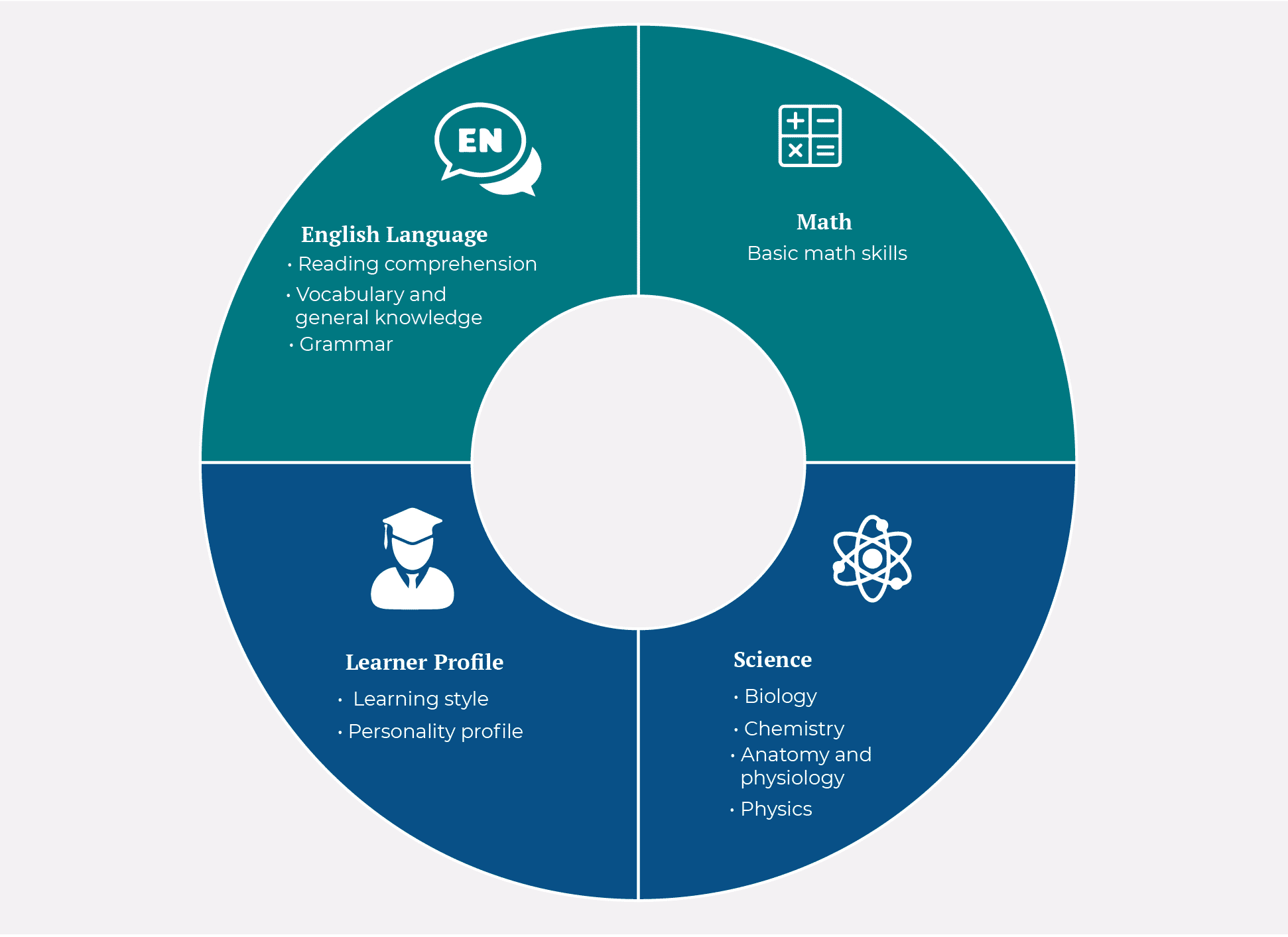
HESI Exam Modules
English Language
Module assesses: language
- Read passages; answer comprehension questions
- Identify main idea, inference, tone
- Use vocabulary in context accurately
- Apply grammar, usage, mechanics consistently
Math
Module assesses: numeracy
- Compute fractions, decimals, percents accurately
- Solve ratios, proportions, conversion problems
- Work multi-step word problems efficiently
- Check estimates for reasonableness quickly
- Calculator rules vary; often on-screen
Science
Module assesses: science
- Recall anatomy and physiology basics
- Apply biology concepts to scenarios
- Use chemistry fundamentals for problems
- Physics content may be required by some programs
Learner Profile (Optional)
Assesses: non-academic questionnaires
- Learning Style and/or Personality Profile
- Program-dependent; may be required individually
- Used for advising and support
- How it’s used varies
Test Duration
Total time: varies by school/program
Confirm your required modules and time limits in your program’s instructions. Plan pacing by module, keep moving when stuck, and return if time remains.
Test Breakdown & Sample Questions
The HESI Admissions Assessment (A2) is a multiple-choice exam. Your school/program selects which sections (modules) you must take, so the number of sections, question counts, and time limits can vary.
Most programs use a combination of academic modules (English Language, Math, and Science). Some programs also require the Learner Profile modules (Learning Style and/or Personality Profile). Always confirm the exact modules and timing in your school’s instructions or exam portal.
| Area | Module | What to expect |
|---|---|---|
| English Language | Reading Comprehension | Passage-based multiple-choice questions |
| English Language | Vocabulary & General Knowledge | Word meaning and usage in context |
| English Language | Grammar | Sentence structure, usage, and mechanics |
| Math | Math | Basic math skills commonly used in healthcare programs |
| Science | Anatomy & Physiology | Body systems, functions, and fundamentals |
| Science | Biology | Core life science concepts |
| Science | Chemistry | Basic chemistry concepts and applications |
| Science (sometimes required) | Physics | Basic physics concepts (required by some programs) |
| Learner Profile (optional) | Learning Style | Non-academic profile items used by some programs |
| Learner Profile (optional) | Personality Profile | Non-academic profile items used by some programs |
Some administrations may include unscored (pilot) questions. Whether pilot questions are used—and how many—depends on the specific exam setup used by your school/program.
English Language
The English Language portion of the HESI Admissions Assessment (A2) commonly includes multiple modules that assess core reading and language skills. Your school/program determines which English modules are included in your exam.
Reading Comprehension
This module measures your ability to understand written passages. Questions may ask you to identify the main idea, recognize supporting details, interpret vocabulary in context, draw logical inferences, and determine the author’s purpose or tone.
Winning Tip for Reading Comprehension: Read the passage. Then read the questions. When two options look “almost right,” choose the one that best matches what the passage actually states or clearly supports.
Vocabulary and General Knowledge
This module assesses your understanding of common English vocabulary, words in context, and general knowledge terms that may also appear in healthcare-related settings.
Winning Tip for Vocabulary and General Knowledge: You can improve quickly by learning high-frequency words and common healthcare prefixes, suffixes, and roots—and then practicing them in context (sentences, not flashcards only).
Grammar
This module focuses on sentence structure and correct usage. You may be asked to identify parts of speech, select the best word or phrase to complete a sentence, and recognize common grammatical errors.
Winning Tip for Grammar: Review the basics (subject–verb agreement, pronoun use, verb tense, punctuation). Then practice with timed questions so the “rules” become automatic.
Basic Math Skills
The Math portion of the HESI Admissions Assessment (A2) typically includes a Math module focused on practical arithmetic and foundational skills often used in healthcare training.
You may see questions on addition, subtraction, multiplication, division, fractions, decimals, ratios, proportions, household/measurement conversions, and general math facts.
Winning Tip for Basic Math: Use smart elimination. If you can quickly rule out answers that are clearly too large, too small, or don’t match the unit/format asked for, you can often get to the best choice without doing every step in full.
Science
The Science portion of the HESI Admissions Assessment (A2) may include one or more science modules. Your school/program determines which science modules you must take.
Winning Tip for Science
Some questions are straightforward recall, but many require you to apply basic concepts. The best approach is to study from a reliable textbook or course notes, then reinforce what you learn with practice questions and short online tutorials.
Biology
This module covers biology basics such as water, biological molecules, metabolism, cells, cellular respiration, and photosynthesis.
Winning Tip for Biology: Focus on the big ideas (cell structure/function, energy pathways, and how molecules support life). If you can explain each topic in your own words, you’ll answer more “application” questions correctly.
Chemistry
This module may include questions on topics such as matter, chemical equations and reactions, the periodic table, atomic structure, nuclear concepts, and chemical bonding.
Winning Tip for Chemistry: Memorize a small set of fundamentals (atomic structure, bonding types, balancing equations) and practice until you can solve common question patterns quickly.
Anatomy and Physiology
This module includes questions on general terminology, anatomical structures, and body systems.
Winning Tip for Anatomy and Physiology: Study by system (skeletal, muscular, cardiovascular, etc.) and connect structure to function. Practice labeling and basic “what happens if…” questions.
Physics
This module is required by some programs (often imaging-related programs) and may be optional for others. Topics can include motion, waves, energy, electricity (current and voltage), optics, and basic forces such as gravity.
Winning Tip for Physics: Don’t overcomplicate it—master the definitions and relationships (speed vs. velocity, voltage/current/resistance, wave properties) and practice interpreting simple scenarios and graphs.
Learner Profile
Some programs include Learner Profile modules as part of the HESI Admissions Assessment (A2). These modules are not academic subjects; they are designed to describe learning and personal preferences. Whether they are required—and how the results are used—depends on your school/program.
Learning Style
This module asks questions about how you prefer to learn and study (for example, how you take in information and what learning methods you tend to use).
Winning Tip for Learning Style: Answer honestly and consistently. There’s no “best” learning style—these questions work best when your answers reflect your real preferences.
Personality Profile
This module includes questions about attitudes and work-related preferences that may relate to studying and training in a healthcare program.
Winning Tip for Personality Profile: Don’t try to game the test. Choose the responses that most closely match how you typically behave in school or work situations.
Did you know?
The HESI Admissions Assessment (A2) is delivered as modules, and your school or program decides which ones you must take (often English Language, Math, and Science, sometimes Learner Profile). Requirements vary by school, so follow your program’s published module and score guidelines, read directions carefully, and pace yourself on test day.
HESI A2 Test Preparation Strategies
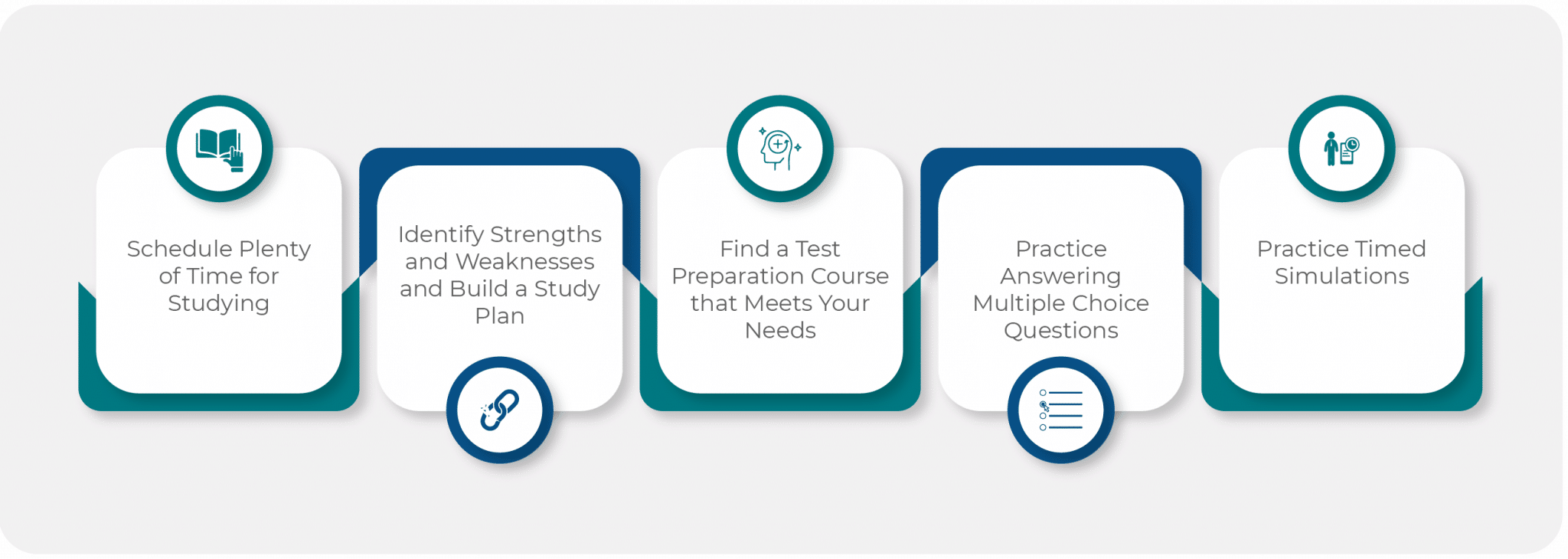
Before you start
- Confirm the exact modules your school requires (and any timing, calculator rules, and retake policy).
- Set your target score based on your program’s published requirements.
Week-by-week game plan
- Take a diagnostic practice test to pinpoint weak modules and topics.
- Build a simple schedule: 3–5 study days per week, one main topic per day, plus one review day.
- Study the concept first, then do practice questions immediately to lock it in.
What to focus on
- English: main idea, inference, vocabulary in context, grammar fundamentals.
- Math: fractions, decimals, ratios/proportions, conversions, estimation.
- Science: core A&P, biology basics, and essential chemistry concepts (plus physics only if your program requires it).
How to score more points (fast)
- Use elimination aggressively.
- Check units and reasonableness (too big/too small = wrong).
- Don’t get stuck: guess smart and move on when a question is taking too long.
Final stretch
- Add timed sets in the last 1–2 weeks to build pacing.
- Review mistakes the same day: write the rule you missed and redo a similar problem.
- Last 48 hours: light review + sleep (skip last-minute cramming).
Test Features
HESI A2, HESI Critical Thinking Exam, and HESI Exit Exam
Health Education Systems, Inc. (HESI) offers different exams used at different points in a healthcare program.
- The HESI A2 is commonly used by nursing schools and other healthcare programs to screen applicants.
- The HESI Critical Thinking Exam may be used by some programs as a supplemental admissions measure.
- The HESI Exit Exam is typically given near the end of a program and is used to help predict readiness for the NCLEX.
Closed Book Exam
The HESI A2 is administered as a closed-book exam. Testing rules vary by location and program, but you should expect restrictions on personal items (notes, phones, and other electronics). If a calculator is permitted for certain questions, it is usually provided within the testing platform rather than brought in by the test-taker.
Retake Policy
Retake rules are set by the school/program, including how long you must wait between attempts and how many attempts are allowed in a year. If your program permits retesting, you may see different question forms on a retake, so plan to review the full range of tested topics for your required modules.
Technical Facts
HESI A2 Fast Facts (tl;dr)
- Multiple-choice, module-based exam
- Modules set by your school
- English, Math, Science common
- Learner Profile sometimes required
- Timing varies by program
- On-screen calculator often used
- ID requirements vary by school
- Evolve account often required
Digital Testing
The HESI A2 is typically delivered as a computer-based exam. Your school/program determines where and how you test (for example, at a school testing center or through an online proctoring/testing arrangement). Follow your program’s instructions for approved testing options.
Rapid Results
Score reporting timing varies by program. In many cases, you can view results in your Elsevier/Evolve account, and some programs also send score notifications by email.
Predicting Success in Healthcare Programs
Many programs use the HESI A2 as one factor in admissions because it helps measure readiness in key academic areas. Use your results to guide your next steps: reinforce weaker topics, practice the modules your program requires, and retest only if your school allows it and you need a higher score.
Results Scale and Interpretations
Results Scale and Interpretations
Doing well on the HESI A2 can strengthen your application, but what “good” looks like depends on your school’s requirements. The best way to improve is targeted practice: focus on the exact modules your program requires and use practice tests early enough to leave time to close gaps.
What is Considered a Good Score?
There is no universal passing score for the HESI A2. Each school sets its own minimum scores and may evaluate results in different ways (overall/composite, by module, or both). Some programs also set higher minimums for specific modules (for example, Math or Reading), so use your program’s published requirements as your benchmark.
Your Score Report
Score reporting timing and the level of detail vary by school and testing setup. In many cases, you can view results soon after testing through your account or testing platform, and you may receive a more detailed report later.
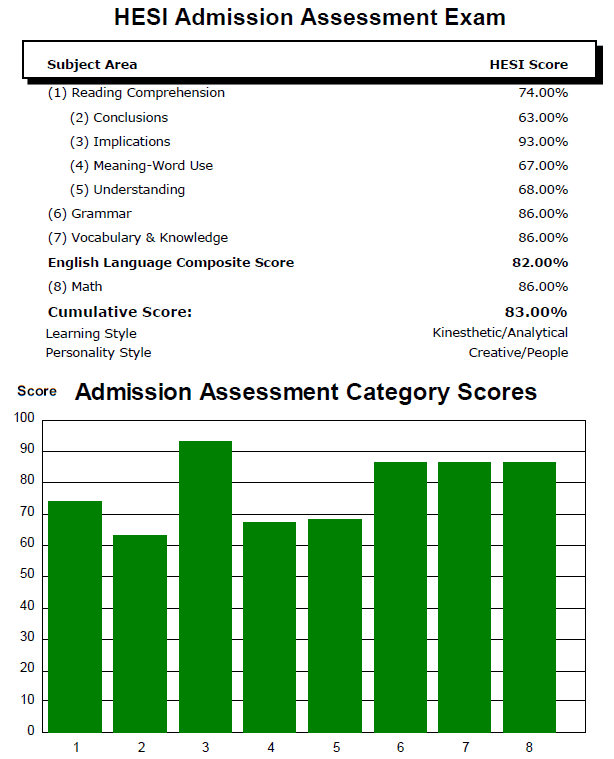
As shown in the sample score report image, results are typically displayed by module (such as Reading Comprehension, Grammar, Vocabulary & Knowledge, and Math), along with composite scores (for example, an English Language composite) and a cumulative score. If your exam includes Learner Profile modules, the report may also list Learning Style and Personality Style results.
HESI A2 FAQs
Passing score requirements are set by your school/program. Some programs set minimum scores for an overall (cumulative) result, while others require minimums by module (for example, Math or Reading). Check your program’s published requirements.
Your school selects the modules you must take. Common academic modules include Reading Comprehension, Vocabulary & General Knowledge, Grammar, Math, and Science modules such as Anatomy & Physiology, Biology, and Chemistry. Some programs may also require Physics.
Most items are multiple-choice. If your program includes Learner Profile modules, you may also see non-academic questions related to learning and personal preferences.
The HESI A2 (Admissions Assessment) is an entrance exam used by many healthcare programs. It focuses on academic readiness in the modules your school requires, and some programs may also include Learner Profile modules.
HESI A2 content depends on your program’s required modules. Many programs test English Language skills, Math, and one or more Science modules.
It covers multiple subjects, so difficulty depends on your background and which modules you must take. With a focused study plan and realistic practice questions, most test-takers can improve significantly.
The HESI A2 is used for admissions by many programs. Other HESI exams may be used later in a program (for example, near graduation). Your school will tell you which exam you need.
Start with your program’s required module list, then study the core topics for those modules and practice the same question style you’ll see on test day.
A “good” score depends on your program’s cutoffs and how they evaluate results (overall score, module scores, or both). Use your school’s minimums as your baseline and aim higher if the program is competitive.
The number of questions depends on which modules your school includes. Your total will vary by program.
Calculator rules depend on the module and your school’s testing setup. If a calculator is allowed, it is often provided within the testing platform rather than brought in by the test-taker.
Question counts vary by module and by school/program. Use your school’s module details (or exam portal information) for the most accurate numbers.
Fees are set by the school/testing site and vary by program. Some locations also charge a separate proctoring or administration fee.
Scores are typically reported as percentages, often shown by module and sometimes as an overall (cumulative) score. If Learner Profile modules are included, those results may be shown separately.
Many nursing and healthcare programs use the HESI A2 to evaluate applicants’ readiness in key academic areas required for the program.
Your school/program determines the testing method and location. Depending on your program, you may test at a school testing center or through an online proctoring/testing arrangement. Registration and score access are often handled through Elsevier/Evolve, so follow your school’s instructions for setup and scheduling.
HESI A2 Test Tips
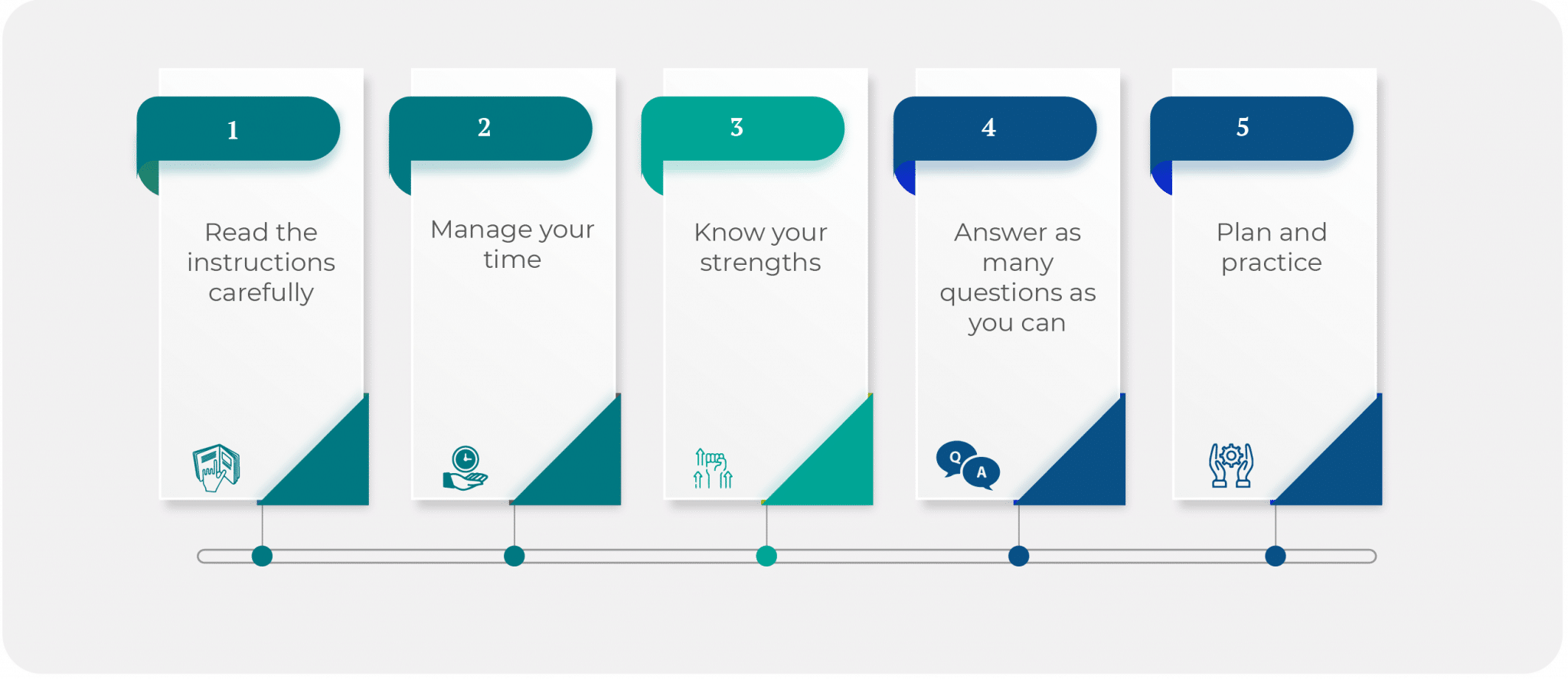
Before you start the exam
- Confirm your required modules (English, Math, Science, and any Learner Profile modules).
- Have your valid photo ID ready (and any extra ID your school requires).
- Log in early if testing online, or arrive early if testing on campus.
How to handle HESI-style questions
- Read the question first, then scan the passage/data for what you need (especially in Reading).
- For Vocabulary & Grammar, pick the best “most correct” option—don’t overthink small wording differences.
- In Math, estimate first and check units/decimals to eliminate bad answers fast.
- In Science, rely on fundamentals (A&P systems, basic bio, basic chem) and avoid second-guessing.
Pacing that actually works
- Move on quickly if you’re stuck—make your best choice and keep going.
- Use elimination to narrow to two choices, then choose the best match.
- Keep a steady rhythm; don’t spend extra time early and rush later.
Smart finishing moves
- If you have time, review flagged questions (don’t change answers without a clear reason).
- Answer every question you can—guessing is better than leaving it blank.
Administration
Test Location: Testing options vary by school/program. You may test at a school testing center or through an online proctoring/testing arrangement, depending on your program. Confirm your testing method and location in your school’s instructions.
Test Schedule: Testing is typically scheduled by appointment. Available dates and deadlines are set by each institution/program.
Test Format: Computer-based, primarily multiple-choice (plus Learner Profile modules if required).
Test Materials: You’ll test on a computer. If a calculator is permitted for certain questions, it is usually provided within the testing platform rather than brought in. Scratch paper/whiteboard rules depend on the testing site or remote proctoring setup.
Cost: Fees are set by the school/testing site and vary by program. Some locations may add a separate proctoring or administration fee.
Retake Policy: Retake rules are set by the school/program (waiting period, attempt limits, and whether retesting is allowed). Always follow your program’s posted policy.
Test Provider
The HESI Admissions Assessment (A2) is a standardized exam used by many nursing and healthcare programs as part of the admissions process and is delivered through Elsevier’s testing and reporting platform.
Programs use HESI A2 results to evaluate academic readiness in the required modules (such as English, Math, and Science) and to identify areas where applicants may need additional support before starting the program.
Information Sources
Disclaimer – All information and preparation materials on iPREP are provided for tutoring purposes. iPREP is not affiliated with Elsevier (owner of the Evolve platform and HESI assessments) or with any other company mentioned on this site.
Free HESI A2 Practice Test
Start with free HESI A2 practice test questions that give you a clear feel for the academic readiness skills tested on the HESI Admission Assessment Exam. The free practice introduces common HESI A2 topics such as reading comprehension, vocabulary, grammar, basic math, anatomy and physiology, biology, chemistry, and learner profile modules.
Use the free practice to understand the question format, pacing, and school-specific module structure before moving into full preparation. For complete practice, iPREP’s full HESI A2 course includes realistic exam-style questions, detailed explanations, video lessons, and targeted practice for the main HESI Admission Assessment content areas.
Question 1 of 12
Which word means most nearly the same as FAULTY?
- didactic
- defective
- zealous
- propitious
- strident
The correct answer is defective.
The word faulty means working badly or unreliably because of imperfections, if something is defective that means that it is imperfect or faulty.
- The word didactic means intended to teach, particularly in having moral instruction as an ulterior motive.
- If someone is zealous that means that they are having or showing fervor for a cause.
- If something is propitious it is giving or indicating a good chance of success.
- Strident means loud and harsh.
Question 2 of 12
Which word is most different in meaning than the other words?
- abysmal
- bottomless
- unfathomable
- superficial
- profound
The correct answer is superficial, meaning having or showing lack of depth of character or understanding.
All the other words mean deep, incredibly low, or bad.
Question 3 of 12
Which word is most different in meaning than the other words?
- close
- shut
- seal
- lock
- solve
The correct answer is solve, which means to find a solution, explanation, or an answer.
All the other words are ways of saying that nothing can go in or out of a certain area. Seal also means a symbol that marks security, usually ornamental, and can also mean a type of carnivorous marine mammal.
Question 4 of 12
Select the best word or words for the blank in the following sentence.
The stand-up artist, who used to perform in various pubs and nightclubs, __________ now formed a privately-owned club in which she performs.
- have
- has
- are
- will
The correct answer is “has”.
A subject must agree with its respective verb.
The subject in this sentence is in the singular form – The stand-up artist; therefore, the correct answer must be in the singular form as well. This observation allows the elimination of “have” and “are.”
In addition, the option “will” is eliminated as it does not fit the tense of the verb “formed”.
The descriptive clause, starting with “which,” creates some separation and makes the question a bit more difficult. When you check for subject-verb agreement, isolate the subject and the verb and ignore the rest of the sentence.
The stand-up artist, who used to perform in various pubs and nightclubs, has now formed a privately-owned club in which she performs.
Question 5 of 12
If the area of a triangle is 420 m² and its height is 60 m, then its base will be:
- 7 m
- 14 m
- 21 m
- 35 m
- 70 m
The correct answer is B.
Explanation:
Formula: Area of a Triangle = ½ x Base x Height
Given Area of Triangle = 420 m²
Height of Triangle = 60 m
Area of this Triangle = 420 m²
½ x Base x Height = 420
Base = (420 x 2) / Height = 840/60 = 14 m
Solving Tip:
This question can be solved easily by working with the answers, given that the height is 60 m. Taking the answer option ‘C’ as it is in the middle, area = ½ x 60 x 21 = 30 x 21 = 30 x 20 + 30 x 1 = 600 + 30 = 630 m² which is greater than the given area. By solving with option ‘B’, area = ½ x 60 x 14 = 30 x 14 = 30 x 10 + 30 x 4 = 300 + 120 = 420 m² which is the given area.
Question 6 of 12
The distance between two streets is 0.57 km. Calculate this distance in centimeters.
- 57
- 570
- 5,700
- 57,000
- 570,000
The correct answer is D.
Explanation:
Formula: 1 km = 1000 m
1 m = 100 cm
The solution will be found in two steps. First, convert kilometers into meters and then meters into centimeters.
Step 1: 0.57 km = 0.57 x 1000 m = 570 m
Step 2: 570 m = 570 x 100 cm = 57,000 cm
Therefore 0.57 km = 57,000 cm
Question 7 of 12
Evaluate (2/3)-3 x (2/3)5
- 2/3
- 3/2
- 9/4
- 4/9
- 8/27
The correct answer is D.
Explanation:
This problem has to be completed in steps:
Step 1 = (2/3) -3 x (2/3) 5
Step 2 = (2/3) -3+5 Exponents are added if numbers are multiplying
Step 3 = (2/3) 2
Step 4 = 22 / 32
Step 5 = (2 x 2) / (3 x 3)
Step 6 = 4 / 9
Question 8 of 12
Jessica bought a 10-inch long rubber band at the rate of $0.1 per centimeter. The cost of the rubber band is:
- $1
- $1.54
- $2.54
- $3.54
- $4.54
The correct answer is C.
Explanation:
Formula: 1 inch = 2.54 cm
Convert the given rate of inches into centimeters because the price rate is in this unit.
Length of rubber band = 10 in = 10 x 2.54 cm = 25.4 cm
Cost of rubber band = rate x length = 0.1 x 25.4 = (1/10) x (254/10) = 254 / 100 = $2.54
Solving Tip:
This question can be solved using estimation, when the total length is converted into centimeters, it becomes 25.4 cm which can be rounded to 25 cm. So the cost of rubber band = 25 x 0.1 = $2.5. Option ‘C’ has the closest value so it is the right answer.
Question 9 of 12
The antigens for ABO and Rh blood groups are present on:
- White blood cells
- Nephrons
- Neurons
- Plasma
- Red blood cells
The correct answer is E. Red blood cells
Explanation: Red blood cells are the most common type of blood cell and the principal means of delivering oxygen. The antigens for blood groups are present on RBCs.
Question 10 of 12
Necrosis and inflammation happen by
- Respiration
- An internal injury
- Cancer
- An external injury
- Metabolic changes in cells
The correct answer is D. An external injury
Explanation: Necrosis is cell damage or death by an external force or injury. Cells show an inflammatory response, they swell up and burst.
Question 11 of 12
The genetic information of living organisms is carried by macromolecules known as:
- Carbohydrates
- Proteins
- Lipids
- Nucleic acids
- Water
The correct answer is D: Nucleic acid
Nucleic acid (DNA and RNA) contains carbon, hydrogen, oxygen, nitrogen, and phosphorus. Nucleic acids carry the genetic information of an organism.
Question 12 of 12
A high voltage melts the wire in the fuse. What happens to the circuit?
- Becomes incomplete
- Becomes complete
- Becomes activated
- Not affected
- None of the above
The correct answer is A. High voltage melts the wire in the fuse and the circuit becomes incomplete.
Explanation: In case of high voltage in the circuit, the fuse wire becomes very hot and melts. The fuse ‘blows’. The circuit is now incomplete so there is no current.
Sample Flashcards
About the course
Includes 33 HESI A2 practice tests
46 Learning hours · 33 Practice tests · 1000 Questions · 790 VIDEOS
This course mirrors the HESI A2’s module-based structure, so you can build skills and then apply them with realistic questions. You’ll review essential concepts across English, Math, and Science, with Learner Profile coverage when required by your program. You’ll finish with full-length simulations that feel like test day, followed by detailed explanations and insights to target weak areas.

Skills you will learn
Critical Reading · Math Skills · Science Concepts · Personality Insights
Curriculum
Course Introduction
- How the course works and flows
- Set goals by required HESI modules
Question Types Introduction
- What to expect across modules
- How to avoid common traps
Reading Comprehension Tutorial
- Main idea, inference, and tone
- Passage strategy and answer selection
Word Knowledge (1)
- Vocabulary in context and meaning
- Focused practice with explanations
Math (11)
- Fractions, decimals, ratios, conversions
- Multi-step word problems and pacing
Basic Math – Arithmetic Operations (1)
- Add, subtract, multiply, divide confidently
Basic Math – The Order of Operations (1)
- PEMDAS and multi-step accuracy
Basic Math for Nursing (2)
- Fractions and decimals fundamentals
- Nursing-style computations and fluency
Basic Math – Multiple-Choice Solving Tips
- Elimination, estimation, and unit checks
Math Word Problems (3)
- Translate words into equations quickly
- Timed practice and test-level sets
Natural Science (5)
- Core science concepts used on HESI
- Recall plus applied question practice
Biology (1)
- Cells, metabolism, and core processes
Anatomy & Physiology (1)
- Body systems, terms, and functions
Chemistry (1)
- Matter, bonding, reactions basics
Ecology (1)
- Relationships, cycles, and environments
Physics (1)
- Motion, energy, electricity, and waves
Full-Length Test Simulations (2)
- Module-based, test-day style practice
- Timed, practice, and enhanced modes
HESI A2 Simulation 1 (5)
- Full-module simulation with explanations
HESI A2 Simulation 2 (5)
- Full-module simulation with explanations
How to Pass Personality Tests (4)
- Personality Profile simulation practice
- Inquisitive practice with explanations
- Answer honestly and consistently
Course Conclusion
- Final review and readiness check
- Plan next steps by module
Reviews

antranette b****
April 1, 2025 at 4:11 PM
This helped me pass my HESI exam i was 100 percent pepared the flash cards really help also i love how i had the option the get the information read to me and they also have videos so your guranteed to understand the information.
Alexa M****
October 23, 2024 at 6:51 PM
The amount of review that you get is enough to teach you without having to take classes all over again. simplifies and really explains everything in an easy to understand manner.
Aneela F*****
July 12, 2024 at 11:27 AM
I really like ane enjoying doing this exercise and getting confidence I feel day by day learning it's cover my all syllabus
Nicolo D******
May 24, 2024 at 12:13 AM
I am amazed at how simple and understandable is the prep materials. It does not try to overwhelm you with too much details but it seems to match the required understanding of the lessons. I would recommend.
Rachelle D********
March 17, 2024 at 2:04 AM
Best practice I ever had very clear and precise. The instructions are pretty straightforward and simple makes easy to remember.
nile p****
March 12, 2024 at 2:19 AM
great practice! using for entrance to nursing school . would recommend to students looking to enter nursing school. has all categories of studying for exam
Rama A*****
November 7, 2023 at 5:15 AM
Outstanding resources I recommend this and try the free course they offer this is super beneficial! It’s a limited time!
Debbie M****
February 23, 2023 at 3:51 AM
This is a very detailed and great preparatory english course, I feel accomplished and my knowledge has been refreshed. I'm ready to take and be successful at the exams.
Alexandria N****
February 17, 2023 at 7:00 PM
iPrep was recommended to me as a resource to prepare for the HESI. iPrep has been a beneficial resource that makes me feel confident and ready to take the HESI!
Jacob B*****
February 17, 2023 at 5:52 PM
this is probably one of the best test prep websites that I have ever used. Not only did I pass my HESI A2 exam, But I passed it with flying colors.